
Banning Kids Will Not Fix the Internet Inside the UK Plan to Copy the Australian Social Media Law
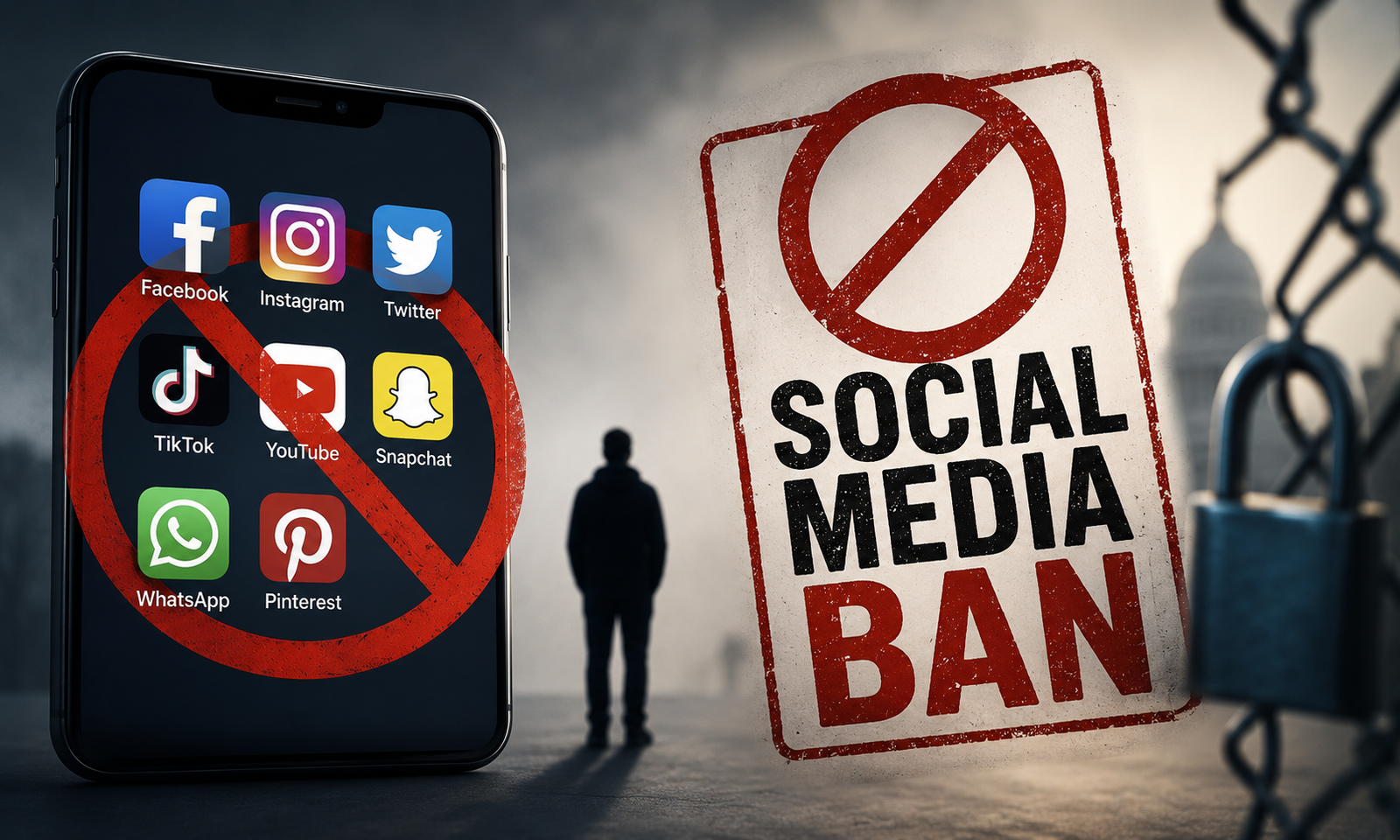
The United Kingdom government announced a complete ban on social media access for children under the age of 16 in June 2026. Prime Minister Keir Starmer introduced the legislation to block youth access to major platforms including TikTok, Instagram, Snapchat, and X. The proposed law is scheduled to take effect in spring 2027. The policy explicitly mirrors the national social media ban implemented by the Australian government in December 2025.
The UK is closely studying the Australian rollout to design its own enforcement mechanisms. The Australian government forced tech companies to block youth access under the threat of massive financial penalties. The world watched to see if a government could actually build a functional digital border wall to keep children away from algorithmic feeds.
Six months later the results from Australia are entirely mixed. The UK government claims they have learned from the Australian loopholes and intend to build an even stricter system. Critics argue that both nations are completely missing the point. Banning teenagers does not fix a fundamentally broken internet. It merely delays their exposure to toxic algorithms while forcing every single adult to surrender sensitive biometric data just to log into an app.
The Reality of the Australian Experiment
When Australia activated its ban late last year, the initial data looked impressive. The eSafety Commissioner reported that platforms removed access to roughly 4.7 million underage accounts within the first few weeks. Politicians declared a massive victory. They pointed to the massive purge as proof that hard regulation works. The government even launched a national television campaign praising the return of healthy childhoods.
Parents on the ground tell a very different story today. Researchers surveying Australian families found that the ban functioned less like an impenetrable wall and more like a minor speed bump. Tech companies implemented the absolute bare minimum age verification required to avoid government fines. Most platforms simply asked users to upload a basic ID or use a rudimentary facial scan to prove their age.
Teenagers adapted instantly. They realized that age verification software relies entirely on the data it receives. Kids began heavily using virtual private networks. A virtual private network tricks a website into thinking the user is logging in from another country entirely. An Australian teenager simply set their network location to the United States or Canada where no age laws exist. The social media platforms let them right back in.
Other kids exploited the facial recognition systems with ridiculous ease. Video game communities quickly figured out that you do not need a real human face to trick a standard age scanner. Teenagers downloaded high definition images of older video game characters and held those printed images up to their webcams. The software read the artificial adult face and instantly approved the account. The system completely failed to distinguish between a real adult and a printed screenshot of a digital avatar.
The ultimate burden of enforcement fell right back onto the parents. The Australian government promised that tech companies would do the heavy lifting. Instead parents found themselves locked in the exact same arguments with their children over screen time. Some parents appreciated the ban because it gave them a rigid legal excuse to tell their kids no. It strongly reinforced their household rules. But many other parents felt completely abandoned by the state. They watched their tech savvy 13 year olds bypass the national firewall in under five minutes.
The Illusion of Highly Effective Age Assurance
The UK government looked at the Australian loopholes and decided they just need much better locks. British regulators are now demanding a standard they call Highly Effective Age Assurance. They want platforms to deploy advanced biometric scans, strict live selfie verification, and mandatory government ID uploads to ensure absolutely nobody fakes their way into an account. The government directed Ofcom to determine exactly what technologies meet this strict new standard.
This approach creates a massive privacy crisis for everyone else. To keep children off social media, the platforms must conclusively prove the age of every single user on the site. You cannot have a secure age gate without fiercely verifying the adults. This means you will have to hand over a driver license, a passport, or a live biometric scan to multinational tech corporations just to look at local news or message a community group.
Privacy advocates are rightfully terrified by this requirement. Social media companies have a terrible historical track record of protecting user data. These exact platforms leak phone numbers and passwords on a regular basis. Forcing them to collect and store millions of official government identification documents creates a massive and lucrative target for hackers. The UK government is essentially forcing everyday citizens to trade their digital privacy for the illusion of child safety.
The Australia Plus Model
Prime Minister Keir Starmer wants the UK law to go much further than the Australian baseline. Political insiders are actively calling the UK proposal the Australia Plus model. The British legislation does not stop at the major social media feeds. It aggressively targets the surrounding digital ecosystem.
The UK ban extends directly into the multiplayer gaming world. The government wants to completely block stranger communication on gaming platforms for anyone under 16. If a child logs into a cooperative multiplayer game, the system must forcefully prevent adult strangers from sending them direct messages. This specific rule attempts to cut off online grooming behaviors before they even start.
The proposal also outlaws artificial intelligence romantic companions for minors. Tech companies recently flooded the app stores with AI chatbots designed to simulate boyfriend or girlfriend relationships. These bots encourage deep emotional attachment and frequently steer conversations toward adult topics. The UK will explicitly require users to prove they are 18 before accessing any virtual companion service.
The most aggressive part of the UK plan involves digital curfews. Regulators are actively exploring a mandatory overnight shutdown for older teenagers between the ages of 16 and 18. The platforms would be legally required to pause infinite scrolling features and block push notifications during standard sleeping hours.
These ideas sound excellent in a political press release. They directly address the features that actively ruin teenage sleep and mental health. But they run into the exact same technical enforcement wall. If a 14 year old can use a virtual private network to pretend they live in France, none of these strict British restrictions will actually affect them in the real world.
Ignoring the Core Problem
The deepest flaw in both the Australian and British bans is that they treat children as the problem rather than the product. Removing young people from a toxic digital environment does absolutely nothing to clean up the environment itself.
The Molly Rose Foundation points this out relentlessly in the UK press. The foundation was established after 14 year old Molly Russell took her own life following prolonged exposure to self harm content on Instagram. The foundation argues that basic age bans are a complete political distraction. They let the tech giants completely off the hook.
Social media platforms operate on a ruthless business model of human engagement. Their algorithms are specifically designed by engineers to provoke an immediate emotional reaction. Anger, fear, and body image insecurity drive the highest levels of consistent engagement. The platforms push extreme content because extreme content generates the most lucrative advertising revenue.
Banning a 15 year old from seeing this content does not fix the broken algorithm. It just means the platform patiently waits until the child turns 16 to flood their fresh feed with the exact same garbage. A delayed exposure is absolutely not a cure. An adult user is just as vulnerable to algorithmic rage bait, political radicalization, and the total destruction of their attention span. The underlying machinery of the internet remains entirely unregulated.
Tech companies secretly love these age bans. They will publicly complain about the high cost of compliance. They will issue dramatic press releases warning about the tragic loss of online youth communities. But behind closed doors, they know an age ban is the best possible legislative outcome. A ban protects their core financial business model. If the government focuses entirely on age verification, the government is not looking at how the algorithms actually function. The tech companies get to keep their infinite scroll, their variable reward systems, and their aggressive engagement metrics. They just have to check digital IDs at the door.
The Need for Fundamental Regulation
We cannot age restrict our way out of a broken internet. The UK and Australia are attempting to build an artificial clean room for kids while the rest of the web remains a toxic sludge. This specific approach will inevitably fail.
If a government actually wants to protect its citizens, it must directly target the design features that cause the psychological harm. Regulators need to ban infinite scrolling for everyone. They need to outlaw the algorithmic amplification of extreme content entirely. They need to force platforms to present feeds in a simple chronological order based only on who a user explicitly chooses to follow.
The internet does not have to function exactly like a casino slot machine. The early web was a place for genuine connection and information retrieval. The modern social media feed is an engineered behavioral trap designed to steal time. Changing the entry age from 13 to 16 does nothing to dismantle the actual trap.
Parents completely deserve support right now. Raising a child in the modern smartphone era is an exhausting daily battle against teams of engineers who spend their entire working day figuring out how to steal your child’s attention. A legal ban gives parents a solid cultural backing to firmly deny their kids a smartphone. It establishes a new social norm where not having TikTok is the default setting rather than the weird social exception.
That specific cultural shift has immense real world value. It naturally reduces the brutal peer pressure that forces kids onto these platforms in the first place. But we must be completely honest about what the law actually achieves. The law does not secure the internet. It simply outsources the role of the bad guy from the tired parent to the state. The kids will still find clever workarounds. The platforms will still harvest valuable adult data. The algorithms will still promote the absolute worst aspects of human nature.
The UK must do significantly better than simply copying the flawed Australian homework. Keir Starmer has a real opportunity to force actual structural design changes upon the global tech industry. If the British government settles for a simple digital age gate, they are entirely missing the point of the crisis. We need an internet that is fundamentally safe by design. We do not need an internet that requires a biometric passport just to prove you are old enough to endure the abuse.