
How Simple Toe Exercises Can Save You from Falls
Most people treat their feet like afterthoughts. We shove them into stiff leather boxes, wrap them in thick cushions, and ignore them until they start to hurt. This neglect comes with a heavy price. Your feet are the only part of your body that touches the ground when you walk, run, or stand. They are the foundation for every movement you make. If that foundation is weak, everything built on top of it begins to wobble.
New research confirms that we have been overlooking a massive opportunity for better health. A study recently highlighted by medical experts shows that training the tiny muscles in your feet can lead to dramatic improvements in balance and agility. This is not just for athletes or gym rats. For older adults, these simple movements could be the difference between a confident stroll and a life-changing fall.
The Forgotten Anatomy of the Human Foot
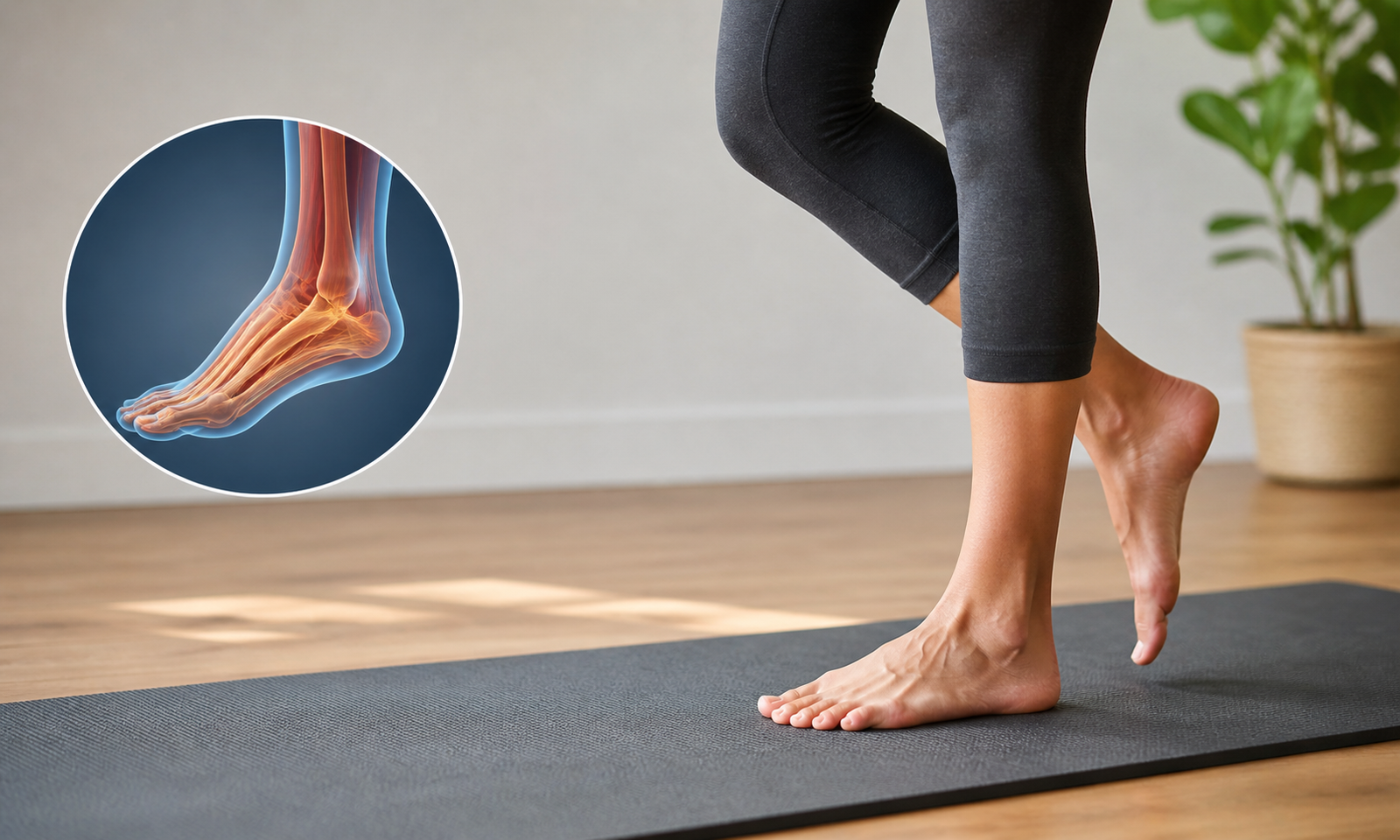
The human foot is a masterpiece of engineering. It contains 26 bones, 33 joints, and over 100 muscles, tendons, and ligaments. These parts work together to act as both a soft shock absorber and a rigid lever. When your heel hits the ground, the foot needs to be flexible to soak up the impact. When you push off to take another step, the foot needs to become a stiff platform to propel you forward.
Inside the foot, there are layers of small muscles often called the foot core. These are very similar to the core muscles in your stomach and back. Just as your abdominal muscles support your spine, these foot muscles support your arches. Most of us have let these muscles go soft. Because modern shoes do all the work of supporting our weight, the feet have forgotten how to support themselves.
When these inner muscles weaken, the arch begins to collapse. This ripple effect moves up the body. Your ankles roll inward. Your knees cave toward each other. Your hips shift out of alignment. Eventually, you feel a dull ache in your lower back and wonder why. The answer is often sitting right inside your socks.
Why Shoes Are Like a Cast for Your Feet
Think about what happens when someone breaks an arm. The doctor puts it in a hard plaster cast to keep the bone still. After six weeks, the cast comes off. The arm underneath is skinny, pale, and incredibly weak. The muscles have wasted away because they were not allowed to move.
Modern footwear acts like a permanent cast. Many sneakers have so much cushioning and arch support that the foot muscles never have to engage. The stiff soles prevent the toes from bending naturally. Over years of wearing these shoes, the feet become “deconditioned.” We lose the ability to grip the ground. We lose the sensory feedback that tells our brain exactly where our body is in space.
This loss of sensation is a major problem for balance. Your feet are covered in thousands of nerve endings. These nerves send constant signals to the brain about the texture of the ground, the slope of the floor, and the weight of your body. If you wear thick, padded shoes all day, those signals become muffled. It is like trying to play the piano while wearing oven mitts. You can still do it, but you will be clumsy and prone to mistakes.
The Science of the “Short Foot”
The study mentioned in recent health reports focused on a specific technique called the short foot exercise. This movement is designed to target the muscles that pull the ball of the foot toward the heel. By doing this, you lift the arch without curling your toes.
Researchers found that people who practiced this and other toe movements for a few weeks saw significant gains. They were able to stand on one leg longer. They could change direction faster. Their bodies became more efficient at staying upright.
The beauty of this discovery is how little effort it takes to see results. You do not need a gym membership or expensive equipment. You only need a few minutes of focused movement while you are sitting at your desk or watching television.
Essential Exercises for Stability
If you want to rebuild your foot core, you have to start slow. These muscles are likely weak and may cramp if you push too hard in the beginning. Consistency is more important than intensity.
1. The Short Foot (Arch Lift)
This is the most important exercise for building a strong foundation. Sit in a chair with your feet flat on the floor. Without curling your toes or lifting your heel, try to pull the ball of your foot toward your heel. You should feel the arch of your foot rise slightly. Imagine there is a small marble under your arch and you are trying to make room for it. Hold this tension for five seconds and then relax.
2. Toe Yoga
This exercise improves the brain’s connection to the feet. Stand or sit with your feet flat. Try to lift only your big toe while keeping the other four toes pressed into the ground. Hold it for a few seconds. Now, switch. Press the big toe down and try to lift only the four smaller toes. Most people find this incredibly difficult at first. Your brain might feel like it is trying to solve a complex puzzle. With practice, the neural pathways strengthen and the movement becomes easy.
3. The Towel Scrunch
Place a small hand towel on a smooth floor like wood or tile. Sit in a chair and put your foot on the edge of the towel. Use only your toes to bunch the towel up and pull it toward you. Once you have reached the end, use your toes to push the towel back out. This builds strength in the muscles that run along the bottom of the foot.
4. Splaying Your Toes
Most shoes squeeze the toes together into a point. This causes the big toe to angle inward, which ruins your ability to balance. To counter this, practice spreading your toes as wide as possible. If they won’t move on their own, use your fingers to help stretch them apart. Eventually, you want to be able to “fan” your toes out like you would fan out your fingers.
The Direct Link to Aging and Falls
As we get older, our world tends to get smaller. A fear of falling often causes people to stop going for walks, stop visiting friends, or stop engaging in hobbies. This fear is not unfounded. Falls are a leading cause of injury for seniors. However, much of this instability comes from the feet.
When an older adult loses strength in their toes, they lose their “brakes.” The toes are responsible for pushing back against the ground to keep you from tipping forward. If the toes are weak, the body has to rely on larger muscles in the thighs and back to stay upright. These larger muscles are slower to react. By the time they engage, it is often too late to prevent the fall.
Training the feet gives the body a faster warning system. It improves what doctors call proprioception. This is just a fancy way of saying your body knows where it is. If you trip on a rug, strong and sensitive feet can feel the shift instantly. They can grip the floor and send a signal to your brain to adjust your weight before you hit the ground.
Better Agility for the Active Adult
This isn’t only about preventing accidents. It is also about performance. If you enjoy hiking, playing tennis, or even just walking the dog, your feet are your primary tools.
Agility is the ability to change the position of your body efficiently. This requires a solid point of contact with the earth. Think about a professional athlete. They don’t have floppy, weak feet. They have strong, active feet that can handle massive amounts of pressure.
When you strengthen your foot core, you improve your “power transfer.” Every time you take a step, energy travels from your leg, through your foot, and into the ground. If your arch collapses, some of that energy is lost. It is like trying to jump off a pile of sand versus jumping off a concrete floor. A strong foot makes every movement feel lighter and more energetic.
How to Transition to Better Foot Health
You cannot go from wearing thick boots all day to running barefoot overnight. That is a recipe for injury. Your bones and tendons need time to adapt to new stresses.
Start by spending more time barefoot inside your home. This allows your feet to feel the texture of the floor and move through their full range of motion. Pay attention to how your weight shifts as you walk from the kitchen to the living room.
Next, look at your shoes. Most people wear shoes that are too narrow. If you take the insole out of your shoe and stand on it, does your foot spill over the sides? If so, the shoe is too small. Your toes need room to spread out. Look for shoes with a wide “toe box” that matches the natural shape of a human foot.
Gradually integrate the exercises mentioned above. You don’t need a specific workout time. You can do toe yoga while you brush your teeth. You can do arch lifts while you are on a phone call. If you do these for five minutes a day, you will notice a difference in how you stand within a month.
The Role of Surfaces
The ground we walk on matters just as much as the shoes we wear. Modern life is lived on perfectly flat surfaces like concrete, carpet, and hardwood. While these are convenient, they are boring for our feet. They don’t challenge the muscles or the nervous system.
Walking on uneven surfaces is like a workout for your balance. Sand, grass, and gravel force the small joints in the foot to move and adjust. If you have access to a safe patch of grass, try walking on it barefoot for a few minutes. The varying texture and slight slopes will wake up parts of your feet that have been dormant for years.
If you live in a city, you can simulate this by using a balance pad or even a rolled-up yoga mat. Standing on an unstable surface for sixty seconds a day forces the foot core to work overtime to keep you steady.
Why This Matters More Than Ever
We are living longer than any generation in history. However, living longer doesn’t always mean living better. Mobility is the foundation of independence. If you can move well, you can take care of yourself. You can stay active in your community. You can avoid the nursing home.
The study on toe exercises is a reminder that big health changes often come from small, simple habits. We spend so much time worrying about our heart rate, our cholesterol, and our muscle mass. Those are all important, but we shouldn’t forget the two things that carry us through the world every single day.
Taking care of your feet is an investment in your future self. It is a way to ensure that when you are seventy, eighty, or ninety years old, you are still walking with your head held high and your feet firmly planted on the ground.
A Weekly Plan for Beginners
To make this practical, follow a simple schedule. You don’t need to overcomplicate it.
Monday, Wednesday, Friday:
-
Toe Yoga: 2 minutes per foot. Focus on the big toe first, then the others.
-
Short Foot: 10 repetitions, holding for 5 seconds each.
-
Towel Scrunches: 3 sets of pulling the towel all the way in.
Tuesday, Thursday, Saturday:
-
Barefoot Time: At least 30 minutes of walking around your house without socks or shoes.
-
Toe Splaying: 2 minutes of spreading your toes as wide as possible.
-
Balance Practice: Stand on one leg for 30 seconds while you wait for the microwave or a kettle to boil.
Sunday:
-
Foot Massage: Use your hands or a small ball (like a tennis ball) to roll out the bottom of your feet. This helps break up tension and improves blood flow.
Beyond the Exercises: Making Better Choices
Once you start building strength, you will become more aware of how your footwear affects you. You might notice that after a day in heavy boots, your feet feel stiff and “dead.” This is a signal from your body.
You don’t have to throw away all your favorite shoes. Just be mindful of when you wear them. If you know you are going to be walking for a long time, choose the pair that allows your toes to move. Save the narrow, stiff shoes for short events where you won’t be on your feet much.
Many people find that as their feet get stronger, their old shoes start to feel uncomfortable. This is actually a good sign. It means your feet are returning to their natural, wider shape. They are no longer willing to be cramped.
The Connection to Chronic Pain
Many people suffer from chronic pain in their heels or the balls of their feet. They often turn to expensive orthotics or surgery. While those are sometimes necessary, strengthening the foot core can solve many of these issues at the source.
A strong arch acts like a natural suspension system. It absorbs the shock of your footsteps so your bones don’t have to. When the arch is weak, that shock travels straight into the heel bone or the soft tissues. This leads to inflammation and long-term pain. By rebuilding the muscles, you are giving your body its own built-in shock absorbers.
Moving Forward
The link between our toes and our balance is undeniable. The science is clear that a few minutes of foot training can change the way you move. It is a low-cost, high-reward habit that anyone can start today.
Stop thinking of your feet as just things to put shoes on. Start thinking of them as active, vital parts of your body. Give them the attention they deserve. If you take care of your foundation, the rest of your body will thank you for years to come.
Building agility and balance is not about doing a massive workout once a month. It is about the small things you do every day. It is about lifting your toes while you sit in a meeting. It is about choosing the wider shoe. It is about walking across the grass barefoot. These small choices add up to a lifetime of confident, stable movement.
The path to a healthier life starts at the bottom. Reach down, take off your shoes, and see what your toes can do. You might be surprised at how much power is hiding in your own feet. Don’t wait for a fall to start caring about your balance. Start now, while you are strong, and stay that way for the rest of your life.
The human body is designed to move. It is designed to be agile and responsive. By reconnecting with your feet, you are reclaiming a part of your natural physical ability that the modern world has tried to take away. Stand up, spread your toes, and feel the ground beneath you. That is where your health truly begins.