
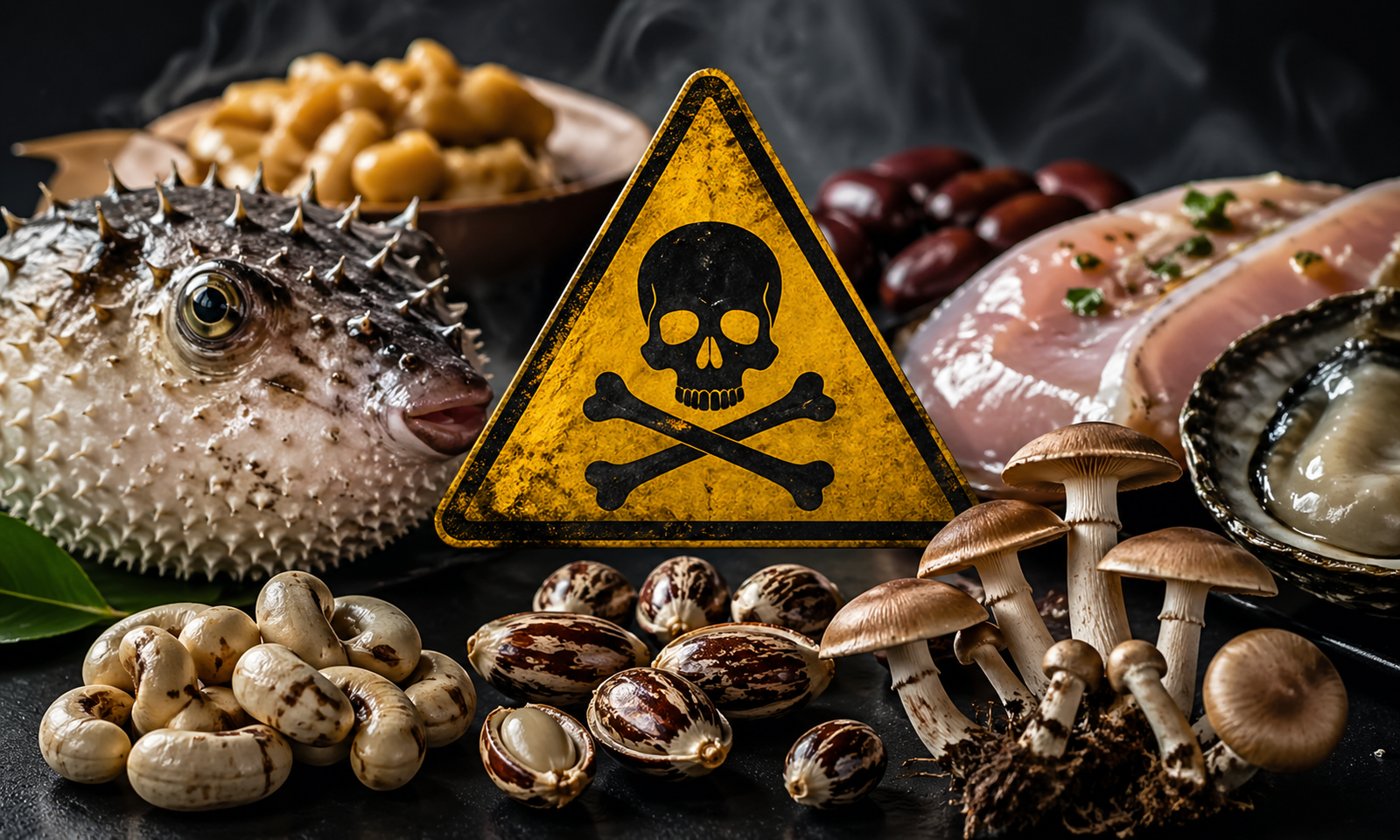
Deadly Delicacies: The Truth About the World’s Most Dangerous Foods
Dangerous foods are biological or chemical hazards found in the culinary traditions of various cultures that can cause immediate death or long term health failure. These substances range from exotic sea creatures to common garden plants that require specialized knowledge to prepare safely.
The Japanese Pufferfish Known as Fugu
The Japanese pufferfish is likely the most famous dangerous meal on the planet. It contains a poison called tetrodotoxin which is found in the liver and skin. This poison is over one thousand times more powerful than cyanide. There is no known antidote for it. When a person eats even a tiny amount of this toxin, their muscles begin to freeze. This starts with the lips and tongue and then moves to the lungs. The victim remains fully conscious while they slowly stop breathing.
In Japan, chefs must go through years of training to get a license to prepare this fish. The test is so hard that many people fail it. The goal is to remove every trace of the liver and ovaries without getting any of the poison onto the meat. Some people actually enjoy a tiny tingle on their lips when they eat it. This tingle is a sign that a microscopic amount of the poison is present. It is a very thin line between a thrill and a funeral.
The history of this fish is long. It was banned in Japan for many years because so many people died from it. Today, most deaths happen when amateur fishermen catch the fish and try to clean it at home. Professional restaurants are very safe, but the risk is never zero. You are essentially trusting a person with a knife to save your life.
Sannakji: The Octopus That Fights Back
In South Korea, a dish called Sannakji consists of a small octopus that is cut into pieces and served immediately. The octopus is dead, but its nervous system is still active. This means the legs are still moving and the suction cups are still working when the plate arrives at your table.
The danger here is not poison. It is mechanical. The suction cups on the tentacles can grab onto the inside of your throat as you try to swallow. If a tentacle gets stuck, it can block your airway. Because the legs are strong and continue to move, it is very difficult to dislodge them once they have a grip.
People who eat this are told to chew very thoroughly. You have to grind the legs into small pieces so the suction cups cannot work. Every year, several people die from choking while eating this dish. It is a strange way to die because the animal is technically dead, yet it still manages to kill the person eating it.
Ackee: The National Fruit of Jamaica
Ackee is a fruit that looks beautiful but carries a heavy secret. If you eat it before it is fully ripe, it can cause what is known as Jamaican vomiting sickness. The fruit contains a toxin that stops the body from releasing glucose. This causes your blood sugar to drop to levels that can kill you.
The rule for Ackee is simple. You must wait for the fruit to open naturally on the tree. Once it opens, the toxic gases escape and the yellow flesh inside becomes safe to eat. However, the black seeds inside are always poisonous. You can never eat them.
When people get sick from this fruit, they experience severe vomiting and seizures. In the worst cases, they fall into a coma. This happens most often to children who find the fruit and eat it before it is ready. In Jamaica, people know the rules, but tourists or people in other tropical areas might not be as careful. It is a reminder that nature does not always want its fruits to be eaten.
Giant Bullfrog: A Namibian Risk
In Namibia, people eat the giant bullfrog. In most parts of the world, people only eat the legs of a frog. In Namibia, they eat the whole thing. The danger is that these frogs carry a toxin that can lead to kidney failure.
Local wisdom says you should only eat these frogs after the third rain of the year or after the frogs have finished mating. At this point, the frogs are thought to have lower levels of the poison. If you eat them too early in the season, your kidneys might stop working. This causes a painful condition that requires immediate medical help.
This is a clear example of how culture and timing work together. The people who live there have learned how to navigate the danger over hundreds of years. But if an outsider tried to do the same without that knowledge, the results would be tragic.
Casu Marzu: The Maggot Cheese of Sardinia
This is perhaps the most controversial food on this list. Casu Marzu is a traditional sheep milk cheese from Italy that contains live insect larvae. To make it, the top of a cheese wheel is cut off so that flies can lay eggs inside. The maggots hatch and eat the cheese. The acid from their digestive systems breaks down the fats and makes the cheese very soft.
The health risk is twofold. First, some people are allergic to the larvae. Second, there is a risk of something called intestinal myiasis. This happens when the maggots survive the stomach acid and stay alive in your intestines. They can burrow into the walls of your organs and cause severe pain and bleeding.
Because of these risks, the cheese is technically illegal in the European Union. However, it is still made and sold on the black market in Sardinia. People who love it say it has a very strong and spicy flavor. They often wear goggles while eating it because the maggots can jump up to six inches when they are disturbed. It is a food that requires you to protect your eyes while you eat.
Hákarl: Fermented Shark from Iceland
Iceland is home to a dish called Hákarl. It is made from the Greenland shark. If you were to eat the meat of this shark while it is fresh, you would die. The shark has no urinary system, so it filters waste through its skin and flesh. This means the meat is full of urea and a compound called trimethylamine oxide. It is basically like eating a giant block of concentrated urine and glass cleaner.
To make it edible, the shark is buried in the ground and pressed with heavy stones for several months. This squeezes out the toxic liquids. Then, the meat is hung up to dry for several more months.
When it is finished, it smells like ammonia. Most people who try it for the first time gag because the smell is so powerful. While the fermentation process makes it safe to eat without dying, it is still a massive shock to the human body. It is a survival food from a time when people in Iceland had very little else to eat during the long winters.
Cassava: The Staple with a Hidden Poison
Cassava is a root vegetable that millions of people around the world rely on for calories. It is the base for tapioca and many flours. However, the plant contains cyanide. If it is not prepared correctly, it can be deadly.
There are two types of cassava: sweet and bitter. The bitter kind has much more cyanide. To make it safe, the root must be peeled, soaked, and cooked thoroughly. In some parts of Africa, people who do not have enough water to soak the cassava properly end up with a condition called Konzo. This is a permanent paralysis of the legs.
It is a tragedy because the people affected are often the poorest. They know the food is dangerous, but they are hungry and do not have the resources to clean it right. It is a reminder that danger in food is often tied to poverty and lack of choice.
Blood Clams: A Reservoir for Disease
Blood clams are found in the waters of the Gulf of Mexico and parts of Asia. They are called blood clams because they produce a lot of hemoglobin, which makes them look bright red. These clams live in areas with very little oxygen. To survive, they filter huge amounts of water.
This filtering process makes them a sponge for viruses and bacteria. They often carry Hepatitis A, Typhoid, and Dysentery. In Shanghai in the late 1980s, over three hundred thousand people got sick and dozens died from eating these clams.
In many parts of the world, importing these clams is illegal. Even if they are cooked, some of the viruses can survive. Eating them is like playing a game of Russian roulette with your liver. The risk is simply too high for a small snack.
Elderberries and Rhubarb: Common Garden Dangers
Not all dangerous foods are exotic. You might have some in your backyard. Elderberries are often used for syrups and jams. However, the leaves, seeds, and stems of the plant contain a type of cyanide. If you eat the berries raw or do not strain the seeds out, you can get very sick.
Rhubarb is another example. The red stalks are perfectly safe and great for pies. But the green leaves are toxic. They contain oxalic acid, which can cause kidney failure in humans. During World War I, some people in England were told they could eat the leaves as a vegetable substitute. Many people got very ill and some died. Most people know this now, but every year someone makes the mistake of thinking the whole plant is edible.
Starfruit: A Hidden Risk for Some
Starfruit is a popular tropical fruit. Most people can eat it with no problems at all. However, if you have any kind of kidney trouble, starfruit can be a death sentence. It contains a neurotoxin that the kidneys are supposed to filter out. If your kidneys are not working at one hundred percent, that toxin stays in your blood and travels to your brain.
Symptoms include hiccups, vomiting, and mental confusion. In severe cases, it leads to death. There have been many cases where people with undiagnosed kidney issues ate starfruit and ended up in the hospital. Because it is so dangerous for a specific group of people, many doctors believe it should carry a warning label.
The Case of the Silver Stripe Blaasop
This fish is a recent problem in the Mediterranean Sea. It is an invasive species that came through the Suez Canal. It looks like a normal fish, but like the Japanese pufferfish, it is full of nerve poison.
The problem is that fishermen in Turkey, Greece, and Lebanon are catching it and they do not know what it is. They sell it in local markets, and entire families get poisoned. There have been several reports of people dying because they thought they were eating a safe, local fish. This shows how climate change and the movement of species can create new dangers in places where people are not prepared for them.
Feseekh: The Salted Fish of Egypt
Feseekh is a traditional Egyptian dish eaten during the spring festival. It is made from mullet fish that is dried in the sun and then fermented in salt for a long time.
The danger comes from botulism. If the fish is not salted enough or if it is kept in an airtight container during the process, the bacteria that cause botulism can grow. Botulism is a form of food poisoning that paralyses the muscles and can lead to death very quickly.
Every year, the Egyptian Ministry of Health issues warnings telling people not to eat Feseekh. Every year, people eat it anyway because it is a deep part of their culture. Hospitals often stock up on anti-toxins specifically for this festival. It is a battle between tradition and modern medicine.
The Real Stance on Dangerous Foods
We spend a lot of time talking about exotic poisons like those in pufferfish or African frogs. These stories are exciting and scary. They make for great television and interesting articles. But if we are being honest, these are not the most dangerous foods in the world.
The most dangerous foods are the ones in your pantry right now.
Sugar, highly processed vegetable oils, and trans fats kill more people every year than all the pufferfish and maggot cheese in history combined. Heart disease, type 2 diabetes, and obesity are the true killers. These foods do not kill you in twenty minutes. They kill you over twenty years.
We have evolved to be afraid of things that cause immediate harm. We fear the snake, the poison berry, and the choking hazard. We are not evolved to fear a bag of chips or a sugary soda. Because the harm is slow, we ignore it. We treat a 15-second video of a man eating a live octopus as a major event, but we don’t think twice about the chemical additives in our daily bread.
If you want to survive a meal, you should worry less about the liver of a Japanese fish and more about the ingredient list on your cereal box. The exotic dangers are rare. The everyday dangers are everywhere.
Understanding the Human Desire for Risk
Why do we keep eating these things? For some, it is about survival. People in Iceland and Namibia ate what they had to so they wouldn’t starve. For others, it is about status. Eating a dangerous fish in Tokyo is a way to show you have money and courage.
There is also the element of the “Forbidden Fruit.” When something is dangerous or illegal, it becomes more attractive. We like to test our limits. We like the story we get to tell afterward. We are the only species on earth that will knowingly eat something that could kill us just to see what it tastes like.
The Biology of Plant Defenses
Almost every dangerous plant on this list is toxic for a reason. Plants cannot run away from predators. They cannot fight back with claws or teeth. Their only defense is chemistry.
When a plant like Cassava or Ackee produces poison, it is trying to tell animals to stay away. Over time, humans have figured out how to hack these defenses. We soak, we boil, we ferment, and we peel. We have turned a plant’s weapon into our dinner. This is a testament to human intelligence, but it also shows our stubbornness. We refuse to take “no” for an answer from nature.
Looking Forward to Food Safety
As we move further into 2026, our understanding of food safety is better than ever. We have sensors that can detect bacteria in seconds. We have global networks that track outbreaks of disease. Yet, we still see deaths from these traditional foods.
Education is the only real solution. In the case of blood clams or wild mushrooms, the danger is lack of information. In the case of processed foods, the danger is a lack of care. We have to be active participants in our own nutrition.
The world is full of flavor, and many of those flavors come with a price. Whether it is a fermented shark or a simple stalk of rhubarb, the responsibility always lies with the person holding the fork. We must respect the power of what we put into our bodies. Nature is generous, but it is also unforgiving.
If you choose to try any of the foods on this list, do your research. Find a professional. Listen to the locals. And most importantly, remember that just because something is traditional does not mean it is safe. Every bite is a choice. Make sure it is one you can live with.