
The 2026 Employment Crisis: How AI and Cost-Cutting Reshaped the Workforce
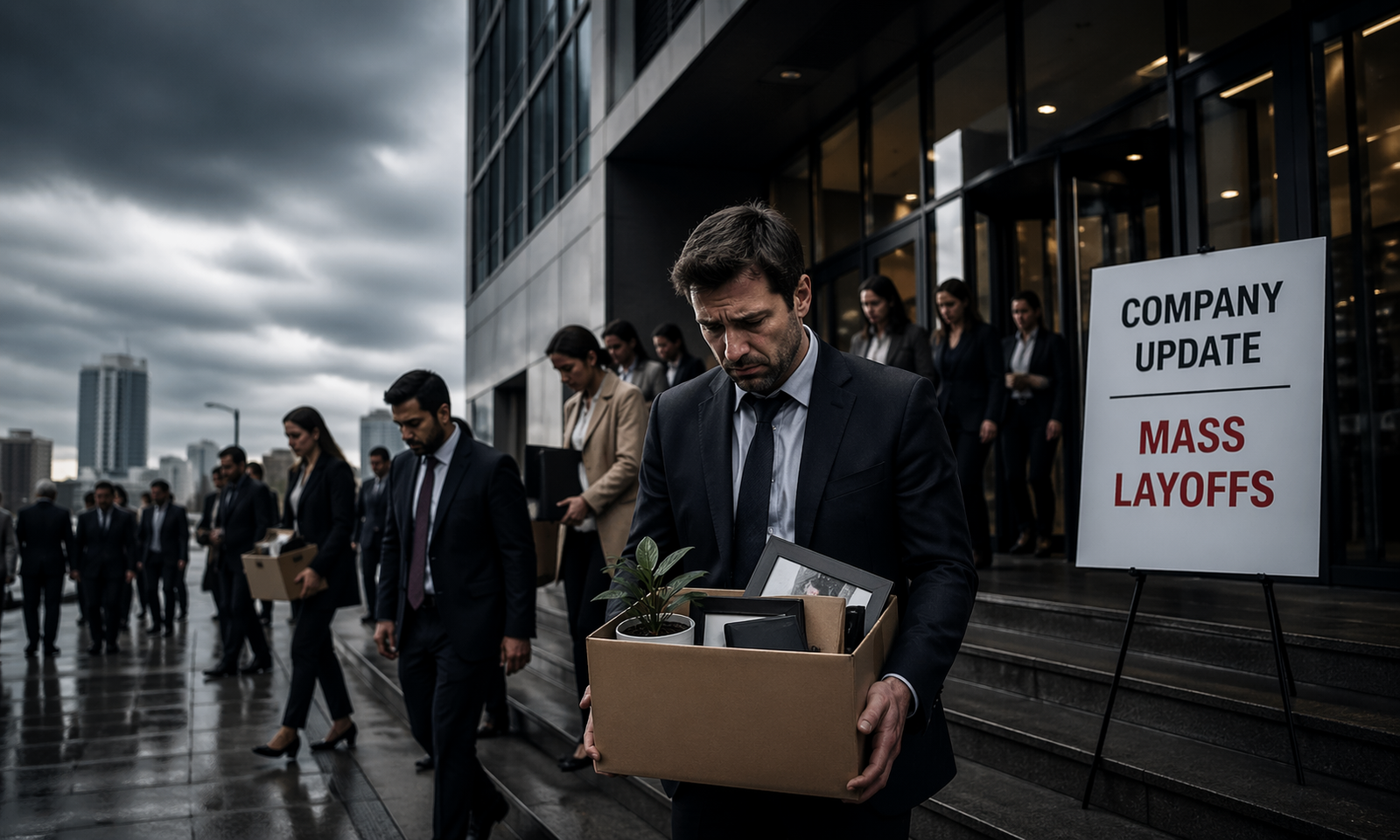
The 2026 corporate layoff wave is a series of mass job reductions affecting the global workforce, driven primarily by investments in artificial intelligence and structural cost cutting. By April 21, 2026, over 217,000 jobs had been eliminated across all sectors. The technology industry leads these reductions, accounting for more than 73,000 job losses across 95 companies in the first four months of the year. Unlike previous economic downturns tied strictly to inflation or pandemic recovery, the 2026 cuts represent a permanent structural shift. Companies are replacing human roles with automated systems, eliminating middle management, and flattening corporate structures to fund massive AI infrastructure projects.
The Core Drivers Behind the Cuts
If you lost your job in 2026, your performance review probably had nothing to do with it. Mass terminations are now driven by top-down boardroom mandates to restructure costs.
Artificial intelligence is the primary catalyst. Corporate leaders are heavily investing in AI infrastructure, and they are funding these billion-dollar data centers by shrinking payroll. AI tools are actively replacing jobs in coding, data analysis, customer support, and middle management. A survey from the first quarter of 2026 showed that nearly 48% of tech layoffs were directly linked to AI automation. Companies realize they simply need fewer people to execute the same volume of work.
The secondary driver is the elimination of “management bloat.” Consulting firms spent 2025 advising large corporations to flatten their reporting structures. In 2026, we are seeing the execution of those plans. Entire tiers of middle management are being wiped out. When a company removes a management layer, the remaining leaders absorb the responsibilities, and automation tools fill the operational gaps.
The final factor is a correction from the aggressive hiring periods of 2020 through 2022. Companies hired rapidly to meet pandemic demand. As consumer habits normalized and interest rates remained challenging, executives found themselves overstaffed. They are now reducing headcounts to what they consider efficient baseline levels to protect their profit margins and satisfy investor expectations.
Technology Sector Reductions
The tech industry is the epicenter of the 2026 layoffs. The scale and speed of these cuts are unprecedented, with major corporations treating job reduction as a necessary step for future growth.
Meta platforms began the year by cutting 1,000 jobs from its Reality Labs division in January. CEO Mark Zuckerberg recognized the failure of the company’s massive metaverse investment and pivoted resources entirely toward AI. By April, Meta announced a much larger secondary cut. The company is currently preparing to eliminate 8,000 jobs, roughly 10% of its global workforce, starting on May 20. This move is designed to create a flatter corporate structure and fund AI development.
Amazon executed severe cuts early in the year. On January 28, the company announced the elimination of 16,000 corporate roles. This followed a previous cut of 14,000 white-collar jobs late in 2025. Amazon is automating its logistics and reducing corporate overhead to maintain its profitability in a slower e-commerce market.
Oracle initiated one of the most aggressive workforce reductions of the year. Straining under the financial pressure of building AI data centers, the company began cutting roles on the technology side where executives felt they were not seeing enough return on investment. Oracle is reportedly cutting between 20,000 and 30,000 positions globally. India absorbed a massive hit, losing about 10,000 roles, or 20% of the local workforce. Oracle Financial Services Software also let go of 1,000 employees. Terminations were handled coldly, with staff receiving early morning emails from “Oracle Leadership” revoking their access.
Snap Inc. cut 1,000 jobs, or 16% of its full-time workforce, in mid-April. CEO Evan Spiegel cited rapid advances in AI as a tool to reduce repetitive tasks and increase speed. The company was also responding to pressure from an activist investor who claimed Snap had over-hired.
Other significant tech cuts include Dell, which cut 11,000 jobs early in the year. Block reduced its staff by a massive 40% to fund its own AI sector expansion. Atlassian fired 1,600 employees, about 10% of its staff. Atlassian’s CEO directly acknowledged that AI is fundamentally changing the number of roles required in certain areas. Pinterest cut nearly 15% of its workforce, reallocating those resources entirely to AI-focused roles. Workday also cut 400 employees, citing a need to realign staffing with current priorities.
Finance and Corporate Consulting
The financial sector faces slower deal flow and the same automation pressures as the tech industry. AI tools are increasingly handling the financial modeling and data analysis tasks previously done by junior analysts.
Citigroup started 2026 with an aggressive restructuring plan. In January, the bank cut 1,000 jobs. This is the first wave of a massive corporate mandate to eliminate 20,000 roles entirely, a move expected to save the bank roughly $200 million.
Morgan Stanley cut 3% of its total workforce in March. The 2,500 job losses spanned across investment banking, trading, wealth management, and investment management divisions.
Media and Entertainment
Media companies are struggling with declining ad revenues and shifting consumer habits.
The Washington Post announced in February that it was laying off one-third of its staff across the newsroom and other departments. The BBC announced it will cut up to 2,000 jobs, nearly one in ten employees, due to severe financial pressures. Disney planned the elimination of 1,000 positions, heavily targeting its marketing department, to streamline operations.
Logistics, Retail, and Manufacturing
The physical economy is not immune to the 2026 cuts. Automation in supply chains and a slowdown in consumer spending are forcing major traditional corporations to shrink.
UPS announced the elimination of 30,000 operational jobs. The delivery giant is cutting costs as it handles fewer Amazon deliveries and faces a broader drop in shipping volume.
In the automotive sector, Volkswagen announced a massive restructuring plan in March. Facing brutal tariffs and falling sales in China and North America, VW will lay off 50,000 employees by 2030. General Motors also cut 1,300 jobs in April. Renault SA plans to reduce its global engineering workforce by up to 2,400 employees over the next two years.
Retail and consumer goods are seeing similar distress. High street retailers Claire’s and The Original Factory Shop entered administration in January, putting 2,500 jobs at risk. Heineken announced it will cut 6,000 jobs globally, roughly 7% of its workforce, as the beer industry deals with weak demand. Stanley Black & Decker closed a manufacturing facility in Connecticut and cut 300 jobs due to declining product demand. Ashley Furniture cut hundreds of jobs at its Texas plant. Nike eliminated 775 jobs, primarily at distribution centers in Tennessee and Mississippi, as it automates its supply chain. Chemical giant Dow is cutting 4,500 jobs to focus on AI and automation integration.
The Reality of Modern Terminations
The way companies handle layoffs has changed. Empathy is gone, replaced by risk protocol.
When a corporate layoff happens in 2026, digital access is cut immediately. Employees wake up to find their email disabled, their Slack deactivated, and their security badges turned off. This happens before they even read the termination email. Companies treat this as a standard security measure, but the psychological impact on the worker is severe. High performers who have dedicated a decade to a single company are finding themselves locked out without a single conversation with their manager.
These cuts carry heavy financial consequences. High-earning corporate employees heavily rely on Restricted Stock Units (RSUs) as part of their compensation. When an employee is laid off, unvested RSUs are usually forfeited entirely. The financial hit includes lost salary, lost bonuses, and years of wiped-out equity appreciation. Severance packages are highly inconsistent. Some workers receive several months of pay and extended health benefits, while others get the bare minimum required by state law.
The 2026 layoff wave is redefining job security. Public financial strength and individual performance no longer protect you from termination. Companies are prioritizing artificial intelligence and lean operations over human capital. The workforce is adapting to an environment where high stress and constant instability are simply the new baseline.