Dr. Laureen Meroueh and her Billion Dollar Plan to Reshaping the Steel Industry
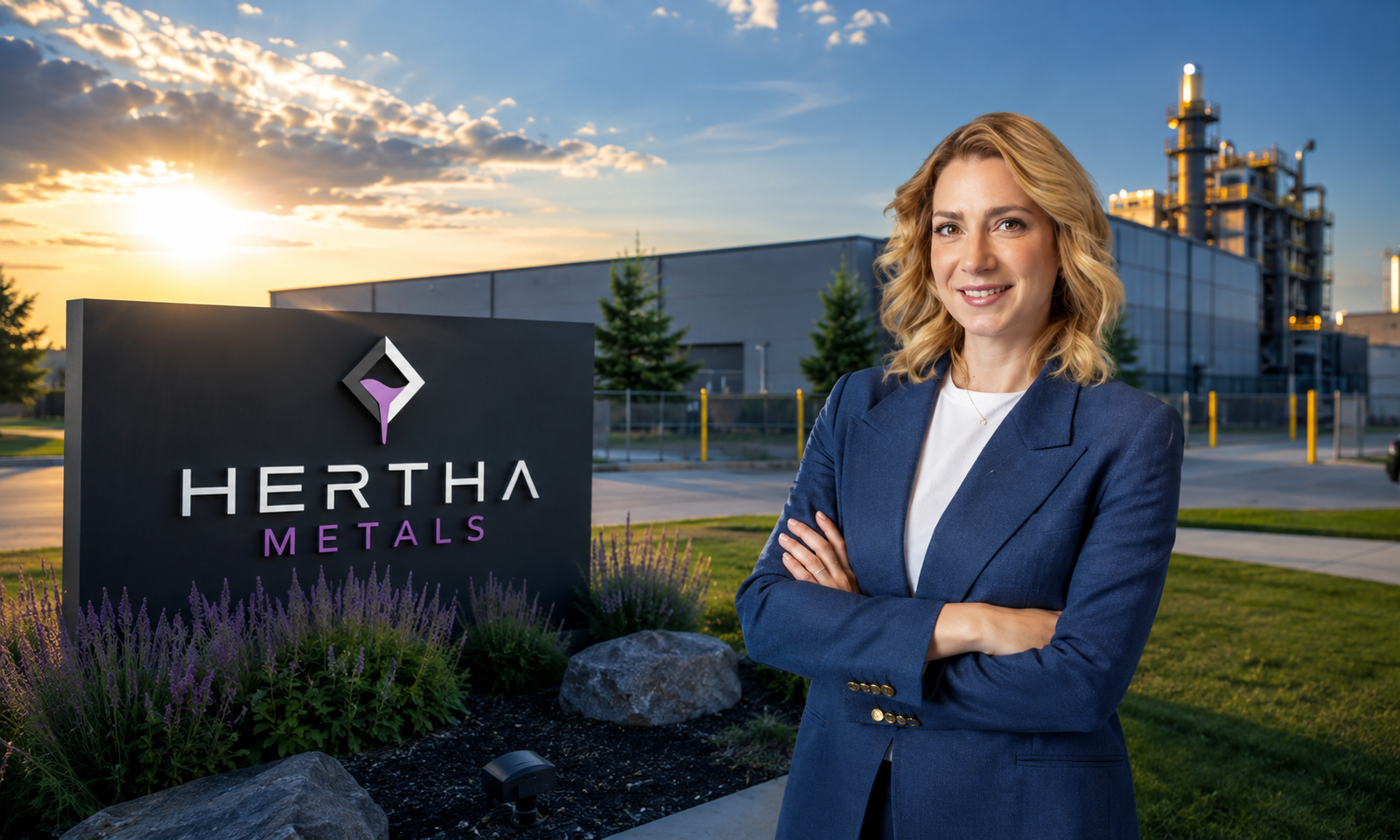
Dr. Laureen Meroueh is a materials scientist and the founder and chief executive officer of Hertha Metals. She operates in the industrial manufacturing sector. Her current primary project involves restructuring how global steel is produced. She focuses on removing coal from the smelting process to eliminate carbon emissions entirely. Meroueh is building a green steel infrastructure with a target valuation and capital requirement reaching one billion dollars. This project demands heavy engineering and physical plant construction rather than software development.
The Problem with Traditional Steel
Steel makes the modern world possible. Look at the structures around you right now. You see this metal in the frame of your office building. You see it in the car parked outside. You rely on it for the bridges you cross every single day. Global manufacturers produce almost two billion tons of it every single year. The problem lies entirely in how we make it.
The traditional process is incredibly dirty and has barely changed in over a century. Mining companies dig iron ore out of the ground. This raw ore contains oxygen. To turn that raw ore into pure iron, we must remove the oxygen. For hundreds of years, humans have used coal to do this specific job. Factory workers bake coal into a dense substance called coke. They dump this material into massive blast furnaces along with the iron ore.
The furnace operators heat the structure to extreme temperatures. The carbon in the coal reacts directly with the oxygen in the iron ore. This chemical reaction strips the oxygen away and leaves pure iron behind. It also creates a massive and dangerous byproduct. The carbon and oxygen combine to form carbon dioxide. This gas floats directly out of the smokestacks and into the atmosphere. The steel industry alone creates roughly eight percent of all global carbon emissions. It is a massive environmental burden. We cannot simply stop making metal. The world needs new housing and new transit systems. We absolutely need a completely new way to process the raw materials.
The Hydrogen Solution
This is exactly where Laureen Meroueh applies her expertise. She realized very early that tweaking the old method would never work. We cannot just put a better air filter on a traditional blast furnace. We have to change the fundamental chemistry of the entire operation. Meroueh developed a process that uses hydrogen instead of coal.
The logic behind this shift is incredibly straightforward. If you pump hydrogen gas into a hot furnace filled with iron ore, the hydrogen reacts with the oxygen. When hydrogen and oxygen combine, they do not make carbon dioxide. They make water. The only exhaust coming out of this new furnace is harmless water vapor. You get the exact same pure iron without any of the climate damage.
People in the industry call this green steel. The basic concept has existed in chemistry textbooks for decades. The difficulty lies entirely in taking that concept out of a university laboratory and putting it into a massive commercial factory. Meroueh spent years studying exactly how to do this. She looked at the physical geometry of the furnaces. She studied how the gases flow through the crushed raw materials. She engineered a specific system designed to maximize energy efficiency and bring the final cost down.
The Billion Dollar Hurdle
Fixing the chemistry equation is only the first step. The real challenge is building the physical factory. This brings us to the harsh financial reality of heavy industry. You cannot start a steel company in your garage with a borrowed laptop. You cannot launch a viable pilot program for fifty thousand dollars.
Building a steel plant requires massive industrial equipment. It requires massive plots of commercial land. It requires a permanent and immense supply of clean electricity. Meroueh understands that completely replacing the old system will cost at least a billion dollars in capital investment. This staggering number scares away most traditional venture capitalists.
Technology investors usually prefer software companies. A software team can build a new phone application for two million dollars and reach ten million users in six months. Hardware takes years to build. A steel plant takes years to permit and construct before it ever sells a single piece of product. Investors must wait a very long time to see their money return. Meroueh has to convince the financial world that the wait is worth the risk. She has to prove that the market for clean metal is so massive that it justifies a billion dollar investment upfront.
The Hungry Market
Meroueh possesses a massive advantage in her sales pitch to these investors. The biggest manufacturing companies in the world are begging for this exact product.
Think about major car manufacturers. They are currently spending billions of dollars to build electric vehicle fleets. They want to tell their customers that their cars are completely green. But if the heavy metal frame of the electric car is forged using dirty coal, the vehicle is not truly environmentally friendly. These car companies need clean steel to meet their own strict climate pledges.
The same rule applies to major construction firms building city skyscrapers. They face strict new government regulations regarding their corporate carbon footprints. The demand for clean metal already exists today. Corporate buyers are lining up and signing early contracts for green materials that do not even exist yet. Hertha Metals does not have to worry about finding willing customers. The company only has to worry about building the product fast enough to satisfy the demand. Meroueh knows that whoever builds the first reliable commercial supply of clean metal will control the market for the next century.
Competing on Price
The final boss in this heavy industry is the price tag. Traditional steel is incredibly cheap because the coal industry is deeply established. The physical infrastructure to dig and ship coal has existed for generations.
Green steel is currently much more expensive to manufacture. Hydrogen gas costs real money to produce. Running the new electric furnaces requires massive amounts of clean electricity from solar farms or wind turbines. If green steel costs twice as much as dirty steel, most construction companies will refuse to buy it. Their internal profit margins are too thin to absorb the premium.
Meroueh designed the Hertha Metals process specifically to attack this exact cost issue. She is not just trying to make clean metal. She is trying to make clean metal that costs exactly the same as dirty metal. Her technology aims to use less raw energy than competing green methods. As the cost of solar power and wind power continues to drop globally, the cost of making hydrogen drops right along with it. Time is actively working in her favor. The gap in price between dirty metal and clean metal shrinks every single month.
Overcoming the Deep Tech Stigma
Meroueh faces a unique cultural barrier in the modern startup world. Silicon Valley culture largely dictates how new businesses get funded. That specific culture rewards fast failure and quick pivots. If a social media platform fails to gain traction, the founders just write new code the very next morning.
You cannot pivot a physical steel plant. If you build a giant industrial furnace incorrectly, you lose hundreds of millions of dollars instantly. This harsh reality makes investors incredibly nervous about funding physical technology. They call this sector deep tech.
Because of this fear, Meroueh has to act as an educator as much as a chief executive officer. She spends massive amounts of time explaining basic heat transfer science to finance professionals. She has to show them the exact math. She has to prove that the fundamental engineering risk is completely resolved. Her personal credibility gives her a strong advantage here. When a trained materials scientist explains the exact physics equations to a banker, the banker actually listens.
The Global Scale of the Problem
We need to understand why this specific mission matters so much right now. We cannot solve global warming just by driving electric cars and drinking from paper straws. The heaviest polluters on earth are the invisible industries.
Cement making and steel making are the twin engines driving modern society. They operate completely out of sight. Most people never visit a working steel mill. Most people never think about where the metal inside their kitchen refrigerator actually comes from. But these hidden factories are actively changing the global climate every single day.
If we want to prevent catastrophic weather changes, we absolutely have to fix heavy industry. Laureen Meroueh chose one of the hardest possible problems to solve. She could have taken her advanced degree and built a very comfortable career at an established technology company. She chose instead to fight a massive global industry heavily dependent on fossil fuels.
Moving from Lab to Factory
Hertha Metals is currently navigating the hardest transition any hardware company faces. They are moving out of the laboratory environment. Working with small amounts of iron in a perfectly controlled room is relatively easy. Running a pilot plant that produces tons of metal every single day is an entirely different game.
Materials behave differently when you scale them up. Heat flow becomes much harder to control. Supply chains become incredibly complicated. You have to secure reliable daily deliveries of raw iron ore. You have to hire teams of specialized factory workers to monitor the machinery. You have to navigate complex local zoning laws and secure difficult environmental permits.
Meroueh is currently building the physical footprint of her vision. Every successful test at the pilot level unlocks more funding from skeptical investors. This is a slow and highly deliberate process. There are absolutely no shortcuts in heavy manufacturing. You have to prove every single step works perfectly before you can build the next larger version of the machine.
The Logistics of a New Industry
Building the furnace is only half the battle. Hertha Metals also has to figure out how to move materials around the country efficiently.
The traditional steel industry built its factories near coal mines and major waterways. They spent a century optimizing their shipping routes. A green steel company has to build an entirely new map. They need to place their factories near massive sources of renewable energy. They need constant access to clean water to produce the hydrogen gas.
This logistical puzzle requires brilliant urban planning alongside the core engineering. Meroueh has to negotiate with local governments for power grid access. She has to ensure the local roads can handle the weight of constant heavy truck traffic. Every single logistical detail must be perfect to keep the final cost of the metal down. A brilliant furnace is completely useless if you cannot afford to ship the finished product to the customer.
The Future of Manufacturing
The work happening at Hertha Metals represents a total shift in how America builds things. For a long time, the country exported its heavy manufacturing to other parts of the world. The national focus moved entirely to digital products and internet services.
Now, a new wave of ambitious founders is bringing physical building back to the forefront. They are combining modern environmental science with classic industrial ambition. Meroueh stands at the absolute front of this new movement.
Her billion dollar plan is completely realistic. The global steel industry generates over a trillion dollars in revenue every single year. Capturing even a tiny fraction of that massive market creates an incredibly valuable enterprise. More importantly, replacing the old methods will physically clean the air we breathe. It secures a reliable supply of core building materials for the next generation without destroying the environment in the process. We are watching the complete redesign of the industrial world happen in real time.