
Inside Atherton Where AI Founders Spend Their Billions on Real Estate
Atherton is a small town in California. It sits right in the middle of Silicon Valley. For years it has been a wealthy area. Now it holds the title of the most expensive ZIP code in the United States. The recent explosion in artificial intelligence technology created a massive wave of new wealth. Founders and executives from companies building this technology are buying up the limited land in this town. They pay entirely in cash. This influx of money pushed housing prices to levels never seen before.
The Geography of Extreme Wealth
Atherton occupies a very specific slice of the San Francisco Peninsula. It sits perfectly positioned between the major tech hubs. San Francisco is thirty miles to the north. San Jose is twenty miles to the south. More importantly, Stanford University and the venture capital offices of Sand Hill Road are practically next door.
This geographic convenience is the primary reason tech leaders flock here. A founder running an artificial intelligence company cannot waste two hours a day sitting in traffic. They need to be near their engineers and their investors. Atherton offers that proximity while providing an illusion of total isolation.
The town covers roughly five square miles of flat land. The entire municipality is shaded by giant oak trees and redwoods. The local zoning laws are famously strict. Atherton has no commercial zones. You cannot buy a cup of coffee anywhere within the town borders. You cannot buy groceries or fill your car with gas. The founders who live here must drive to neighboring Menlo Park or Palo Alto to access basic services. The town government established these rules decades ago to prevent outside traffic from entering their streets. They succeeded completely.
The Shift From Silicon to Artificial Intelligence
Wealth in this region always arrived in distinct waves. The first wave came from the early hardware companies that built silicon chips. The second wave rolled in with the early internet boom. The third wave belonged to social media platforms and smartphone applications. Now the fourth wave is entirely driven by artificial intelligence.
This current economic wave is fundamentally different from the others. The sheer scale of the money is unprecedented. Companies focusing on large language models and generative artificial intelligence are raising billions of dollars in single funding rounds. The companies building the physical hardware to run these models are seeing their stock prices multiply rapidly.
When a hardware company experiences a historic stock surge, its senior employees suddenly find themselves holding tens of millions of dollars in liquid assets. They want to diversify their holdings. Real estate is the most logical choice. They pull their money out of the stock market and drop it directly onto the streets of Atherton. The same process happens when private artificial intelligence startups allow their early employees to sell their private shares on secondary markets. The wealth transfers from digital stock accounts into physical land.
The Real Estate Reality
You cannot understand the Atherton market by looking at standard real estate metrics. The median home price hovers around eight million dollars, but that number includes empty lots and unlivable structures. A functional modern estate easily costs twenty million dollars. The most spectacular properties trade hands for over forty million dollars.
The buyers operate with complete ruthlessness. They do not care about the existing house on the property. They are strictly buying the dirt. Most buyers tear down the existing structures immediately after closing the deal.
The transaction process is equally aggressive. Normal homebuyers rely on mortgages and require bank appraisals. The artificial intelligence executives buying in Atherton skip all of those steps. They make their offers entirely in cash. If a property lists for fifteen million dollars, a tech founder might offer eighteen million dollars in cash just to shut down the bidding war immediately. They waive all inspections. They waive all contingencies. They close the deal in ten days. Standard wealthy buyers cannot compete with this level of liquid aggression.
Architecture for the New Elite
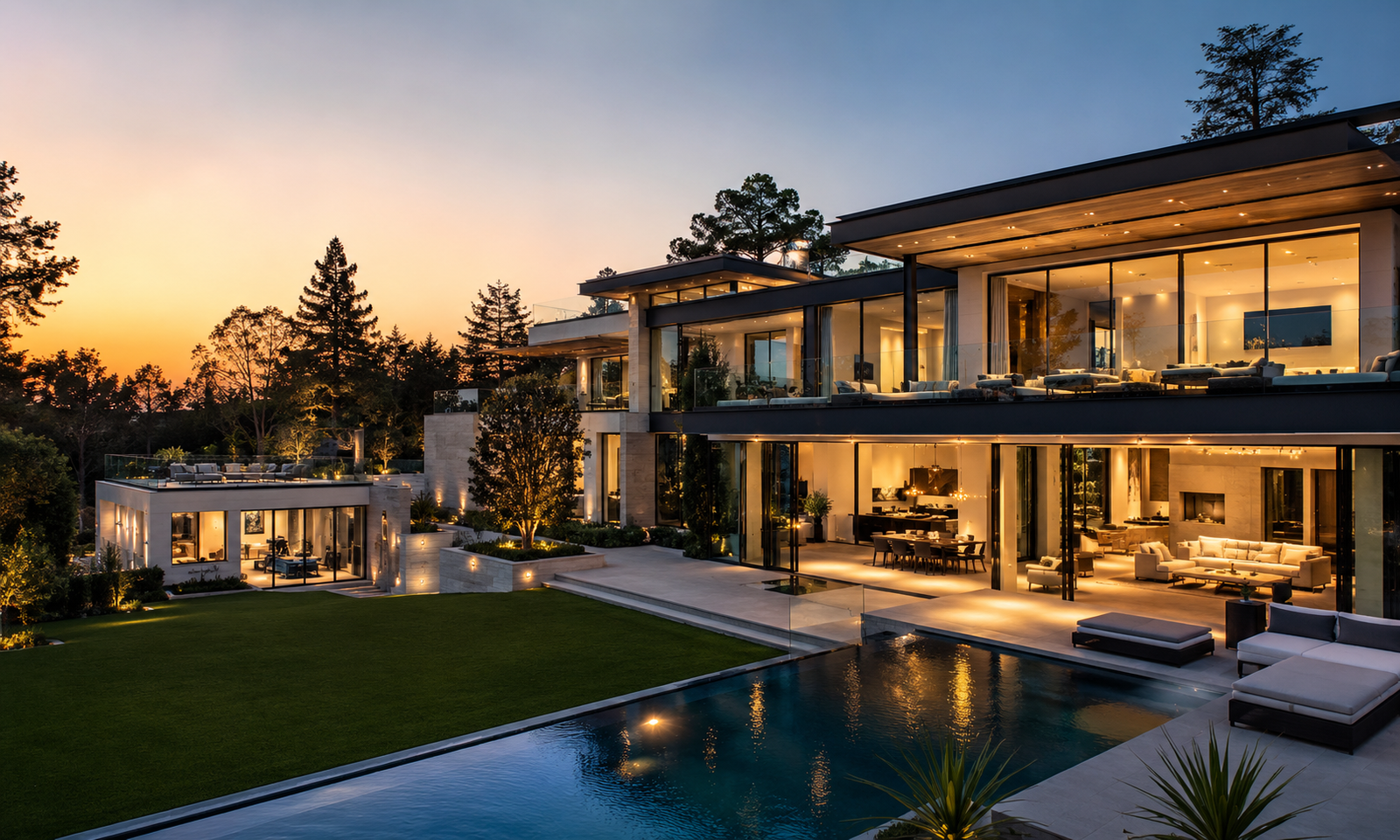
Once they secure the land, the new owners begin massive construction projects. The architecture demanded by the artificial intelligence elite differs greatly from previous generations. Older mansions in Atherton featured grand columns, formal dining rooms, and classical European designs. The new tech founders want entirely different features.
They build sleek modern fortresses. They heavily prioritize health and wellness facilities. A standard new build includes a commercial grade fitness center, a sauna, a cold plunge pool, and a dedicated massage room. They want the amenities of a luxury spa perfectly integrated into their private residence.
Technology is naturally woven into the foundation of these new homes. The server rooms in these houses rival small corporate data centers. The climate control, the lighting, the window shades, and the security systems are all fully automated and controlled via custom software. Some founders even install independent power grids using advanced solar panels and massive battery storage systems to ensure their homes function during utility blackouts.
The Business of Privacy
Privacy is the most valuable commodity in Atherton. When you run a company that dominates global headlines, you attract unwanted attention. The founders building the future of artificial intelligence require immense security.
The town mandates that properties must be at least one acre in size. This rule guarantees physical distance between neighbors. The buyers increase that distance by building massive perimeter walls and installing heavy metal gates.
The security operations are intense. Many estates employ active monitoring systems with thermal cameras and license plate readers. Private security guards sit in unmarked vehicles near the driveways. The local police department operates incredibly fast. Because the town is small and well funded, police response times are measured in low single digits. The entire infrastructure of the community exists to keep strangers away from the residents.
Tension Among the Trees
The rapid influx of new money creates quiet friction within the town. The older residents include retired lawyers, traditional finance executives, and older tech pioneers. They view Atherton as a quiet sleepy suburb. They enjoy the silence.
The new buyers treat their properties like active corporate compounds. The endless construction is the primary source of anger. When you have dozens of properties being demolished and rebuilt simultaneously, the town sounds like an active industrial zone. Heavy trucks destroy the pavement on the narrow streets. The noise of chainsaws and backhoes ruins the peaceful atmosphere.
The culture clash extends to daily behavior. The older generation values discretion. The new generation of founders often uses their homes to host massive networking events and corporate retreats. They bring in private chefs and valet parking services for parties that last late into the night. The older residents frequently complain to the town council about the noise and the catering trucks blocking the streets. The council tries to enforce strict noise ordinances and construction hours, but the new owners gladly pay the fines. To a billionaire, a thousand dollar noise citation is just a rounding error in the cost of throwing a good party.
The Market Scarcity
Atherton will never get any larger. The borders are fixed. The town contains roughly two thousand five hundred homes. No new land can be created. This absolute scarcity is the economic engine driving the prices upward.
If you want to live in Atherton today, you must convince a current resident to leave. Real estate agents in the area spend most of their time trying to pry properties out of the hands of the older generation. The most lucrative deals happen entirely off the market. Agents call tech founders directly to pitch properties that are not publicly listed. This private shadow market prevents the general public from ever seeing the true highest sales figures.
The artificial intelligence boom ensures a constant supply of new buyers. Every time a new machine learning startup reaches a massive valuation, a new group of millionaires starts looking for housing on the Peninsula. The supply remains exactly the same while the demand multiplies every single year.
The Tax Burden and Local Economy
Owning property in Atherton requires massive ongoing capital. The purchase price is only the initial entry fee. The state of California assesses property taxes based on the purchase price of the home. When a tech executive buys a twenty million dollar estate, their annual property tax bill frequently exceeds two hundred thousand dollars.
This tax revenue completely funds the local municipal government. The town does not have to worry about budget deficits. They use the massive influx of property tax money to fund an incredible local infrastructure. The police department gets top tier vehicles. The public works department keeps the roads immaculately clean. The town recently built a modern library and civic center completely funded by resident donations and tax revenue.
However, this immense local wealth creates a strange paradox. Because the town bans commercial development, Atherton generates zero sales tax. The residents spend their vast wealth in neighboring towns. When an artificial intelligence founder buys a luxury car or eats at an expensive restaurant, the neighboring cities of Menlo Park and Redwood City collect the tax revenue. Atherton operates essentially as a residential tax shelter completely divorced from the normal economic activities that sustain typical American cities.
The Mindset of the Buyer
The business leaders buying into Atherton share a specific psychological profile. They are obsessive problem solvers. In their corporate lives, they build complex algorithms that process massive amounts of data. They apply that exact same intense logic to their personal real estate.
When an artificial intelligence executive designs a home, they treat it like a software product. They demand efficiency. They want the structural engineering to be perfect. They interview architects and landscape designers the same way they interview senior software engineers. They expect answers backed by exact data for every single decision regarding the property.
They also view these massive homes as necessary investments in their own personal productivity. Running a major technology company requires extreme mental endurance. The founders believe that a perfectly optimized home environment allows them to perform better at the office. The cold plunge pools and the silent meditation rooms are not just luxuries. The buyers see them as necessary tools for maintaining their competitive edge in a ruthless industry. They are willing to pay twenty million dollars for a house because they believe the perfect house helps them build a billion dollar company.
The Ultimate Wealth Concentrator
Atherton is no longer just a town. It is a physical manifestation of extreme corporate success. It operates as the ultimate scoreboard for the technology industry.
The artificial intelligence sector is currently absorbing a massive portion of global capital. The companies building these systems are generating wealth at a speed that breaks historical records. Atherton proves that this digital wealth ultimately demands a physical footprint. The founders taking over this town are cementing their status at the absolute top of the economic hierarchy.
The prices in this ZIP code will not correct downward. The residents are entirely insulated from rising interest rates because they do not use bank loans. They are insulated from minor economic recessions because their core wealth is so vast. The artificial intelligence boom successfully transformed a quiet patch of California woods into an untouchable fortress of private capital.