

The Most Influential Woman Leader Making a Difference – 2026
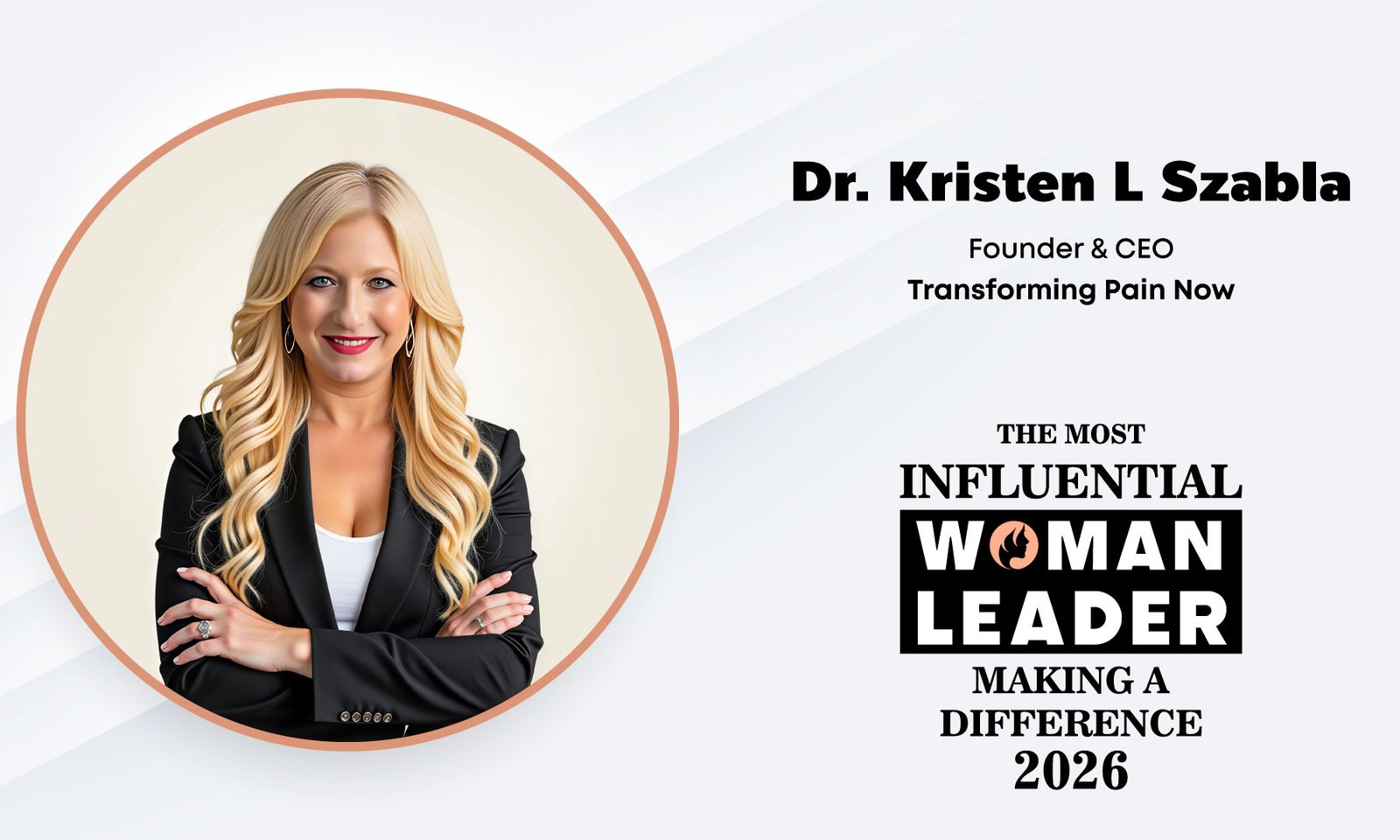
Dr. Kristen L. Szabla: Transforming Pain Into Authentic Power by Leveraging Neuroplasticity
Dr. Kristen L. Szabla is the Founder of Transforming Pain Now, an organization dedicated to helping individuals and institutions navigate trauma and mental illness through the practical application of neuroscience and compassionate care. As a survivor of childhood sexual abuse and a subsequent brutal assault during her young adult years, she intimately understands the profound and long-lasting aftermath that trauma inflicts on the mind, body, personal identity, and fundamental sense of safety. Dr Kristen developed a framework based on her knowledge of neuroplasticity, the scientific understanding that the human brain is not fixed and can physically rewire itself based on experience, to help others realize that healing is structurally achievable. The Influential Today Magazine is proud to recognize her as one of “The Most Influential Women Leaders Making a Difference – 2026,” as she has dedicated her career to replacing societal shame with neurobiological understanding, guiding survivors and corporate leaders alike toward authentic power, emotional regulation, and lasting recovery.
The Genesis of Transformation
The foundation of Dr. Kristen’s life’s work was forged in the crucible of profound personal trauma. For years, she was forced to navigate the debilitating aftermath of severe abuse and mental illness, grappling with the devastating impact these experiences had on her identity and psychological safety. The pivotal turning point in her life did not come from simply trying to forget the past, but from discovering the hard science of the human brain.
When she learned about neuroplasticity, it fundamentally altered her trajectory. The realization that the brain is not a static, permanently damaged organ, but rather a dynamic structure capable of profound change, provided a scientific basis for hope. This revelation proved that healing was not just a theoretical concept, but a biological possibility. This single, powerful truth became the bedrock of Transforming Pain Now. She made the conscious decision to take the profound pain she had endured and transform it into authentic power, dedicating her life to helping others transition out of fear, shame, and powerlessness.
Reclaiming the Voice
For many survivors, silence is a heavy burden imposed by trauma. For Dr. Kristen, the process of finding her voice was not the result of a single mentor stepping in to save her, but rather a gradual, deeply personal process of reclaiming and learning to love herself.
During her earliest years, when her external world felt entirely terrifying, she survived by retreating into her own mind. She relied on her imagination to conjure a sense of protection, envisioning light and a loving figure to mentally shield herself from the darkness around her. As she grew older, formal education became her sanctuary. Delving into science gave her the precise, objective language needed to articulate exactly what trauma had done to her nervous system and her body. Having the right words was revolutionary; it actively transformed her internalized shame into self-compassion and understanding.
As an avid reader, she held onto literature that instilled hope, absorbing it with every part of her being. It was the combination of this acquired knowledge, unwavering faith, relentless perseverance, and an absolute refusal to let silence define her existence that empowered her to speak out. Today, she uses that hard-won voice as a beacon, ensuring that others suffering in the shadows know unequivocally that they are not alone.
From Personal Pain to Public Purpose
The decision to turn her personal history into a public mission was born from a deep sense of empathy for those who suffer in silence. Dr. Kristen recognized that countless individuals live with the false belief that their pain has permanently defined their character and their future. Because she knew exactly what it felt like to be trapped in terror, isolation, and shame, she felt an overwhelming responsibility to share what she had learned.
She recognized that trauma responses are not indicators of weakness. Rather, they are highly effective adaptations made by the brain and body to survive overwhelmingly dangerous experiences. Once she understood that healing could be systematically approached through evidence-based neurobiological strategies that harness neuroplasticity, she felt a profound calling to build a platform larger than her own individual survival story. Transforming Pain Now was created to serve as that vehicle for widespread change.
Creating Real, Lasting Change
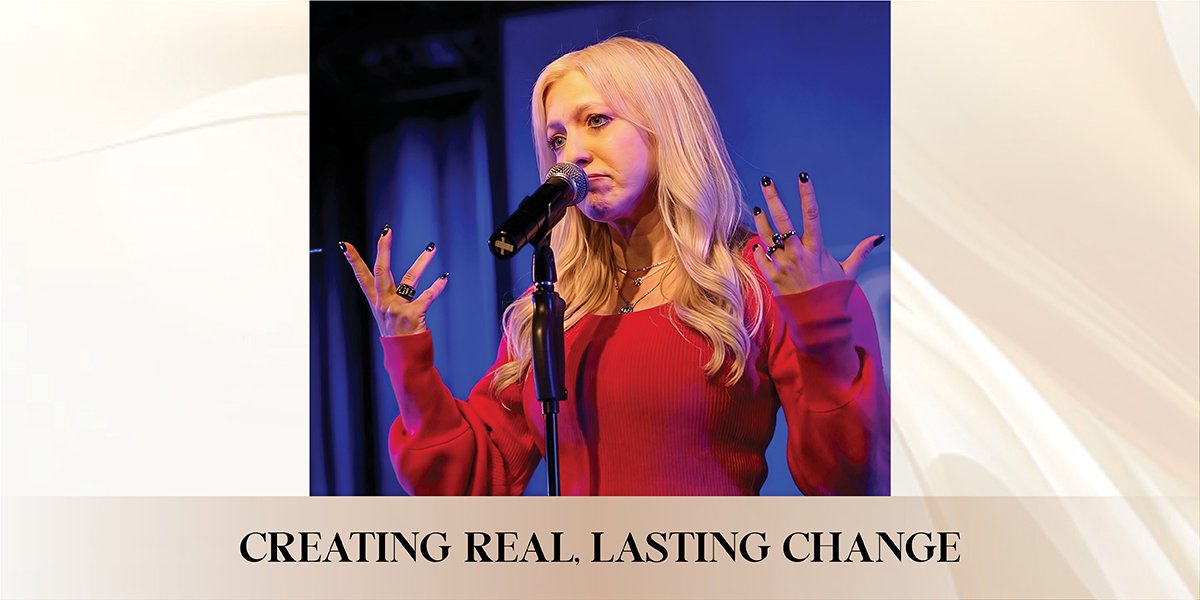
Through Transforming Pain Now, Dr. Kristen is committed to facilitating real, enduring transformation across multiple demographics. Her work targets both individuals and larger institutional structures.
- For Survivors and Individuals: The goal is to facilitate a shift from states of fear, shame, anxiety, and deep despair toward true empowerment, nervous system regulation, hope, and healing.
- For Organizations and Leaders: The focus shifts to systemic culture. She educates leaders on the absolute necessity of psychological safety. She emphasizes that the emotional well-being of a workforce is not an optional corporate luxury; it is a fundamental requirement for fostering healthier individuals, establishing stronger communication channels, and ultimately achieving better organizational performance.
At its very core, the mission of Transforming Pain Now is to help people recognize that they are wounded, not broken, and that meaningful, measurable change is always within reach.
The Intersection of Science, Healing, and Advocacy
Dr. Kristen’s methodology is unique because it seamlessly weaves together three distinct disciplines: hard science, emotional healing, and systemic advocacy. She achieves this by making complex scientific concepts understandable and ensuring that healing strategies are highly actionable.
- Neuroscience: She utilizes science to explain exactly how trauma impacts fear circuitry, drives depression, alters behavior, and affects overall mental well-being. This demystifies the symptoms of trauma.
- Neuroplastic Transformation: This pillar introduces the compassionate, relational, and practical daily work required to actually change those deeply ingrained neural patterns.
- Advocacy: She recognizes that trauma and mental illness are not merely private struggles; they are broader cultural and systemic issues. True change requires better public understanding, the creation of safer systems, and far more equitable access to care.
By operating at this intersection, she ensures that individuals receive both the emotional validation they need and the practical, evidence-based tools required to rebuild their nervous systems and, in practicality, their lives.
““We do not only help individuals cope with trauma. We guide them to the point where it no longer defines how they think, feel, or live by addressing the problem at the root – the nervous system.”
The Architecture of a Mission-Driven Life
As a founder, speaker, and leader, her daily life is a carefully orchestrated blend of direct service, high-level strategy, ongoing education, and content creation.
Her schedule is highly dynamic. Some days are dedicated to the front lines of her mission: speaking at events, teaching seminars, or meeting directly with survivors, healthcare providers, or corporate organizations. Other days are heavily focused on the strategic growth of the platform: developing comprehensive workshops, refining her public talks, creating new educational resources, and strategizing on how to make neuroscience-based healing more scalable and accessible to the public.
A constant theme in her daily life is the balancing act between depth and reach—figuring out how to serve the person directly in front of her with deep meaning, while simultaneously building an infrastructure capable of touching thousands of more lives over time.
The Profound Necessity of Hope
In her extensive work with survivors, she has learned that hope is not a superficial sentiment; it is a biological and psychological essential. Survivors of severe trauma often carry crushing burdens of shame, intense self-blame, and profound disconnection from the world around them.
However, when survivors are taught what trauma has actually done to their nervous system—and are subsequently provided with compassionate, evidence-based tools to address it—hope inevitably begins to return. She is candid about the fact that the healing journey is rarely a linear upward trajectory, but she is adamant that it is real. She has witnessed firsthand that even small, incremental moments of felt safety, increased self-awareness, and self-compassion can begin to permanently alter the course of a life. When people are finally convinced that they are not broken, they are free to believe in the possibility of becoming whole.
Navigating Vulnerability and Systemic Stigma
Building a platform centered on such deeply personal and heavily stigmatized issues has not been without its challenges. The vulnerability required to speak openly about severe abuse and mental illness is immense. There is an inherent social risk in telling the unvarnished truth about experiences that society often meets with silence, stigma, or disbelief.
Also, she faced the rigorous challenge of constructing a platform that strikes a delicate balance: it must be profoundly compassionate and honoring of lived experience, while simultaneously remaining scientifically credible and strictly evidence-based. Despite these hurdles, she firmly believes in the transformative power of radical honesty. Speaking openly, wrapped in compassion, directly attacks the root of shame, fosters deep human connection, and allows others to finally feel seen, heard, and understood, sometimes for the first time.
The Discipline of Self-Care for the Healer
Engaging daily with the heavy realities of trauma requires a rigorous commitment to personal well-being. She maintains her own health by strictly honoring the exact same principles she teaches her clients: prioritizing self-awareness, actively regulating her nervous system, engaging in continuous reflection, setting firm boundaries, and committing to intentional restoration.
She relies on consistent practices, such as yoga, that keep her physically grounded and mentally connected to her core purpose. This discipline allows her to continuously choose hope, healing, and light, even when the subject matter of her work is intensely heavy. Her personal journey has ingrained in her the understanding that tending to one’s own well-being is not a luxury separate from the mission; it is the vital engine that sustains it.
Redefining Female Leadership
As a prominent woman leader driving real societal change, she hopes her journey serves as a blueprint for others. She wants to unequivocally demonstrate that experiencing profound pain and carrying shame do not disqualify a woman from leadership. On the contrary, surviving such darkness often deepens a leader’s wisdom, bolsters their courage, expands their capacity for empathy, and sharpens their clarity of purpose.
Her message to women is clear: you do not have to remain trapped in silence, and you absolutely do not have to wait until you are “perfect” or completely healed before you use your voice. She envisions a future where more women speak truthfully and lead boldly, understanding that the processes of healing and leadership can occur simultaneously and synergistically. She reminds women that thriving authentically in the aftermath of what tried to break them can become the very strength they utilize to change the world, affirming that women are all “phenomenal,” regardless of their past circumstances.
Rewiring the Narrative on Mental Health
If there is one central thesis Dr. Kristen wishes the broader public understood, it is the fundamental redefinition of trauma responses and mental health challenges. She insists that trauma responses must stop being viewed as character flaws. They are the adaptive responses of a brain and body desperately trying to cope with overwhelming, life-threatening experiences. Making this vital distinction is what permanently replaces debilitating shame with actionable understanding, opening the literal door to effective healing.
Furthermore, she wants society to understand that healing is never a matter of simply “getting over it.” It is a dedicated, physiological process of rewiring neural patterns, actively constructing a sense of internal safety, and persistently practicing new responses over an extended period. She also emphasizes that mental health challenges are highly complex, very real brain diseases that cause the brain to wire itself in a maladaptive fashion—requiring science, patience, and compassion to resolve.
“Still I Rise” – The Philosophy of Resilience
A guiding philosophy in her life is encapsulated in the title of Maya Angelou’s famous poem, “Still, I Rise.” This phrase perfectly mirrors her own narrative of navigating through immense shame, agonizing pain, and profound darkness to eventually reach a place of self-compassion, immense courage, and enduring hope. For Dr. Kristen, the concept of resilience does not mean pretending that the pain did not happen or that the trauma wasn’t devastating. True resilience is the conscious, repeated choice—made day after day—to rise beyond it.

Vision for 2026: Accessibility and Scale
Looking toward the future, her primary focus for 2026 is aggressively expanding access to the resources of Transforming Pain Now. Her major goal is to scale the platform through the implementation of comprehensive online classes and the development of a dedicated mobile application. This technological expansion is designed to ensure that anyone—regardless of their socioeconomic status, geographic location, or demographic background—can readily access meaningful support, vital education, and practical tools for growth.
Simultaneously, she is excited to continue expanding her specialized programs tailored for survivors, healthcare providers, corporate executives, and large organizations. By scaling her reach, Dr. Kristen aims to ensure that neuroplasticity-based healing and the establishment of psychological safety can continue to create lasting, paradigm-shifting change on both a personal and a global, systemic level.





Related Post