
ChatGPT Health Is Here: The End of Googling Your Symptoms?
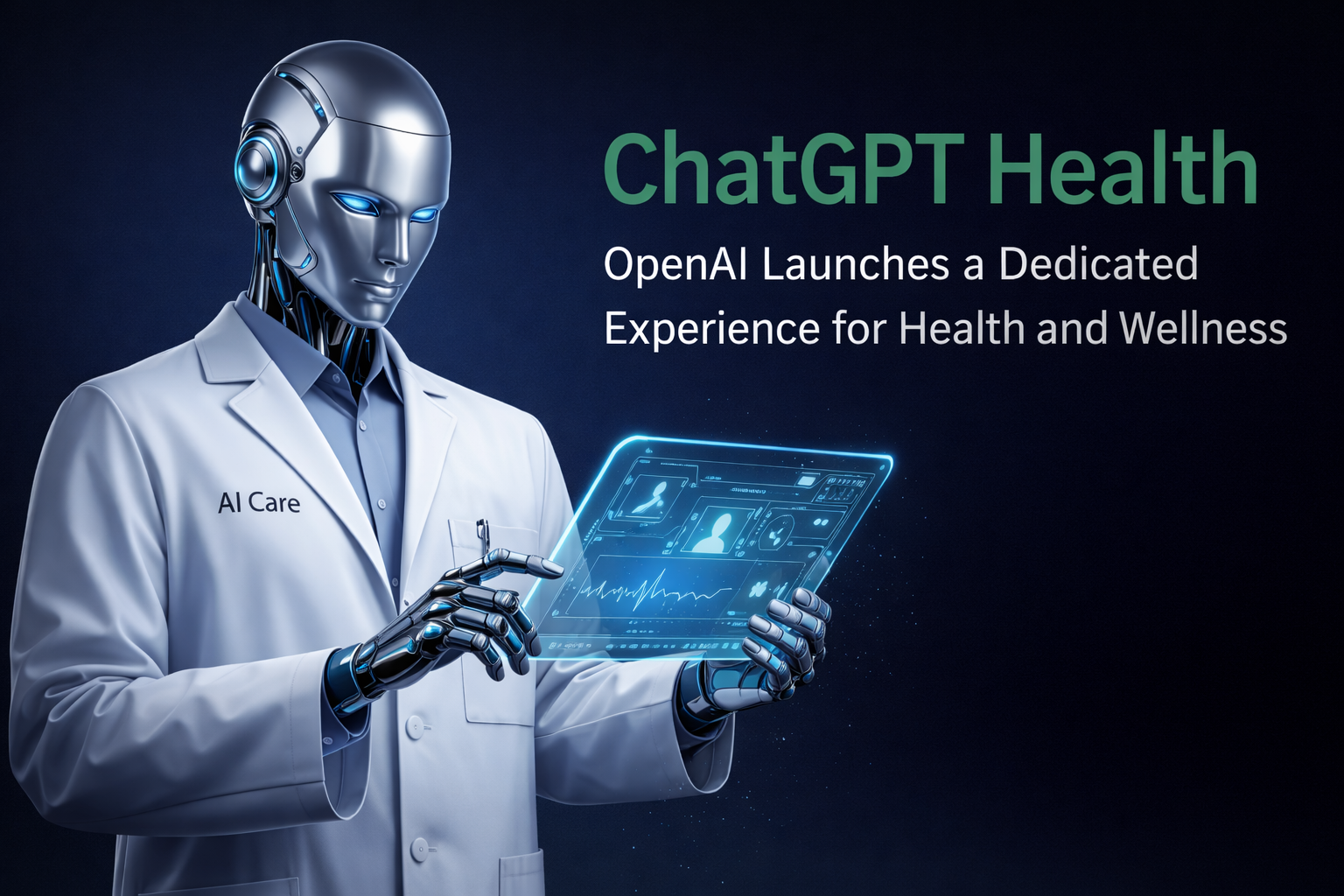
OpenAI launched ChatGPT Health on Thursday. It is a specialized version of their artificial intelligence system designed for medical use. The tool aims to help users understand symptoms, manage chronic conditions, and prepare for doctor appointments. It is currently available to Plus subscribers in the United States, with a wider rollout planned for later this year.
The End of “Dr. Google”
For the last twenty years, feeling sick meant one thing: typing symptoms into a search engine and panicking. You have a headache? The internet says it is a tumor. You have a cough? The internet says it is rare lung disease.
ChatGPT Health changes that loop. It does not give you a list of scary websites. Instead, it asks questions. It mimics the triage nurse at a clinic. If you tell the app your stomach hurts, it asks where. It asks if you ate something strange. It asks if you have a fever.
This is the biggest selling point. It creates a conversation rather than a list of links. The goal is to calm you down and give you a plan, not to diagnose you with a deadly disease five minutes after you wake up.
How It Actually Works
The app looks different from the standard ChatGPT. The interface is cleaner, with larger text and a “Panic Button” for emergencies that immediately directs you to call 911.
Symptom Checking
You can talk to it or type. If you upload a photo of a rash or a bruise, the AI analyzes it against millions of medical images. It gives you a probability, not a definite answer. It might say, “This looks like contact dermatitis (poison ivy), but watch for swelling.”
Medical Record Analysis
This is the feature that will save people hours. You can upload a PDF of your blood test results. Usually, these papers are full of confusing numbers and abbreviations like “CBC” or “Lipid Panel.” ChatGPT Health reads the file and translates it.
It tells you, “Your Vitamin D is low, which is common in winter. Your cholesterol is slightly high.” It puts the data into plain English so you can understand what is happening inside your body before you see your actual doctor.
Wearable Connection
If you give it permission, the app connects to your Apple Watch or Fitbit. It looks at your sleep data and heart rate. If it sees your resting heart rate spike for three days in a row, it might nudge you to rest or check your temperature. It acts like an early warning system.
The Privacy Wall
The immediate question everyone asks is: “Is OpenAI selling my health data?”
OpenAI anticipated this. They built ChatGPT Health on a separate server infrastructure. They call it the “Zero-Retention Vault.” According to their press release, the AI processes your conversation to give an answer, and then it forgets the personal details unless you explicitly choose to save them to a “Medical Profile.”
They claim that insurance companies cannot access this data to raise your premiums. They also state that this data is not used to train future models by default. You have to opt-in for that.
However, trust is hard to earn. Health data is the most sensitive information a person possesses. If OpenAI has a data breach, it isn’t just credit card numbers at risk; it is mental health records and HIV statuses. This security risk is the biggest hurdle the company faces.
Doctors Are Cautiously Optimistic
You might think doctors would hate this. Surprisingly, many seem relieved.
Dr. Sarah Jenkins, a general practitioner in Ohio, explained why. “I spend the first ten minutes of every appointment arguing with misinformation my patient found online,” she said. “If this tool can give them accurate, calm information before they walk in the door, it makes my job easier. We can get straight to treatment.”
The American Medical Association (AMA) released a statement shortly after the launch. They did not endorse the product fully, but they acknowledged its utility. Their main warning was clear: AI is not a doctor. It cannot feel a lump in your neck. It cannot listen to the wheeze in your lungs. It relies entirely on what you tell it. If you describe your symptoms poorly, the AI will give you bad advice.
The Mental Health Component
While the physical health features are impressive, the mental health tools might see the most use. ChatGPT Health includes a module called “Daily Check-in.”
This isn’t therapy, but it is close. It uses cognitive behavioral therapy (CBT) techniques to help users process stress. If you are anxious at 2:00 AM, you can talk to the app. It listens without judgment. It helps you reframe negative thoughts.
Therapy is expensive. In many parts of the country, waiting lists for a counselor are months long. This tool is available instantly. For someone having a panic attack, having a voice guide them through breathing exercises immediately is a game changer. It bridges the gap between feeling bad and getting professional help.
The Cost of Health
OpenAI has made a strategic move with pricing. The basic symptom checker is free for everyone. They want this to become a utility, like Google Search.
However, the advanced features—scanning blood work, connecting to your watch, and the deep mental health coaching—are part of a $20 monthly subscription.
This creates a divide. Wealthier people get a personal AI health assistant that watches their heart rate and explains their blood work. People who cannot afford the subscription just get a chatbot. Critics are already pointing out that this mirrors the inequality already present in the US healthcare system.
Why Now?
Why launch this in 2026? The technology finally caught up to the need.
Two years ago, AI “hallucinated” too much. It made things up. You couldn’t trust it with medical advice because it might invent a medication that doesn’t exist.
OpenAI spent the last year doing “Red Teaming” with real hospitals. They hired thousands of doctors to test the system, trying to trick it into giving bad advice. They claim to have reduced the error rate to less than 1% for standard triage questions.
They also faced pressure from competitors. Google has been testing its medical AI, Med-PaLM, inside hospitals for a while. Apple is turning the iPhone into a medical device. OpenAI had to move now to capture the consumer market before Apple or Google locked everyone into their ecosystems.
The Liability Question
What happens if ChatGPT Health gets it wrong? What if the app tells someone their chest pain is just heartburn, but it is actually a heart attack?
The terms of service are very specific. When you open the app, you agree that this is “information, not advice.” Legally, it is the same as reading a medical textbook. OpenAI is betting that this disclaimer protects them from lawsuits.
But legal experts aren’t so sure. If the AI acts like a doctor—asking questions, analyzing data, giving a specific recommendation—a court might decide it should be held to the same standards as a doctor. We will likely see a lawsuit regarding this within the first year.
Real World Scenarios
To understand the impact, look at how this changes a Tuesday morning.
Scenario A (The Old Way): You wake up with a weird rash. You Google it. You see photos of flesh-eating bacteria. You panic. You call the doctor, but they are booked until Friday. You go to Urgent Care, wait three hours, pay a $50 copay, and find out it is just dry skin.
Scenario B (The New Way): You wake up with the rash. You snap a photo with ChatGPT Health. It says, “This looks like standard Eczema. It is likely not an emergency unless you have a fever. Try hydrocortisone cream and monitor it for 24 hours.” You go to the pharmacy, spend $5, and go to work.
This efficiency is what insurance companies want. Every person who doesn’t go to Urgent Care for a minor issue saves the system money. Rumors are already circulating that some major insurance providers might bundle ChatGPT Health subscriptions with their health plans next year.
The Verdict
ChatGPT Health is a significant step forward. It takes the terrifying chaos of medical information and organizes it. It makes health data accessible to normal people.
It is not a replacement for a human doctor. It lacks intuition. It lacks hands. It lacks empathy. But as a tool to help you decide when to see a doctor, it is powerful.
The days of frantically searching symptoms at midnight are over. Now, you just ask the app. It is calmer, smarter, and faster. Whether or not we can trust it with our deepest secrets remains to be seen, but the shift has happened. AI is now part of your healthcare team.
What You Should Do Next
If you have a chronic condition or just want to see how it handles your medical history, you can export your last blood test result as a PDF (most patient portals allow this) and feed it into the free version of the tool. See if the explanation it gives helps you understand your own health better than you did yesterday.