
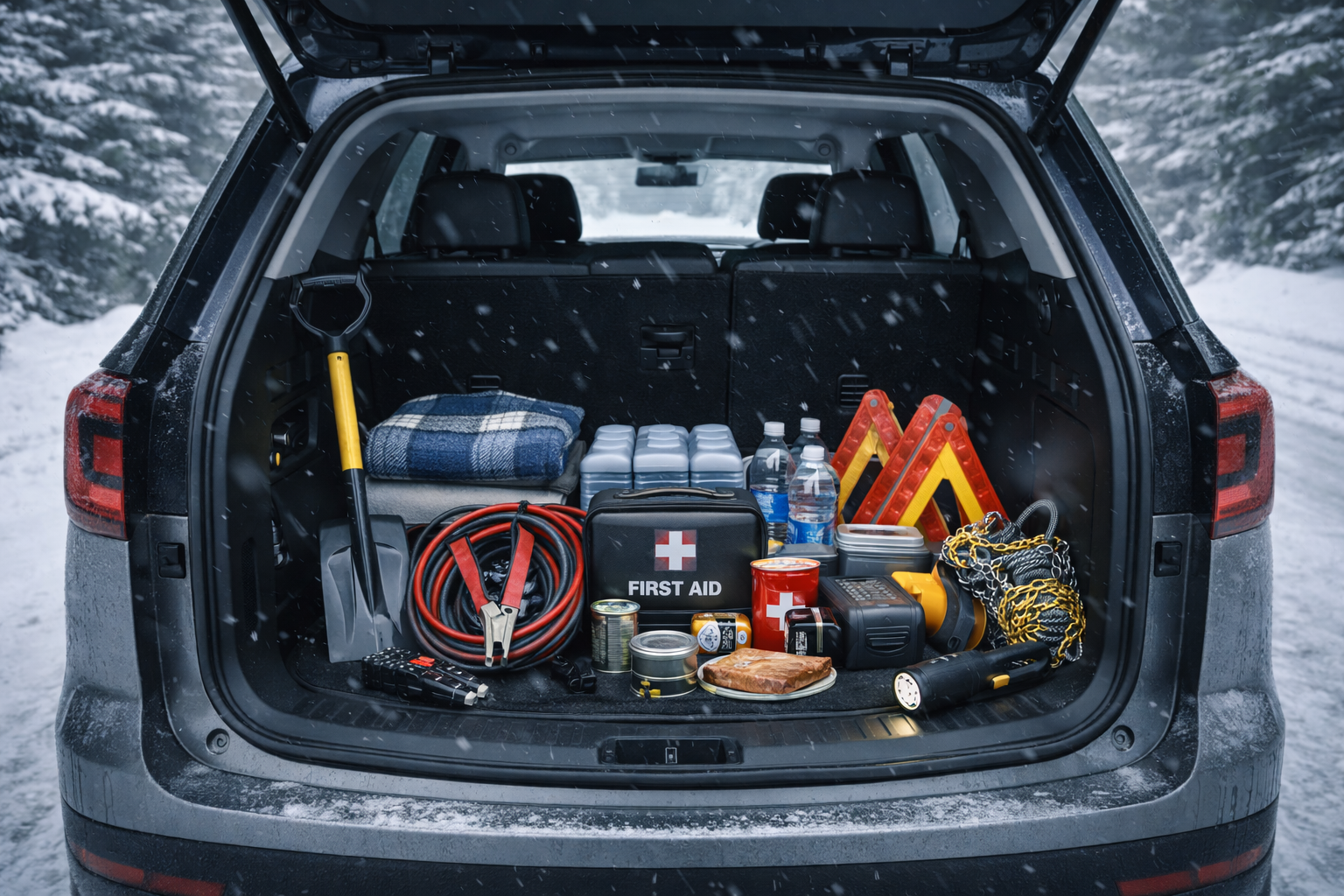
21 Items That Should Be in Every Car During Winter
Winter driving creates specific hazards for motorists across the country. Lower temperatures affect vehicle mechanics, while snow and ice increase the likelihood of accidents or getting stuck. A properly stocked emergency kit acts as a safety net when regular roadside assistance is delayed or unavailable. The following items are necessary for handling common winter roadside emergencies, ranging from dead batteries to long waits in freezing temperatures.
1. A Portable Jump Starter Pack
Jumper cables were the standard for decades, but they have a major flaw. They require a second vehicle to work. If you are stuck in a remote area or late at night with no traffic, cables are useless. A portable lithium-ion jump starter allows you to restart your own car independently.
These small battery packs are about the size of a paperback book. They hold a charge for months and provide enough power to start a cold engine multiple times. When buying one, look for a unit with at least 1000 amps. Cold weather drains battery power quickly, and a weak starter pack might fail when the temperature drops below freezing. Most modern packs also include USB ports, so they double as a backup charger for your phone.
2. An Ice Scraper with a Brush
A credit card or a CD case is not an effective tool for clearing a windshield. You need a dedicated scraper with a long handle. The extra length serves two purposes. First, it lets you reach the middle of the windshield without leaning against the dirty, wet car. Second, it gives you better leverage to chip away thick ice.
Choose a scraper that has a brush attached to the other end. Clearing the ice is only half the job; you also need to sweep away the loose snow from the roof, hood, and trunk. Leaving snow on your car is dangerous because it can blow off and blind drivers behind you. In many states, driving with snow on your roof is illegal and carries a fine.
3. A Collapsible Metal Shovel
Plastic shovels are common, but they become brittle in extreme cold. If you try to dig through hard-packed snow or ice with a cheap plastic blade, it will likely snap. A collapsible shovel with a metal blade or a metal-reinforced edge is the reliable choice.
You need a shovel to clear space around your tires if you slide into a ditch or get plowed in by a street sweeper. It also helps clear the tailpipe. If the exhaust pipe is blocked by snow while the engine is running, carbon monoxide can build up inside the car. This is a lethal situation. A compact shovel that folds up fits easily in a trunk organizer but extends enough to be useful.
4. Non-Clumping Cat Litter or Sand
Tires need friction to move. Ice removes that friction. If your wheels are spinning freely on a patch of ice, you need to put something gritty under them to regain grip. A bag of sand or cat litter works well for this.
Cat litter is often lighter and easier to buy at any grocery store. However, you must buy the “non-clumping” variety. Regular clumping litter turns into a slick, clay-like mush when it gets wet, which makes the ice even more slippery. Simple, cheap clay litter stays gritty. Keep it in a sealed plastic container or a heavy-duty bag so it doesn’t spill inside your trunk.
5. A High-Quality LED Flashlight
Changing a tire or looking under the hood is impossible in the dark. The flashlight on your cell phone is not bright enough for roadside repairs, and using it drains your phone battery, which you need for calling help. A standalone LED flashlight is a requirement.
LED bulbs use less power and are more durable than old-style bulbs. The casing should be aluminum or high-impact plastic. Waterproofing is also important since you will likely be using it in snow or rain. Store the batteries outside the flashlight. If you leave batteries inside the device for a year, they can corrode and ruin the contacts. Put the batteries in the flashlight only when you need to use it.
6. LED Road Flares
Traditional fire-burning flares are effective, but they last only 15 minutes and can be dangerous to use near leaking fluids or dry grass. Battery-operated LED flares are a safer, modern alternative. These look like hockey pucks with bright, flashing red or orange lights.
They usually have magnetic backs, so you can stick them directly onto the side or roof of your car to make it visible from a distance. Because they don’t use fire, they last for hours rather than minutes. Place them well behind your vehicle to give other drivers time to react and move over.
7. A Wool Blanket
The interior of a car cools down rapidly once the engine stops. If you run out of gas or the engine fails, you lose your heat source. A heavy blanket is your primary defense against hypothermia.
Wool is the best material for this. Unlike cotton or synthetic fleece, wool retains heat even if it gets damp or wet. It is also naturally fire-resistant. A “space blanket” (those shiny silver sheets) is a good backup, but they are very thin and tear easily. A real wool blanket provides a substantial layer of insulation that can save your life during a long wait for a tow truck.
8. Warm Hats and Gloves
Your hands are your most important tools. If your fingers are frozen, you cannot operate a jack, connect jumper cables, or tie a tow strap. A pair of thick, waterproof gloves should be in your kit. Avoid thin knit gloves; they get wet instantly and offer no protection against wind. Ski gloves or heavy work gloves are ideal.
Include a knit hat or beanie as well. You lose a significant amount of body heat through your head. Putting on a hat is one of the fastest ways to raise your body temperature. Keep these items in the cabin of the car, possibly in the glove box, so you don’t have to exit the vehicle into the cold just to retrieve them from the trunk.
9. Sturdy Boots
Many people drive in sneakers, dress shoes, or heels. These shoes are useless in deep snow. If you have to walk to a mile marker or push your car, your feet will get wet and cold immediately. Frostbite can set in quickly on wet toes.
Keep a pair of old winter boots or waterproof hiking boots in the trunk. They don’t need to be fashionable; they just need to be dry and warm. Having proper traction on your feet also makes it safer to walk around the car on an icy shoulder.
10. A First Aid Kit
A basic first aid kit handles minor injuries that can happen during an accident or while trying to repair the car. Cuts from jagged ice or metal are common. Your kit should contain adhesive bandages, gauze pads, medical tape, and antiseptic wipes.
You should also include basic medications like pain relievers and any specific prescription meds your family might need. In a severe snowstorm, you might be stuck for a day or more. Having a small supply of essential daily medications ensures you don’t face a medical crisis on top of a vehicle crisis.
11. Bottled Water
Dehydration is a risk even in cold weather. The dry air from the heater zaps moisture from your body. You should keep a case of water bottles in the trunk.
There is a trick to storing water in winter: it will freeze. When water freezes, it expands. If a bottle is filled to the top, it will burst and leak everywhere when it thaws. Pour a little bit of water out of each bottle before you pack them, leaving some air space at the top. This gives the ice room to expand without breaking the plastic.
12. High-Energy Food
Hunger makes you cold and tired. Your body burns more calories trying to stay warm, so you need fuel. Pack non-perishable food that is high in protein and calories.
Granola bars, energy bars, nuts, and dried fruit are excellent choices. Avoid chocolate or candy bars. Chocolate melts if the car gets warm in the sun and freezes into a rock when it gets cold. It also makes a mess. Choose foods that come in easy-to-open wrappers and don’t require cooking or water to prepare.
13. A Portable Phone Charger (Power Bank)
Your cell phone is your lifeline. If the car battery is dead, you cannot charge your phone using the car’s cigarette lighter or USB port. You need a separate, pre-charged battery bank.
Get a high-capacity bank, something with at least 10,000mAh. This is enough to charge a standard smartphone two or three times. Include a charging cable that fits your specific phone. Cables often break or go missing, so buy a dedicated cable that stays in the emergency kit and never leaves the car.
14. Windshield Washer Fluid
Winter driving consumes massive amounts of washer fluid. Road salt and slush spray onto your windshield constantly, drying into an opaque white film that blocks your view. Running out of fluid on a highway is dangerous because you are effectively driving blind.
Keep a full gallon of fluid in the trunk. Make sure it is rated for low temperatures, usually -20°F or lower. Summer-blend fluid is mostly water and will freeze in the reservoir or on the glass, making the problem worse. The bottle should be secured so it doesn’t roll around and crack.
15. A Multi-Tool
You don’t need a full mechanic’s tool set, but you do need the basics. A multi-tool (like a Leatherman or Swiss Army Knife) puts pliers, a knife, a screwdriver, and wire cutters in one pocket-sized package.
The pliers are the most useful part. You might need them to pull a fuse, loosen a frozen nut, or bend a piece of metal. The knife can cut a seatbelt or open a package. Having these tools readily available saves you from frustration when dealing with small mechanical issues.
16. Duct Tape
Duct tape is the universal fix for temporary repairs. In a winter accident, plastic bumpers often crack or hang loose. A broken side mirror might dangle by a wire. You cannot drive safely with parts dragging on the ground.
Duct tape allows you to secure loose parts enough to get the car home or to a shop. It can also patch a broken window to keep snow out. Buy a high-quality brand like Gorilla Tape, which sticks better to cold, dirty surfaces than cheaper generic tapes.
17. A Tow Strap
If a kind stranger offers to pull your car out of a ditch with their truck, you need a way to connect the two vehicles. A tow strap is designed for this. Do not use a chain or a random rope. Chains can snap and whip through windshields, causing serious injury.
Look for a strap made of nylon or polyester with loop ends, not metal hooks. Metal hooks can become deadly projectiles if they slip off under tension. A strap with a rating of 10,000 pounds or more is sufficient for most passenger cars.
18. A Whistle
Shouting for help wears you out quickly. The sound of a voice also doesn’t carry very far, especially over the noise of wind or other traffic. A whistle is a simple, low-tech signaling device.
If your car goes off the road into a ravine or deep woods, you might not be visible from the highway. A loud sports whistle can be heard from a long distance. It requires very little energy to use, which is crucial if you are injured or exhausted.
19. Matches or a Lighter
Fire provides warmth and light. While you should be careful about lighting fires inside or near a car, having the ability to start one is a basic survival need.
Keep waterproof matches or a lighter in a sealed bag. If you are stranded for a long time and need to melt snow for water or create a signal fire outside the vehicle, these are essential. A lighter is easier to use, but extreme cold can sometimes affect the fuel pressure. Matches are a reliable backup.
20. Paper Road Maps
We rely heavily on GPS, but technology is fragile. In remote areas, cell signal often disappears. Batteries die. Electronics fail in extreme cold. A paper map never loses its signal.
Keep a detailed map of your state or region in the glove box. If you are forced to take a detour due to closed roads, a map helps you find an alternate route. It also helps you identify nearby towns or landmarks so you can tell emergency responders exactly where you are.
21. Hand Warmers
Chemical hand warmers are small packets that generate heat when exposed to air. They are inexpensive and effective. When you are waiting for a tow truck, your extremities get cold first.
Slip these packets into your gloves or boots to maintain feeling in your fingers and toes. They are also helpful if you have to do fine motor tasks, like changing a tire. Frozen fingers are clumsy; warming them up for five minutes with a heat pack can give you the dexterity you need to finish the job.
Maintenance of Your Kit
Building the kit is step one. Maintaining it is step two. A kit full of dead batteries and expired food is useless. You should audit your supplies twice a year: once in the late fall before the snow starts, and once in the spring.
Check the expiration dates on food and water. Test the batteries in the flashlight and the jump starter pack. Make sure the clothes and blankets are dry and haven’t become moldy. If you used the washer fluid or duct tape during the year, replace them.
Winter driving demands respect. The weather can change in minutes, turning a routine commute into a survival situation. This list of 21 items covers the basics of warmth, visibility, sustenance, and self-rescue. Putting these items in your car requires a small investment of time and money, but the payoff is peace of mind and safety for you and your passengers.