The Most Admired Woman Leader in Real Estate Industry – 2026
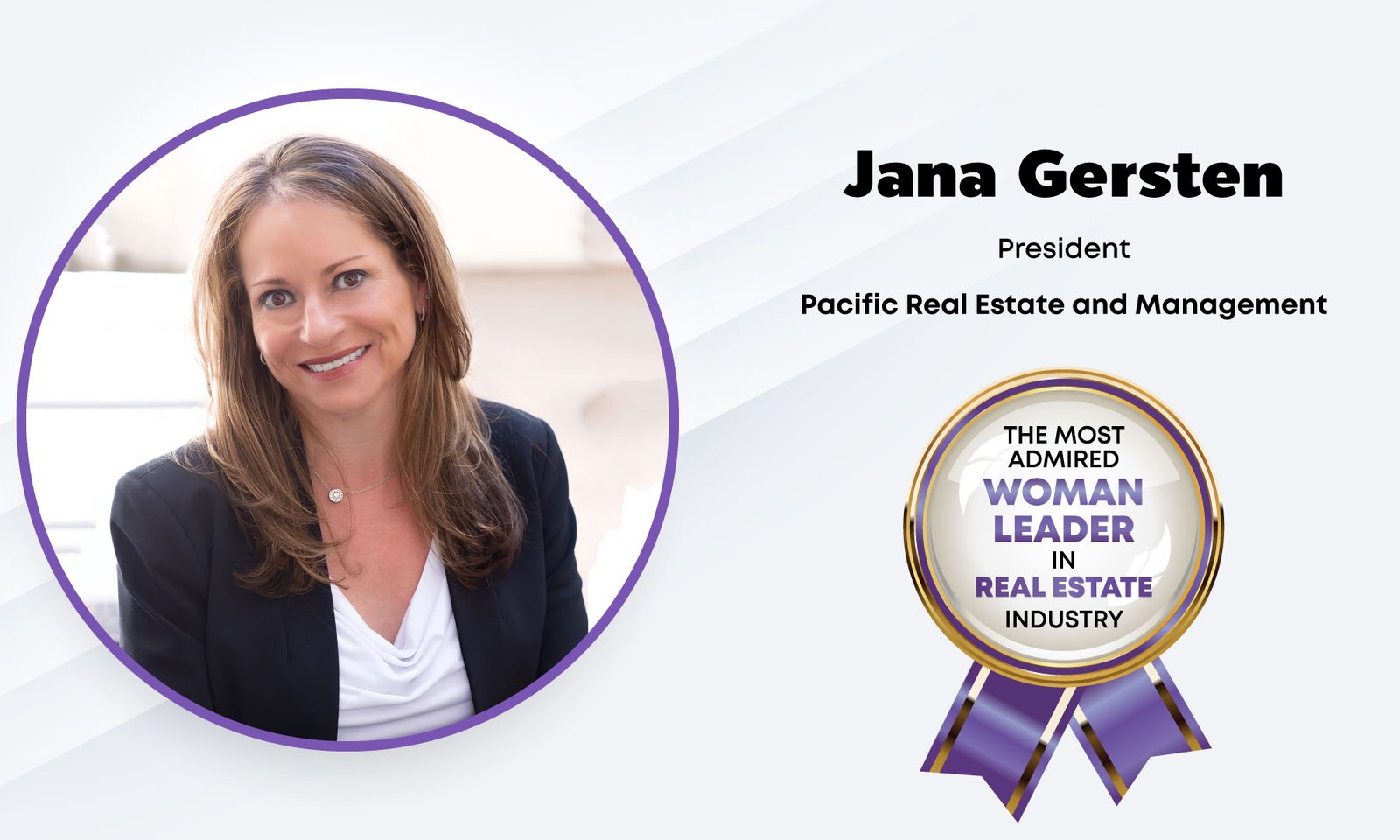
Jana Gersten: Twenty-Five Years of Redefining the Property Management
Jana Gersten is the President and Chief Executive Officer of Pacific Real Estate and Management, Inc. With a career in the industry spanning twenty-five years, she has developed a comprehensive approach to property management that prioritizes consistency, meticulous documentation, and highly customized client service. She acquired the company in 2019 after working her way through every operational department. Under her executive leadership, the firm has navigated complex administrative responsibilities, severe environmental crises, and the evolving technological landscape of residential real estate. The Influential Today Magazine is proud to recognize her as ” The Most Admired Woman Leader in Real Estate Industry – 2026″

An Unconventional Entry into Real Estate
Her entry into the property management sector was entirely accidental, stemming from an unexpected shift in her early professional trajectory. After graduating from the University of California, Los Angeles (UCLA), she initially pursued a career in the entertainment industry. However, an industry-wide strike led to a sudden layoff, forcing a change in direction. At the time, her father was the owner of Pacific Real Estate and Management, Inc. While she was working at a retail store, he offered her a position at the family firm with a modest incentive: a starting wage of nine dollars an hour, which was precisely one dollar more per hour than her retail job was paying.
Despite the family connection, there was a strict policy of no nepotism regarding her career advancement. She was not handed an executive title; rather, she started at the entry level and was required to learn the mechanics of the business from the ground up. Over the years, she methodically worked her way through every single department within the organization. This comprehensive, hands-on education in the operational realities of property management eventually culminated in her promotion to Vice President. In 2019, she officially purchased the business from her father, assuming the role of President and taking full executive control of the firm.
The Philosophy of Property Management as a Lifestyle
From the very first day she began answering the company phones, she discovered a affinity for the work. The primary attraction was the inherent unpredictability of the sector. She quickly realized that no single day would ever be the same, a dynamic environment that kept her highly engaged and ensured the work was never boring.
For her, property management transcends the boundaries of a traditional occupation; it is fundamentally a lifestyle. She operates under the empathetic principle that whatever her clients are experiencing, she is experiencing alongside them. This shared emotional and operational burden is central to her leadership style. The core motivation driving her decades of service is the ability to provide residents with the safety and sanctity of their homes. She views a residence not merely as a physical structure, but as a safe, sacred space for the individuals who live there. Knowing that she facilitates an environment where people can return home and rest easily, free from operational worries, provides her with immense personal joy and peace.

Executive Operations and Daily Demands
As Chief Executive Officer, she is responsible for the overarching day-to-day management of the firm. However, due to her deep-seated passion for the granular aspects of property management, she is admittedly incapable of maintaining a strictly hands-off executive approach. To keep her schedule fully occupied and to stay intimately connected with the core functions of the business, she continues to personally run the firm’s insurance division, the escrow division, and the collections department.
The daily realities of her role require immense adaptability, as the demands fluctuate wildly on any given morning. Her schedule might necessitate mediating a simple parking dispute, settling an interpersonal squabble between homeowners, or coordinating massive logistical efforts to restore properties damaged by severe environmental disasters.
To navigate this demanding and fast-paced environment, she identifies two indispensable skills for anyone seeking success in the industry: exceptional organization and the uncompromising ability to document absolutely everything. While she utilizes state-of-the-art Homeowner Association (HOA) real estate software to maintain operational efficiency, she remains fundamentally old-school in her personal organizational habits, describing herself as a “paper and pen notes” professional.
Furthermore, while she is slowly learning to integrate artificial intelligence into the firm’s systems, she is cautious about over-automating the client experience. A self-described control freak regarding the quality of service, she recognizes that clients deeply value hearing a human voice on the other end of the line. She remains committed to providing that personal, human connection for as long as it is operationally viable.
Crisis Leadership During the Palisades Fires
The depth of her commitment to her communities was severely tested during the recent Palisades Fires, which she cites as one of the most significant challenges of her career. The crisis highlighted the intense emotional toll inherent in property management. For days, she monitored the fire maps with a sense of helplessness, uncertain of the ultimate outcome for the communities under her care.
The fires ultimately resulted in the loss of two properties, while one was successfully saved. For the past year, she has overseen the arduous and complex process of restoring those damaged properties. Witnessing residents lose everything they owned was a heartbreaking experience. However, the tragedy also reinforced the ultimate reward of her profession: the ability to manage the recovery process and eventually return a restored home to those who were displaced. Her direct oversight of the firm’s insurance division undoubtedly played a critical role in navigating the complex aftermath of this environmental disaster.
Custom Concierge Management and Building Trust
In the property management industry, transitioning to a new management firm represents a significant leap of faith for any residential community. She understands the weight of this transition and builds lasting trust with her clients through consistency. The firm rises to the challenge of meeting and exceeding a community’s expectations by explicitly rejecting standardized, one-size-fits-all operational models.
Instead, she champions a model of custom concierge management. Acknowledging that no two communities operate in exactly the same manner, she ensures that every management plan is meticulously customized to fit the specific needs, goals, and culture of the property. She views every property as a unique entity with its own distinct set of challenges, and her tailored approach is designed to address those specific nuances effectively.
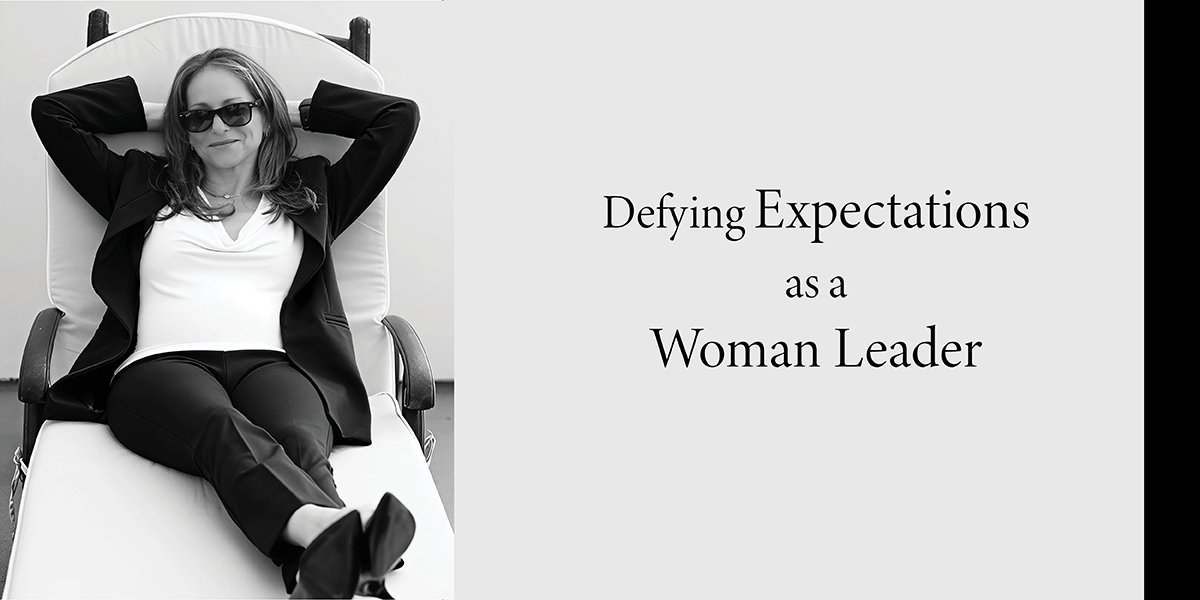
Defying Expectations as a Woman Leader
Navigating the real estate and property management sectors as a woman has occasionally required confronting outdated stereotypes. She actively pushes back against the narrative that property management is a field exclusively suited for men. Her extensive, ground-up experience has equipped her with deep technical knowledge regarding property maintenance and infrastructure.
She often notes, with a sense of humor, that she has lost count of the number of dates that ended poorly simply because she possessed vastly more knowledge about property, physical repairs, and patching walls than her male counterparts. Her journey serves as a direct challenge to traditional gender roles within the trades and real estate management. Her primary advice to others looking to step into leadership roles is absolute and uncompromising: never let anyone dictate what you can or cannot achieve.
A Twenty-Five Year Evolution of Professional Wisdom
Reflecting on a quarter-century in the real estate business, she recognizes a distinct evolution in her own professional mindset. Her progression serves as a masterclass in the value of humility and continuous learning.
During her first year in the industry, immediately after obtaining her license, she operated under the naive assumption that she possessed all the necessary knowledge. By her fifth year, this overconfidence peaked, and she describes her former self as a “total know-it-all.” It was not until she reached her tenth year in the business that a realization occurred: she actually had an immense amount left to learn.
Now, with twenty-five years of experience, she has distilled the ultimate key to professional success down to a single action: listening. She firmly believes that a professional can acquire an infinite number of licenses and formal educational credentials, yet still fundamentally know nothing of value. The industry demands the humility to learn something new every single day. She advises that true leadership often involves being the quiet observer in the room. It is through silent observation that a leader truly learns the dynamics of a situation, carefully plans a resolution, and quietly executes a successful outcome.

Vision for the Future
Looking ahead to 2026 and beyond, her strategic vision for Pacific Real Estate and Management, Inc. is defined by measured, deliberate stability rather than aggressive scaling. Her primary goal is to continue expanding the company, but to do so very slowly.
She is acutely aware of the risks associated with rapid corporate expansion, specifically the potential to lose the capability to deliver the high-quality customer service that has defined her firm. The foundational promise she makes to her clients on their first day is the exact standard she intends to maintain indefinitely. She is determined to never lose the personal touch that separates her firm from larger, impersonal corporate entities. Her ultimate objective is to ensure that years down the line, her clients still feel the exact same level of dedication, customized care, and personal commitment that they felt on the day they signed their management contract.





Related Post