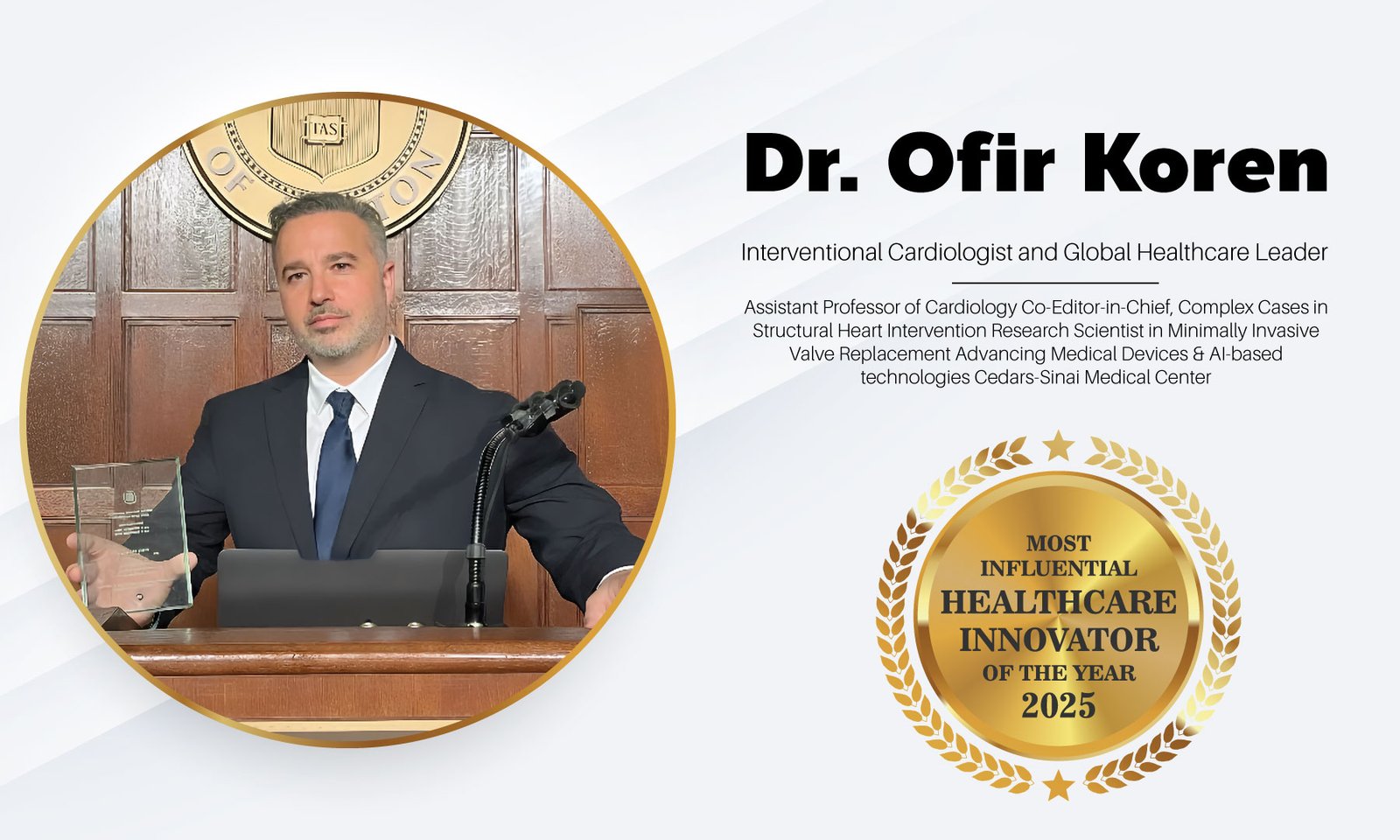
Most Influential Healthcare Innovator of The Year 2025
Re-engineering the Future of Heart Care
Dr. Ofir Koren is an Assistant Professor of Cardiology who leads a highly inspired mission to build and advance cardiovascular innovation at the Smidt Heart Institute, Cedars-Sinai Medical Center. He is an interventional and structural cardiologist whose work is re-engineering the future of heart care. Blending data science, deep compassion, and a passion for global collaboration, Dr. Koren is redefining what it means to heal. From Cedars-Sinai’s advanced catheterization labs to humanitarian missions across continents, his work proves that true innovation is not just about technology; it is, and always will be, about people. For his visionary approach to medicine and his impact on the global healthcare industry, The Influential Today Magazine is proud to honor Dr. Ofir Koren as one of the Most Influential Healthcare Innovators of The Year 2025.
The Quiet Seed of Innovation
For Dr. Ofir Koren, the journey to becoming a healthcare innovator was not a deliberate career choice, but a natural evolution of his character. He never set out with the grand goal of “innovation” in mind. “In medical school, the goal was simple—learn, practice, repeat,” he recalls. “But I always felt certain processes could be simpler, smarter, kinder. That quiet curiosity became the seed.” This foundational belief, that progress begins when one dares to question the obvious, has been the guiding principle of his entire career.
Long before he entered medicine, He learned his first practical lessons in innovation while serving in the Air Force in the late 1990s. He and his unit faced a critical communication gap between aircraft systems and ground units. “Our mapping systems spoke different languages,” he explains. The conventional wisdom was that a solution would have to come from the manufacturers or a dedicated engineering team. Instead, his team decided to tackle the problem themselves, from the operator’s perspective.
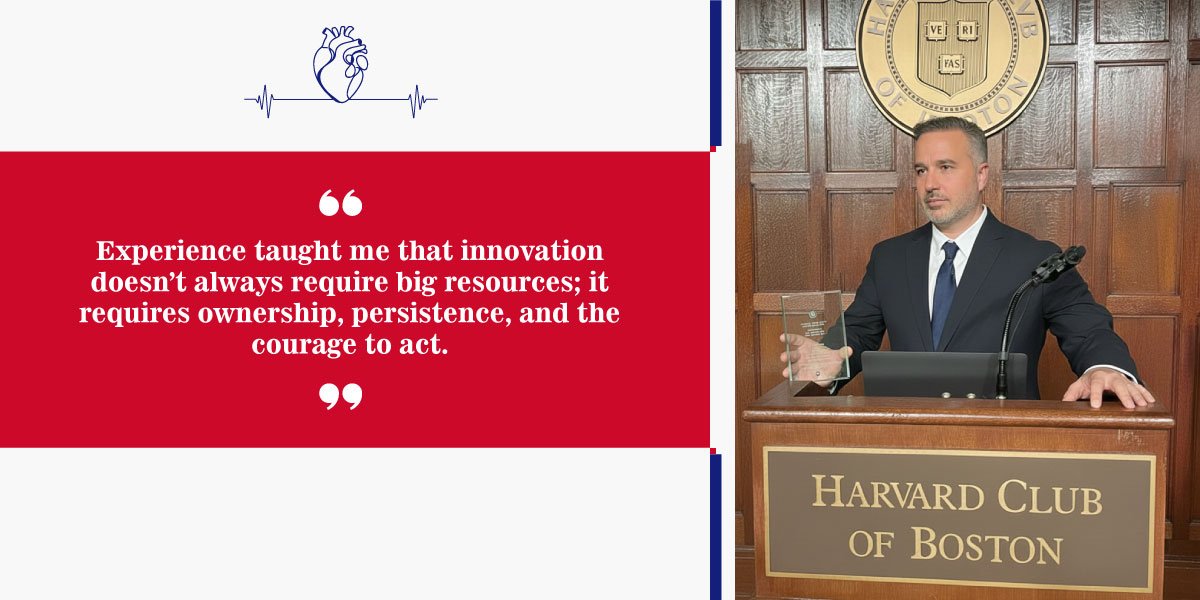
“After many attempts, we designed a simple yet highly accurate method to align the systems,” he says. “Bringing solutions rather than complaints up the chain of command was a refreshing change-and for us, it felt like a small but meaningful victory.” That single experience cemented a core philosophy that he would carry into medicine: “That experience taught me that innovation doesn’t always require big resources; it requires ownership, persistence, and the courage to act.”
The Hand-in-Hand Values of Compassion and Excellence
Dr. Koren’s values as both a physician and a leader were shaped by two towering figures in his life. The first was his father. “He was honest, tough, humble, and quietly determined,” Dr. Ofir shares. “Watching him die from cancer while I was in medical school broke my heart, but it also defined my path.” That profound loss focused his drive, pushing him to become more precise and dedicated. “He’s the reason compassion and excellence will always go hand in hand in my work.”
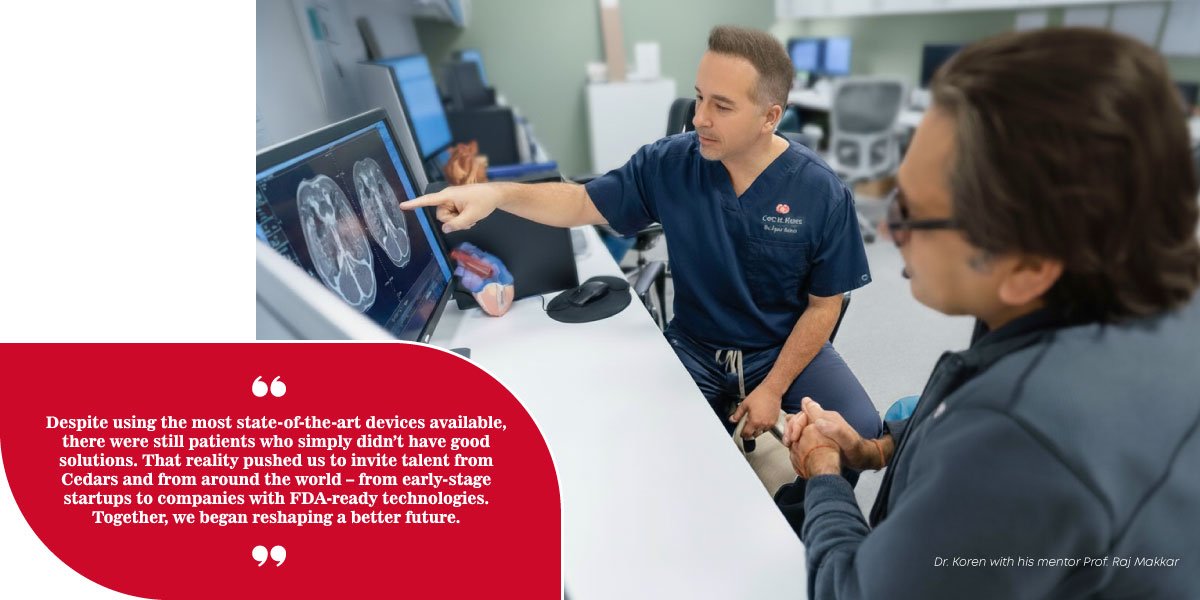
Years later, his professional path was shaped by a second great influence, Dr. Raj Makkar, one of the world’s foremost pioneers in transcatheter valve replacement. “Humbly saying, his work on minimally invasive techniques changed the field of structural heart intervention and saved countless lives,” Dr. Ofir says. “Working alongside him and having a small part in changing medicine is truly a privilege.” It was a mentorship built on a shared vision for the future of heart care. “We believed in the vision of cardiovascular innovation from day one, and his support opened doors for many international collaborations, from early-stage startups to mature companies with FDA-ready devices.”
This spirit of innovation is not confined to a single lab; it is the cultural heartbeat of Cedars-Sinai. “The focus on integrating, fostering, educating, and providing the tools for innovation is at its peak,” Dr. Ofir notes. He describes an environment rich with resources for entrepreneurs, all designed to discover the next generation of diagnostics and treatments. “This philosophy runs through every level of leadership and continues to nurture an environment where new ideas can take root and transform patient care.”
The Living Laboratory: Where Data Meets the Cath Lab
At Cedars-Sinai, Dr. Ofir helped shape the Cardiovascular Innovation Program, turning it into a “living laboratory.” The program’s genius lies in its integration. “We bridge the Cath lab, imaging, and data-science teams to turn frontline insight into real-world solutions,” he explains. This is not a theoretical exercise; it is a hands-on, collaborative culture where a surgeon, an engineer, and a data scientist might find themselves brainstorming a new idea right after a complex case. This “convergence of medicine, mathematics, and creativity” is precisely where he believes the next generation of therapies is born.
Artificial intelligence and advanced imaging are central to this work. For Dr. Ofir , AI is a tool that “allows us to turn intuition into measurable insight.” He points to a project where his team used silicon modeling and algorithmic analysis to predict vascular complications during heart valve replacement before they could ever happen.
What made the project remarkable was its origin. “Two independent teams, working on opposite sides of the world, approached the same challenge in completely different ways: one through trial and error, and the other through a physician-driven, data-analytical lens,” he says. “When we brought those perspectives together, the result was both simple and brilliant, a model that meaningfully reduced vascular complications.” That model, since its publication, has been shared with clinical teams worldwide, helping them make safer, smarter, data-driven decisions for their patients.
His vision for this work is expansive. He aims to use new technologies to find people who are unaware of their heart disease, to design longer-lasting heart valves, and to develop AI tools that empower patients to monitor their own health. He is also actively exploring robotic assistance and 3D live integration for complex procedures, seamlessly “bridging digital precision with human expertise.”
Medical Diplomacy: Healing Across Divisions
Dr. Koren’s influence is not limited to his own institution. In recent years, he felt a pull to share his experience to help others on a global scale. “My schedule is tight and often unpredictable, so I chose to do it through volunteering, usually at night or on weekends,” he says. “What started as a small initiative gradually became a global operation.”
With the help of friends and colleagues, they have managed to deliver advanced medical devices, expertise, and training to communities across the globe, from Ukraine to Latin America, Africa, and Israel. He calls this “medical diplomacy: building bridges through shared healthcare missions.” For him, these efforts are proof that “collaboration can heal divisions just as much as diseases.”
From Individual Patients to Entire Systems
This humanitarian work opened his eyes to a staggering global need he was previously unaware of: the desperate lack of access to prosthetic care. “The reality is that only a small percentage of people have access to any type of advanced prosthetic solution,” he explains.
This new awareness became the focus of his work at Harvard Medical School’s Global Healthcare Leadership Program. As he investigated the problem, he saw a “vicious cycle of inaction” that directly harmed patients. “Many partners wanted change, but there was no design partner uniting these public–private partnerships, government and federal entities, and NGOs around one shared table,” he says. “They were all waiting for someone to take the first step.”
His time at Harvard shifted his focus from treating individual patients to healing entire systems. His final project proposed a new working model called the Global Prosthesis Care Coalition (GPCC), a framework to connect universities, R&D centers, NGOs, and governments to finally make advanced prosthetics affordable worldwide. His subsequent receipt of the GHLF Award for Innovation and Impact was not just a personal honor. “It proved that humanitarian collaboration can be structured, sustainable, and scalable,” he says.
Lifting the Next Generation
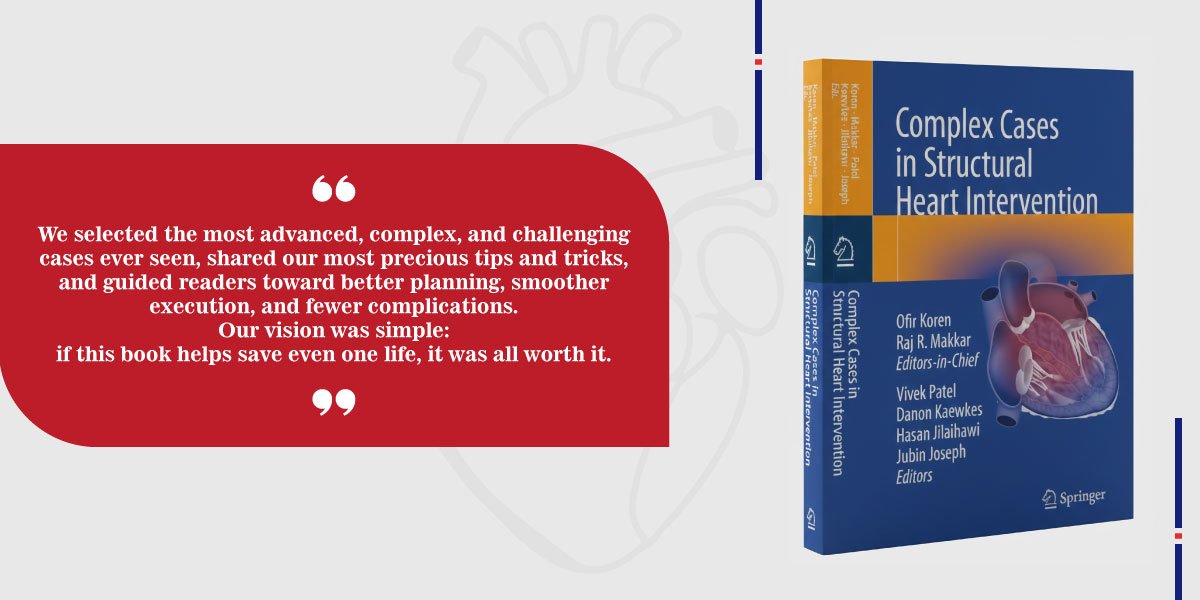
For him, education is the “most scalable form of innovation.” For years, he has dedicated himself to mentoring medical and PhD students, guiding them through research and helping them find their own place in the world of science. His philosophy found expression in Complex Cases in Structural Heart Intervention, published by Springer Nature, a globally respected leader in medical publishing. The book compiles practical and highly specialized knowledge in transcatheter valve interventions while promoting a model of inclusive academic authorship. “We invited young trainees from around the world to co-author every step—from data and writing to illustration,” he says. “It’s uncommon in academic publishing, but it allowed us to recognize emerging talent and foster genuine collaboration.
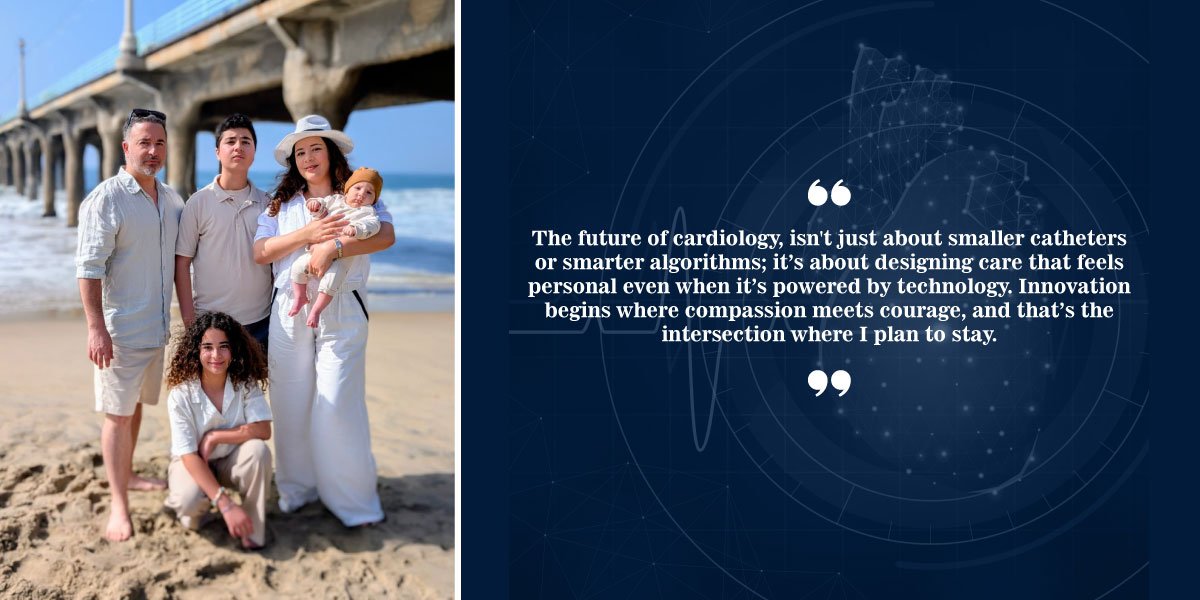
Behind this immense professional drive is a strong personal anchor. His family remains the center of his inspiration. His wife, Regina, a pediatric dentist, is his constant source of strength and perspective. Their children embody the spirit of innovation in different yet complementary ways. Ilay, the older son, is building his own path in creativity and technology, developing new worlds on Roblox, experimenting with game design, and learning Python as tools of expression and innovation. Emma, on the other hand, brings an artistic dimension to invention. She loves working with real materials, designing, crafting, and testing her creations with boundless imagination. Together, they represent the essence of hands-on curiosity, the same values that guide Dr. Koren’s own approach to discovery. The family’s newest addition, baby Jonathan Roei, brings daily joy and a reminder of why compassion and creativity must always walk hand in hand.
Looking to the future, Dr. Ofir sees an age where “medicine, data, and empathy must coexist.” He believes the most exciting advances, from robotics to regenerative medicine, will only succeed if they remain fundamentally human-centered. “The future of cardiology,” he concludes, “isn’t just about smaller catheters or smarter algorithms; it’s about designing care that feels personal even when it’s powered by technology. Innovation begins where compassion meets courage, and that’s the intersection where I plan to stay.”




Related Post