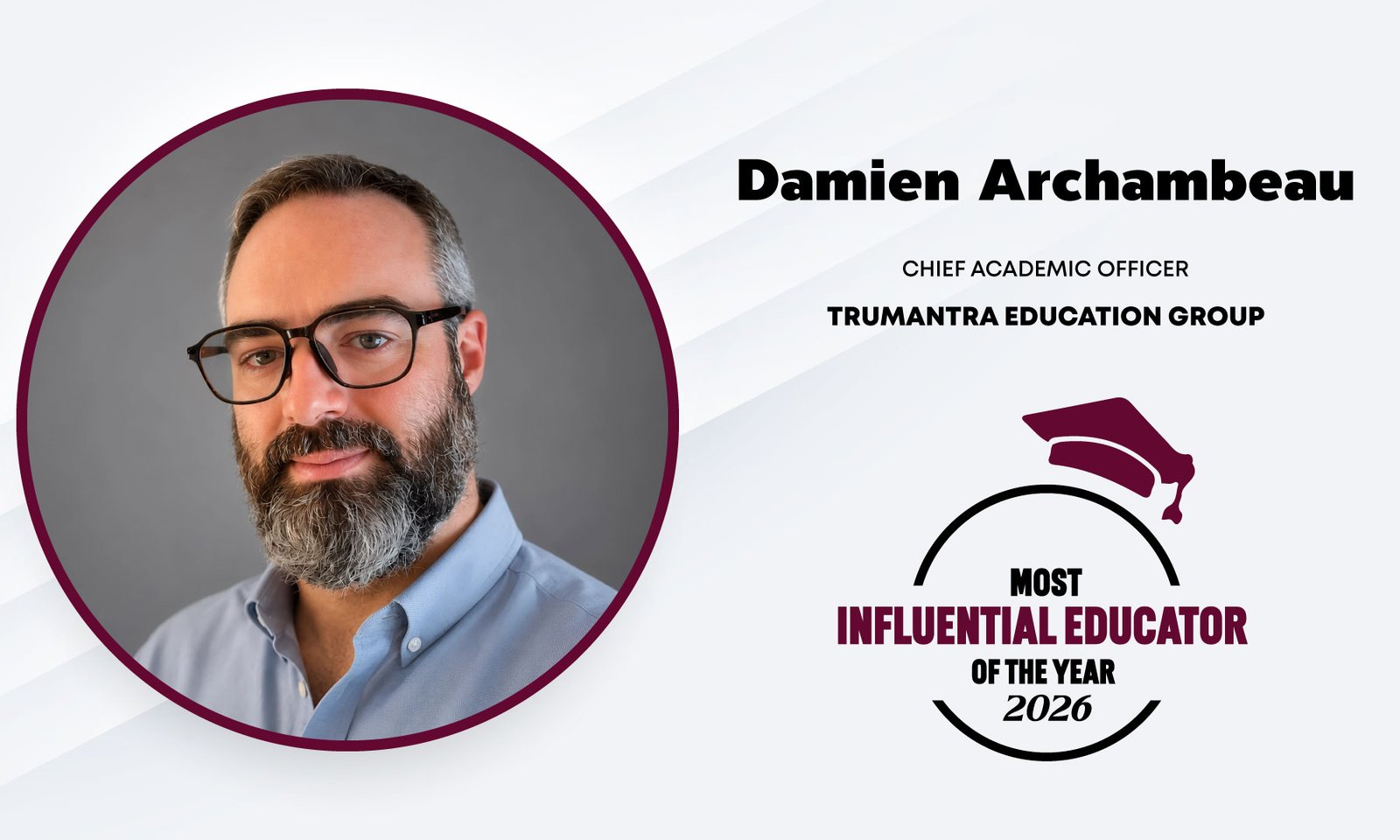
Most Influential Educator of The Year 2026
The Visionary Architect of Modern Lymphatic and Massage Education
Damien Archambeau is the Chief Academic Officer of the Trumantra Education Group and its subsidiary, The Academy of Lymphatic Studies. He holds the professional credentials of LMT, BCTMB, CLT-ALM, MLD-C, and CPST. He has dedicated his career to the clinical application of manual therapies and the advancement of educational standards within the profession. Due to his work in developing hybrid learning models and advancing clinical training methodologies, we are proud to recognize him as the Most Influential Educator of the Year for 2026. His work focuses on integrating foundational therapeutic techniques with complex clinical assessments, specifically regarding the lymphatic and fascial systems.
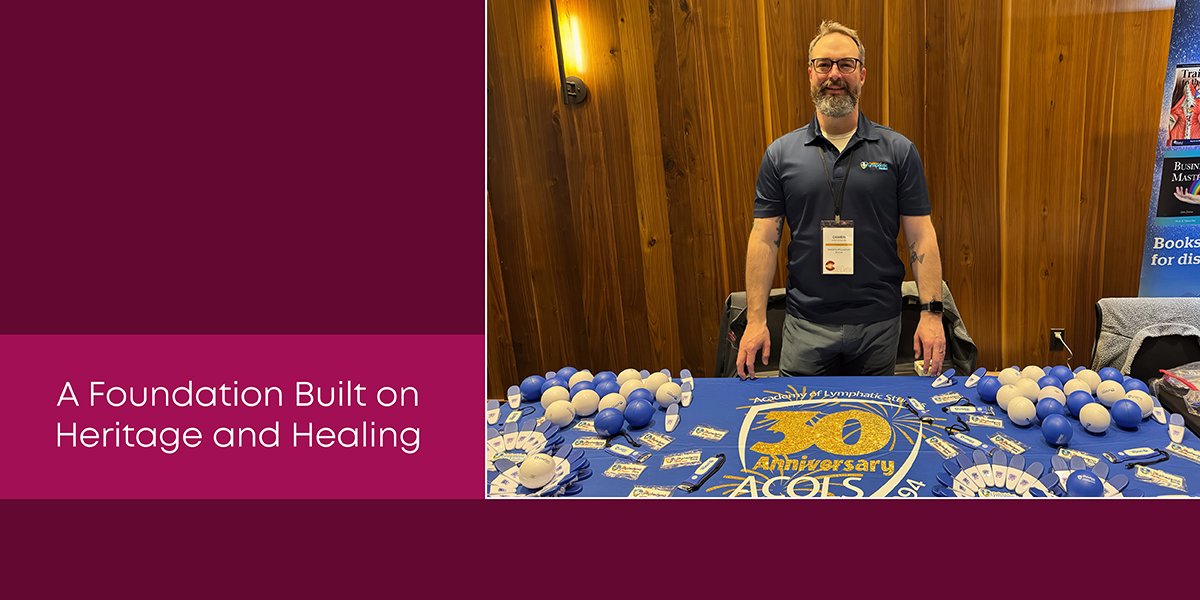
A Foundation Built on Heritage and Healing
The path toward a career in manual therapy and education was established long before his formal academic training began. The earliest indications of his future career emerged during his teenage years when he first began practicing energy healing methods. However, the most profound influence on his trajectory came directly from his family heritage.
His grandfather, James Dispoto, served as the primary catalyst for his entry into the healing arts. Dispoto was a highly accomplished individual with a diverse background: he was an internationally recognized Massotherapist, a Golden Glove boxer in his youth, and an interpreter during World War II who was fluent in seven languages. He personally taught his grandson how to perform a full-body massage, passing down hands-on knowledge that would eventually become the cornerstone of a global educational career.
From this mentorship, three specific life lessons were imparted that continue to guide his professional and personal philosophy today:
- Observe and understand culture: Language and human interaction reveal our underlying capacity to grow and participate in something greater than ourselves.
- Utilize innate gifts for others: Compassion and healing must be used to aid those in need, accompanied by the vital education that all true healing fundamentally begins with the self.
- Maintain unwavering ideals: True personal and professional growth is synonymous with rigorous, persistent hard work.
These principles formed a rigid ethical and professional framework. Later in life, while receiving a massage himself, he experienced a moment of absolute clarity. He realized he was already engaged in this exact type of healing work. The path had always been laid out before him; he simply needed to formalize it. This realization prompted a decisive career pivot that would dictate the rest of his life.
Rigorous Academic and Global Pursuits
Determined to pursue the highest standard of training, he conducted extensive research to identify the best educational institution available in his region. Living in South Florida at the time, he enrolled in the American Institute of Massage Therapy. The foundational program proved to be an eye-opening experience, validating his career choice and igniting a desire for continuous, lifelong learning.
His commitment to education did not stop at his initial certification. Recognizing the complexity of the human body and the depth of the profession, he eventually returned to school to complete an additional, more advanced program. This rigorous ongoing education culminated in the achievement of an Associate’s Degree in Applied Sciences in Massage Therapy, distinguishing him in a field where many stop at basic licensure.
His pursuit of mastery also extended far beyond domestic borders. He lived and worked overseas, traveling extensively to broaden his understanding of global healing practices. This included dedicated time spent in Thailand, where he deeply immersed himself in the study and application of traditional Thai Massage. This international exposure allowed him to accumulate a vast and diverse range of manual techniques, broadening his clinical perspective and preparing him for a transition into leadership.
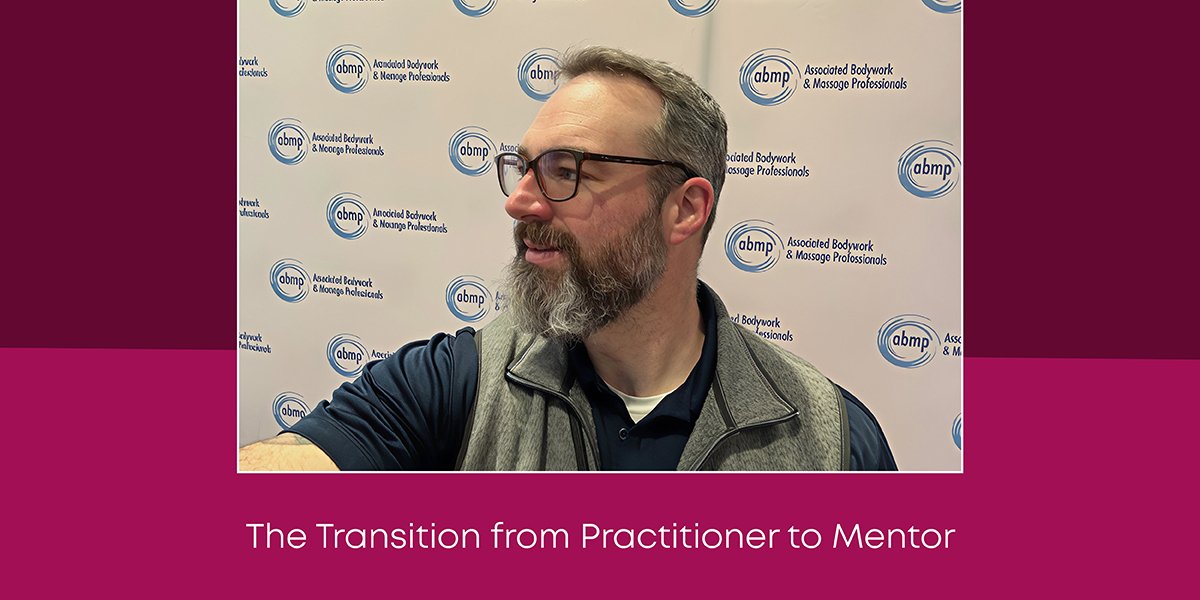
The Transition from Practitioner to Mentor
The shift from a dedicated practitioner to an educator began organically during his mid-twenties. While working at the prestigious Four Seasons Resort in Jackson Hole, Wyoming, he took on the role of designated trainer for the existing staff of therapists.
At that time, his clinical focus was heavily centered on structural integration work. He actively applied the diverse techniques he had learned abroad to his daily sessions. Recognizing the value of this integrated approach, he began systematically teaching his peers. Initially, the instruction was highly practical, focusing on helping other therapists manage their session time more effectively, efficiently incorporate different modalities into a single treatment, and perform the Thai Massage techniques he had mastered overseas.
He discovered a deep-seated desire to help his colleagues realize their true, untapped potential within the profession. This peer-to-peer mentoring laid the groundwork for formal curriculum development.
The Genesis of Myokinesio Therapy
The environment in Jackson Hole proved to be the perfect clinical incubator for his next major contribution to the field. Working in a high-altitude mountain resort town, he encountered a highly specific demographic of clients. Many were tourists presenting with acute injuries sustained from skiing and other rigorous active vacations. Concurrently, he treated a steady base of local, long-term clients suffering from chronic structural imbalances caused by repetitive daily strain, such as avid cyclists.
To address these complex cases, he developed a much deeper, highly analytical assessment process. Instead of merely addressing the localized area of pain, he began thoroughly mapping kinetic chains and analyzing specific muscle firing patterns to isolate the absolute root cause of the body’s dysfunction.
He discovered that when this rigorous, analytical assessment strategy was paired with specific manual techniques applied in highly targeted ways, the human body became vastly more receptive to healing. He formalized this methodology and began teaching it to other professionals. Over time, this targeted curriculum evolved and expanded, officially becoming the highly regarded continuing education program known today as Myokinesio Therapy.
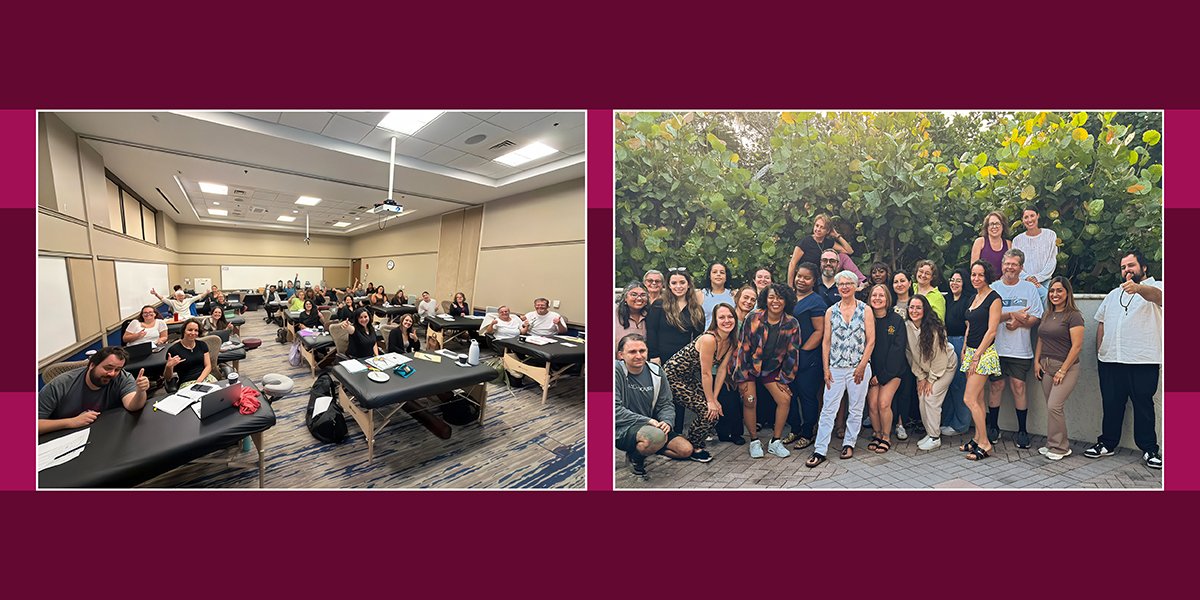
Redefining Educational Paradigms
Today, as the Chief Academic Officer for the Trumantra Education Group and the Academy of Lymphatic Studies, his daily priorities center entirely on student success and the delivery of educational excellence. He operates under the core belief that quality of education must be paired with ease of access.
To adapt to a rapidly changing world and the modern needs of adult learners, he spearheaded the development of innovative hybrid learning models. These models are meticulously structured to emphasize quality and necessary repetition in a comfortable, low-stress environment. The theoretical and foundational knowledge is delivered through accessible formats, which is then followed by intensive, in-person training designed specifically to finalize and test practical, hands-on skills.
This strategic restructuring of the curriculum has yielded significant improvements in both student morale and overall educational outcomes. He recognized that the heavy financial and logistical demands associated with traditional, fully in-person training often create unnecessary external stress. This stress actively interferes with a student’s ability to learn and build confidence. By removing these systemic barriers, students arrive at their on-site training feeling fully prepared and confident, rather than fatigued and overwhelmed. They leave the program possessing not only the technical skills but the essential self-belief required to put their new knowledge into immediate clinical practice.
The Anatomy of an Exceptional Therapist
When defining what elevates a therapist from good to great, he points to qualities that extend far beyond simple technical skills or a list of certifications. The defining characteristic is an unrelenting drive to find another, better way to help a patient.
He advocates fiercely for an integrative approach, firmly maintaining that no single modality is inherently superior to another. Much like the complex, overlapping systems of the human body, every manual therapy technique serves a specific, vital purpose. While they perform well individually, it is their collective, integrated application that achieves the greatest clinical rewards.
However, he cautions that accumulating knowledge of various modalities is insufficient without the ability to apply them clinically. Knowledge and clinical application must work in absolute tandem.
A great therapist must always search for the root cause, a practice that distinctly separates advanced manual and lymphatic therapies from standard conventional symptom management. When a patient presents with an issue, the exceptional therapist immediately asks why.
- Analyzing Swelling and Edema: If a patient presents with swelling, the root cause must be identified. The practitioner must determine if it is related to underlying cardiovascular disease, renal insufficiency, an acute injury like a broken bone or sprained ankle, or a severely compromised lymphatic system. If the lymphatic system is compromised, creating a backlog of fluid the body cannot clear naturally, it leads to the onset of lymphedema. Recognizing these critical clinical signs and possessing the skills to address lymphedema makes a profound, life-altering difference in a patient’s quality of life.
- Tracing Structural Restrictions: If a patient cannot lift their head, the surface symptom is pain, but the origin requires deep investigation. The therapist must determine if repetitive motion has created unnecessary hypertonicity in the surrounding musculature. Furthermore, they must assess if poor hydration and repetitive movement patterns have compromised the health of the fascia. The fascia is critical; it supports skeletal structures and encapsulates the body’s vessels. Any restriction in the fascial network can directly impede blood circulation, disrupt nerve impulses, and compress the lymphatic vessels running through it. This disruption severely limits the body’s ability to move fluid efficiently, setting the stage for systemic dysfunction that extends far beyond the original site of the neck restriction.
He emphasizes that no system in the human body operates in isolation. The muscular, fascial, circulatory, nervous, and lymphatic systems are engaged in constant, dynamic conversation. A disruption in one inevitably forces a negative cascade in the others. The best therapists understand these intricate relationships, using that profound knowledge to trace dysfunction directly back to its origin. They dedicate their time to relentless research, actively pursue clinical continuing education, attend industry seminars, and deliberately network with physicians to ensure comprehensive patient care.
Adaptability and the Craft of Teaching
His success as an educator is deeply tied to his philosophy on communication and adaptability in the classroom. The most significant lesson he has learned from his students over the years is the absolute necessity of adapting his teaching methods.
He actively teaches people based on how they teach him to teach them. He recognizes that every individual absorbs and processes information differently. If an instructor remains rigidly fixed to a single method of delivery, they will inevitably connect with only a small fraction of the room while entirely missing the rest. By continuously adapting his style to match the specific learning needs of his students, he ensures that every single person leaves the classroom having gained maximum value and feeling highly capable. He does not view this necessary adaptability as a compromise of standards; rather, he considers it the true essence and craft of professional education.
To master any subject, he firmly believes one must teach it. He advises professionals to constantly educate their clients about the treatments they are receiving, as the act of explaining the science keeps the therapist sharp and engaged. He encourages a mindset of constant evolution—revisiting old courses to discover new dimensions of information that the practitioner may not have been clinically ready to absorb years prior.
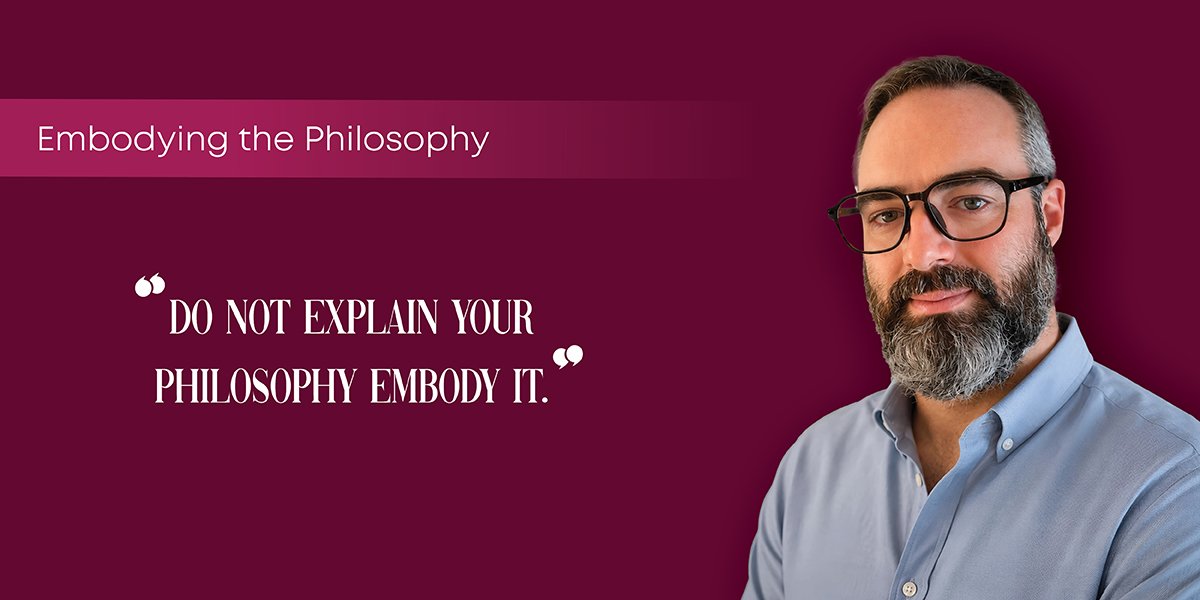
Embodying the Philosophy
Balancing the intense, competing demands of being a high-level educator, a corporate business leader, and a lifelong student is a challenge he meets by viewing them as a single, unified effort. He considers himself a learner first and foremost. Every single day brings new research to incorporate into a curriculum or a new insight that fuels his own personal growth. This relentless pursuit of learning naturally forces him into an educational mindset, allowing him to speak with authentic passion. Finally, his role as a business leader provides the necessary infrastructure to take that educational drive and channel it into the most effective delivery systems possible, ensuring the knowledge reaches everyone who needs it. The roles do not compete; they perfectly reinforce one another.
His entire professional ethos can be summarized by a quote from the Stoic philosopher Epictetus: “Do not explain your philosophy. Embody it.” He lives and breathes the clinical work he does and the complex methodologies he teaches. They are not a separate professional persona; they fundamentally shape who he is. He does not waste time justifying his methods; he simply shows up, performs the work at the highest possible level, and invites profound physical and educational change to occur.
As he looks toward the future of the industry, he is most excited by the rapid, undeniable convergence happening between massage therapy and lymphatic studies. Lymphatic studies, a field once strictly confined to the context of disease management, is now expanding powerfully into the realms of preventative care and overall wellness. Simultaneously, clinical massage therapy is rapidly earning the respect and recognition it deserves within advanced medical settings. With accelerating scientific research supporting both disciplines, he views this not as the peak of the profession, but as the very beginning of realizing its true, limitless potential in global healthcare.





Related Post