
The End of Tab Overload? Inside Google Disco, The Gemini 3-Powered Web Experience
Mountain View, CA — The browser tab has been the foundational element of the internet for over two decades. But for anyone who has ever juggled twenty-plus tabs while planning a trip, researching a stock portfolio, or compiling academic notes, the tab has become a symbol of digital chaos and cognitive overload.
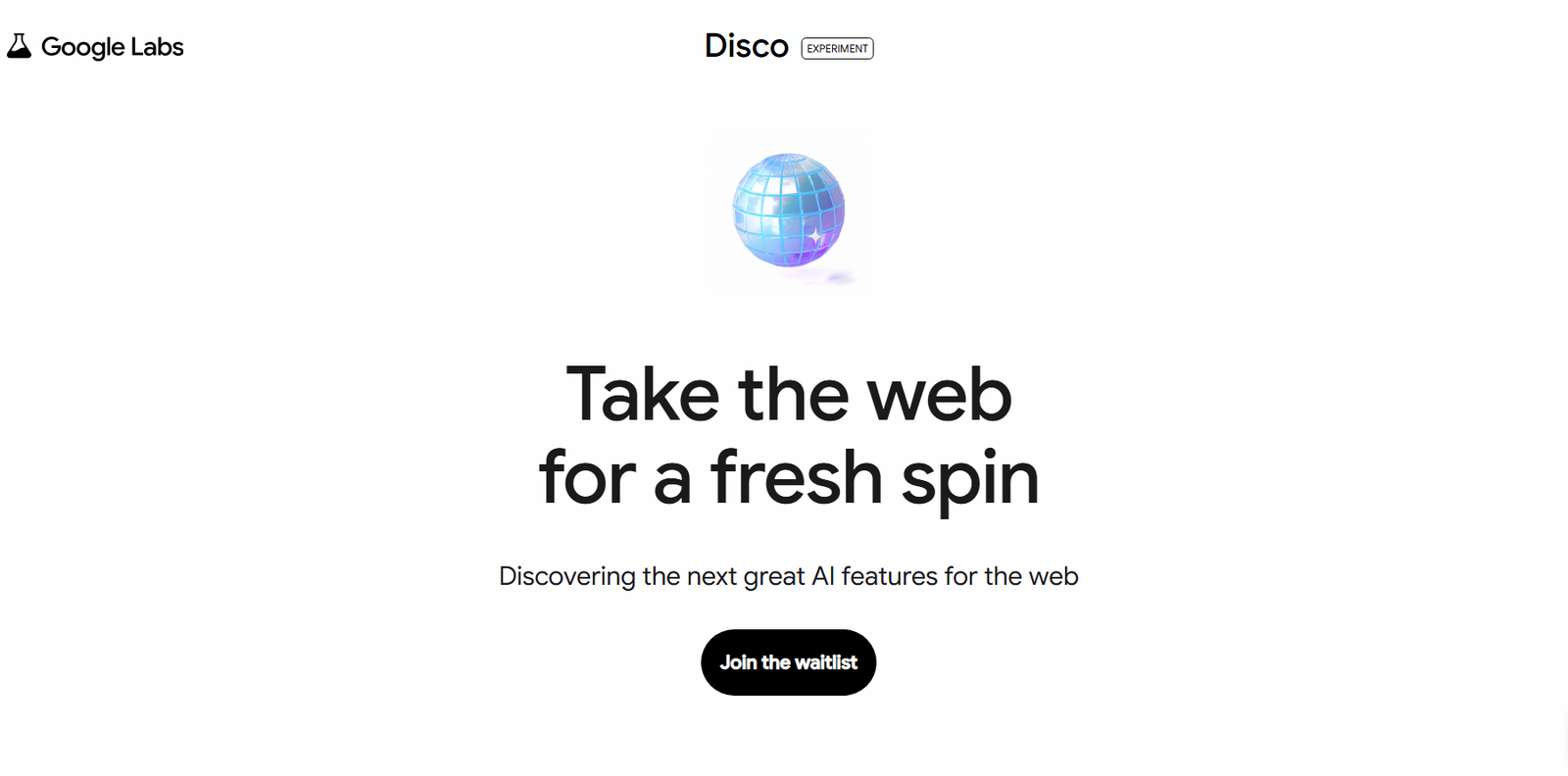
Google has just thrown a massive wrench into the traditional browsing model with the launch of Disco, a new experimental browser from Google Labs. Disco is not merely Chrome with a chatbot sidebar; it is a fundamental re-imagining of the web interface, powered by the latest Gemini 3 AI model. Google describes Disco as a “discovery vehicle,” but its core feature, GenTabs, reveals its true ambition: to transform passive consumption of web pages into active, on-the-fly software creation.
The launch of Disco marks Google’s most aggressive move yet to make the browser an intelligent partner rather than just a passive window. It signals a shift from the era of searching for information to the era of generating tools to process that information. This article explores the groundbreaking technology behind Disco, its potential to reshape digital productivity, and the looming competitive war it sparks in the AI-powered browsing space.
The Core Innovation: GenTabs Explained
At the heart of Google Disco is GenTabs (Generative Tabs). GenTabs takes the chaos of a multi-tab browsing session and uses Gemini 3’s advanced reasoning capabilities to synthesize the content and create a bespoke, interactive mini-application tailored to the user’s current objective.
This is the uncommon genius of the product: it moves beyond summarization or simple Q&A. Instead of asking Gemini a question about the tabs, the browser proactively builds a functional piece of software to help the user complete their task.
How GenTabs Works Under the Hood
The process relies on Gemini 3’s powerful contextual understanding and multi-source retrieval capabilities:
- Context Analysis: GenTabs continuously analyzes the content of all open tabs, previous search history, and (if authorized) recent Gemini chat history. It synthesizes this broad information to determine the user’s implicit intent—e.g., “This person is planning a weekend trip to Vermont, comparing three hotels, and checking local weather.”
- Artifact Generation: Based on the identified intent, Gemini 3 quickly generates the necessary front-end elements for a specific application.
- Trip Planning: It generates a dashboard with a zoomable map (linked to the correct locations), an itinerary schedule, and a budget checklist.
- Recipe Research: It generates a shopping list application, scraping ingredients from three different open recipe sites and consolidating them.
- Academic Study: It generates a visualization matrix or a flashcard app, pulling key definitions and citations from open journal articles.
- Natural Language Refinement: The user can then interact with the generated application using simple, natural language prompts. For example, “Change the budget checklist to Euros” or “Filter the study findings to only show results from 2024,” and GenTabs will update the custom app instantly, without any coding required.
By connecting the dots between disparate information sources and assembling them into a cohesive, actionable workspace, Disco tackles the problem that has plagued knowledge workers for years: the time lost switching between tabs, notes apps, and spreadsheets.
The New Productivity Paradigm: From Passive Consumption to Active Creation
The traditional browser operates in a passive mode; it serves information, and the user’s brain is responsible for processing, organizing, and synthesizing it. Disco flips this model, making the browser an active collaborator.
Industry research has long highlighted the efficiency costs of tab overload. The McKinsey Global Institute estimates that knowledge workers lose up to 19 percent of their time searching and gathering information. The psychological burden of task switching, as cited by the American Psychological Association, can consume as much as 40 percent of productive time.
Disco targets both these pain points. By consolidating the research into a single, dynamically created application, it drastically reduces switching costs. The immediate creation of a tool—a budget tracker, a comparison chart, a research matrix—allows the user to jump directly into analysis and action rather than spending time on organization and data compilation.
Furthermore, Google has emphasized transparency. Every piece of AI-generated content or data within the GenTabs mini-app is linked directly back to its original source web page. This traceability ensures that users can verify and audit the information, a crucial element for tasks like academic work, financial planning, or journalistic research where accuracy is paramount.
The Market Landscape: Sparking the AI Browser War
Google’s decision to launch Disco—built on Chromium, the same base as Chrome, but positioned as a separate experiment—is a clear strategic move. It is a proactive declaration of war in the burgeoning AI browser space.
For the past year, competitors have been chipping away at Chrome’s dominance:
- OpenAI/Microsoft: With the integration of powerful generative models into the Edge browser (and rumored work on a standalone AI browser), the race was on to make the search box smarter.
- Opera: Browsers like Opera have pioneered features like built-in AI agents and customizable sidebars.
- Perplexity: This platform built its entire identity around an AI-first search experience that synthesizes results with high accuracy.
Disco’s launch, particularly with the GenTabs feature, raises the bar by focusing on application generation rather than just information synthesis. It suggests Google’s ultimate vision is not merely to integrate AI into Chrome, but to redefine what the next version of the internet itself looks like: a personalized, auto-generated ecosystem of miniature software tools built on demand.
The Future Trajectory and Ethical Considerations
Disco is currently being rolled out through the Google Labs program to a limited, waitlisted group of users on macOS. This experimental phase is critical, as Google seeks real-world feedback to refine the concept.
The most compelling ideas from this testbed are highly likely to graduate and be integrated into the flagship Google Chrome browser, potentially overhauling the experience for the billions of users who rely on it daily.
However, a technology this powerful introduces new ethical and technical considerations:
- Data and Privacy: For GenTabs to function effectively, it must analyze the user’s complete browsing context. While Google emphasizes privacy controls and opt-ins, the level of context required (multiple tabs, chat history) raises questions about data handling and user consent for this deeply personalized form of browsing.
- Source Attribution and Copyright: Although Disco links back to original sources, the act of scraping and synthesizing content to generate an application raises long-term questions about fair use and compensation for the publishers whose content fuels the AI’s ability to create.
- Dependence on AI: Will users become overly reliant on the AI to organize and curate their information, potentially diminishing their own critical thinking and organizational skills?
Google Disco is a spectacular preview of a more productive, task-oriented internet. By replacing the chaos of open tabs with custom, AI-built software, Google has positioned the browser as the new front line of the generative AI revolution, challenging users and competitors alike to discover what the web can truly become.