Designing Retirement Income with Precision
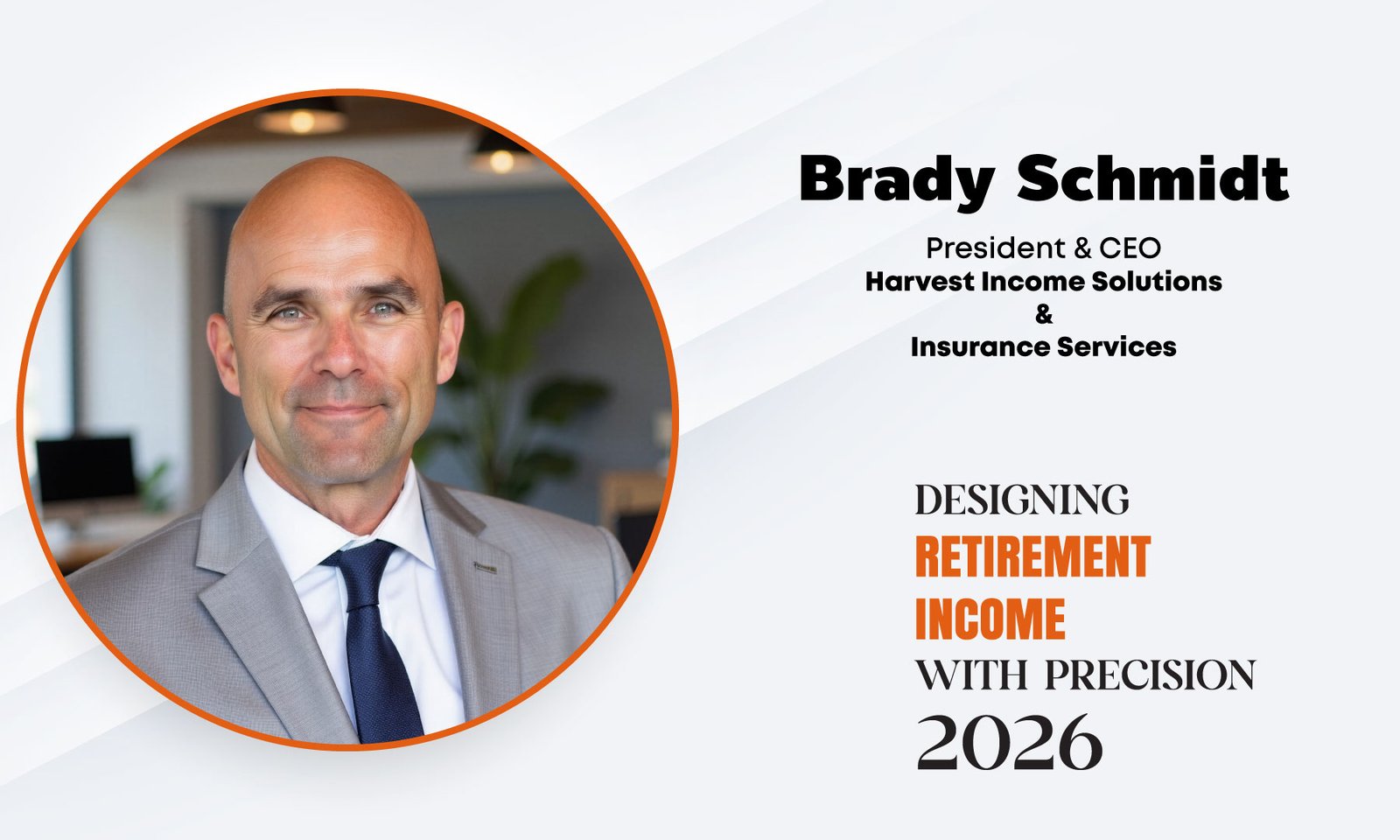
Designing Retirement Income With Precision
Helping Risk Averse People Create Income They Can Count On
An Interview with Brady Schmidt, President & CEO, Harvest Income Solutions, Inc.
Introduction
For many Americans in their 60s and 70s, the big question is whether their money will last the rest of their lives. Brady Schmidt has spent his career answering that question. We sat down with him to talk about what has changed, common mistakes to avoid, and how to find peace of mind in retirement.
Background and Experience
Q: Tell us a little about yourself and how you got into retirement planning.
Early in my career, I tried to be all things to all people, which made it hard to develop real expertise. I also worked at a large brokerage firm where I was limited in what solutions I could offer, even when I could see that someone approaching retirement needed more than just an investment portfolio. That frustration pushed me to build an independent practice, one where I could choose what is truly best for each client rather than being restricted to a single company’s menu of products.
Q: Was there a personal experience that shaped your focus on retirement planning?
I grew up in Fullerton, California, in a family of hardworking tradespeople. Taking care of today often came before planning for tomorrow. My grandmother Fern, who helped raise me, worked two jobs most of her life. Yet when she passed at 82, she had little more than her Social Security check to her name. That stayed with me. It is one reason I am especially committed to helping single women, including widows over 55, feel financially secure and supported. In many ways, I still think of my grandmother when I do this work and consider how different things could have been with a clear plan in place. I work with couples too. Really, I work with anyone who wants to move from financial uncertainty to genuine peace of mind. People do not need more complexity. They need clarity and the confidence that their money will be there when they need it.
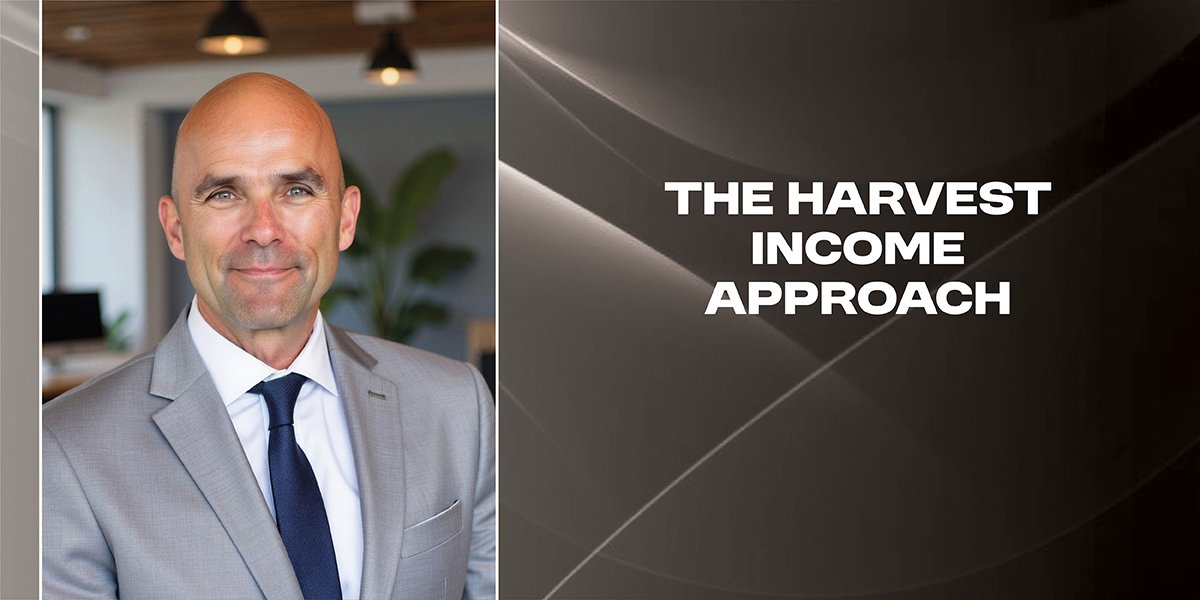
The Harvest Income Approach
Q: Why do you focus specifically on people between 55 and 75?
Retirement planning can feel overwhelming, and for good reason. The decisions you make around Social Security, pensions, turning savings into a monthly paycheck, and managing taxes all need to fit together just right. Some choices, once made, cannot be undone. Most people I meet are not looking for the most sophisticated financial strategy. They want to understand how everything works together and feel confident they are making sound, thoughtful decisions. What I have found is that people do not need more complexity. They need clarity.
Q: What makes your approach different from a typical financial advisor?
The biggest difference comes down to relationships and process. I take time to really listen to understand what matters most to each person, and I invite honest, two way conversation. Even if someone never becomes a client, they leave our first meeting having learned something useful. My process is built around clarity at every step. Some things only become clear as we move forward, so trust is important. When we share core beliefs and mutually agree that my strategies make sense for someone’s situation, we move forward in a very intentional, organized way. The result is a well structured income plan that is secure, predictable, and built to last.
Avoiding Common Pitfalls and Outdated Strategies
Q: What are some of the pitfalls retirees and people planning for retirement need to avoid, or that could prevent a good outcome?
Great question. First is working with a generalist advisor who lacks the specialized skill set and years of experience that a true retirement income professional brings to the table. Old strategies simply do not work the way they used to, and cookie cutter portfolios do not add up to long term retirement security.
Q: When you say outdated strategies, can you give us some examples?
Sure. Let me walk through three rules you have probably heard of and explain why each one deserves a second look.
- The 4% Distribution Rule: This guideline says you can safely withdraw 4% of your savings each year in retirement. For someone with $250,000 saved, that is $10,000 a year. With $500,000, it is $20,000. Even with $1,000,000, you are looking at $40,000 a year, and with today’s cost of living, that barely scratches the surface for most retirees. The rule was designed as a safety guardrail. The idea is that at 4%, your portfolio should be able to weather market downturns and bear cycles. But 4% can hardly keep pace with inflation, let alone absorb market losses at the same time. The good news is there are many options available today with no market risk that can allow withdrawal rates of 6% to 9%. Even if the account itself eventually runs out, the income keeps coming for life. Having that kind of reliable income can bring real peace of mind.
- The 80% Rule: This one assumes you can live comfortably on 80% of what you earned before retirement. In over two decades of sitting across from people who are getting ready to retire, I have never once had someone tell me, “Sure, Brady, I am fine taking a 20% pay cut the day I stop working.” Most people want their lifestyle to stay the same. Planning around an automatic reduction in your income is simply not a strategy. It is an assumption that can lead you in the wrong direction from the very start.
- The Rule of 100: This formula says your age should equal the percentage of your money kept in safer, more stable investments. So if you are 70, the rule says keep 70% safe and put 30% into investments with growth potential. It sounds tidy, but it is a one size fits all shortcut that does not require a lot of deep thought. The reality is that many retirees are not comfortable having any assets at risk, and that is okay. Others are comfortable with risk if it means the chance for better growth. They just want to know exactly how much they could lose in a bad market year before they decide. A real plan is built around the individual, not a formula.
Retirement distributions while also experiencing market losses, even occasional ones, can be incredibly stressful. Retirees are depending on those hard earned assets to deliver a paycheck for 20 or even 30 years. If they experience losses like millions of Americans did during the dot com crash in 2000 or the Great Recession in 2008, there may simply not be enough time left to recover. That kind of setback can seriously jeopardize both your income and your quality of life. This is exactly why thoughtful income architecture matters so much. These old, generalized approaches may not hold up when you need them most.
To be clear: I am not making any recommendations about anyone’s specific situation or a specific strategy, and I am not recommending any products, investments, or changes. This is meant to be educational, just some important things for retirees and soon to be retirees to be aware of.
Income Architecture and Overcoming Fear
Q: What is “Income Architecture” and why does it matter?
Think of it like building a house. Before you pick out the furniture, you need a solid foundation and a clear blueprint. “Income Architecture” is my term for designing your retirement paycheck before deciding where to put your money. We start by looking at all your income sources, like Social Security, any pension, and savings, and build them into a clear, predictable monthly structure. The goal is simple: replace uncertainty with clarity. When clients can see exactly how their income will flow each month, the worry tends to fade. They feel in control. That peace of mind is priceless.
Q: What is the number one concern you hear from people approaching retirement?
Without question, it is: “Will my money last?” Underneath that question is a deeper fear, the fear of running out of income later in life when you are least able to go back to work. It is not just about numbers on a spreadsheet. It is about security, independence, and the ability to live life on your own terms. Many people I meet have done a good job saving, but they have no clear plan for turning those savings into a reliable monthly income. Once we address that, the anxiety often lifts significantly.
Navigating Loss and Market Volatility
Q: How do you help clients who are going through the loss of a spouse or loved one?
Those moments call for a completely different kind of support. It requires less strategy, and more stability, compassion, and patience. I slow everything down. There are no rushed decisions. My job is to create a calm environment where the person feels heard and supported. I have been connected with a grief support group since the early 2000s, and my clients know well in advance that they will not have to face those difficult financial questions alone. For widowed clients especially, we take things one step at a time, making sure they fully understand their options before anything is decided. Financial guidance at those times is not just technical work. It is about trust, patience, and helping someone regain a sense of control over their life.
Q: How do you keep clients calm when the financial news gets scary?
Clarity is the foundation of confidence. My clients rarely call me in a panic when the market drops, because we have designed their plan so their essential monthly income is not riding on market performance. When you know your retirement paycheck is secure regardless of what the stock market does on any given day, you can sleep a lot better at night.
Final Advice and Guiding Principles
Q: What is the most important advice you would give someone who is close to retirement or already retired?
Work with a retirement income specialist, not a generalist. Make sure you have a well structured plan in place before making any major financial moves. Think of it this way: plan first, product second. Be willing to invest a little time and energy into the process. It will pay dividends in reduced stress and a much clearer picture of your future. Trust your instincts. If something does not feel right, say so. A good advisor welcomes those conversations. You want to be educated, not sold. And finally, do not wait until everything feels perfectly clear before taking the first step. Clarity often develops as you move through the process together.
Q: Are there any people or quotes you can share that have been a guiding principle for you personally and in business?
Yes, one quote that continues to influence me in business and helps me recalibrate often is by Zig Ziglar: “Don’t be a wandering generality, be a meaningful specific.” In fact, this quote was the motivation behind my decision to go on the radio, host my own retirement program, and shift from being a generalist to becoming a specialist in retirement planning, and it has paid off quite well.
As a Christian, I turn to the scriptures for guidance, wisdom, inspiration, and encouragement. David writes in Psalm 119:105 that God’s word is a lamp unto my feet and a light unto my path. This has been true for me since I was 16 years old. The Bible is a phenomenal resource for life and business, and the fact that twenty million of them are sold each year is proof of that.
Disclaimer & Contact Information
This interview is for informational and educational purposes only. Nothing in this article constitutes financial, legal, or tax advice. No specific product or company is being alluded to. Withdrawal rates, income strategies, and product features mentioned are illustrative examples only. Consult with a qualified financial professional, attorney, or tax advisor before making any retirement or investment decisions.
For more information about Brady’s retirement services:
Call 805 335 0115 or email info@retiredramafree.com
Harvest Income Solutions, Inc. • Brady Schmidt, President & CEO • 2026
Harvest Income Solutions Insurance & Financial
California Dept. Of Insurance License# 0632846




Related Post