OpenAI Abandons Total Automation: Inside Sam Altman’s Warning to the Tech Industry
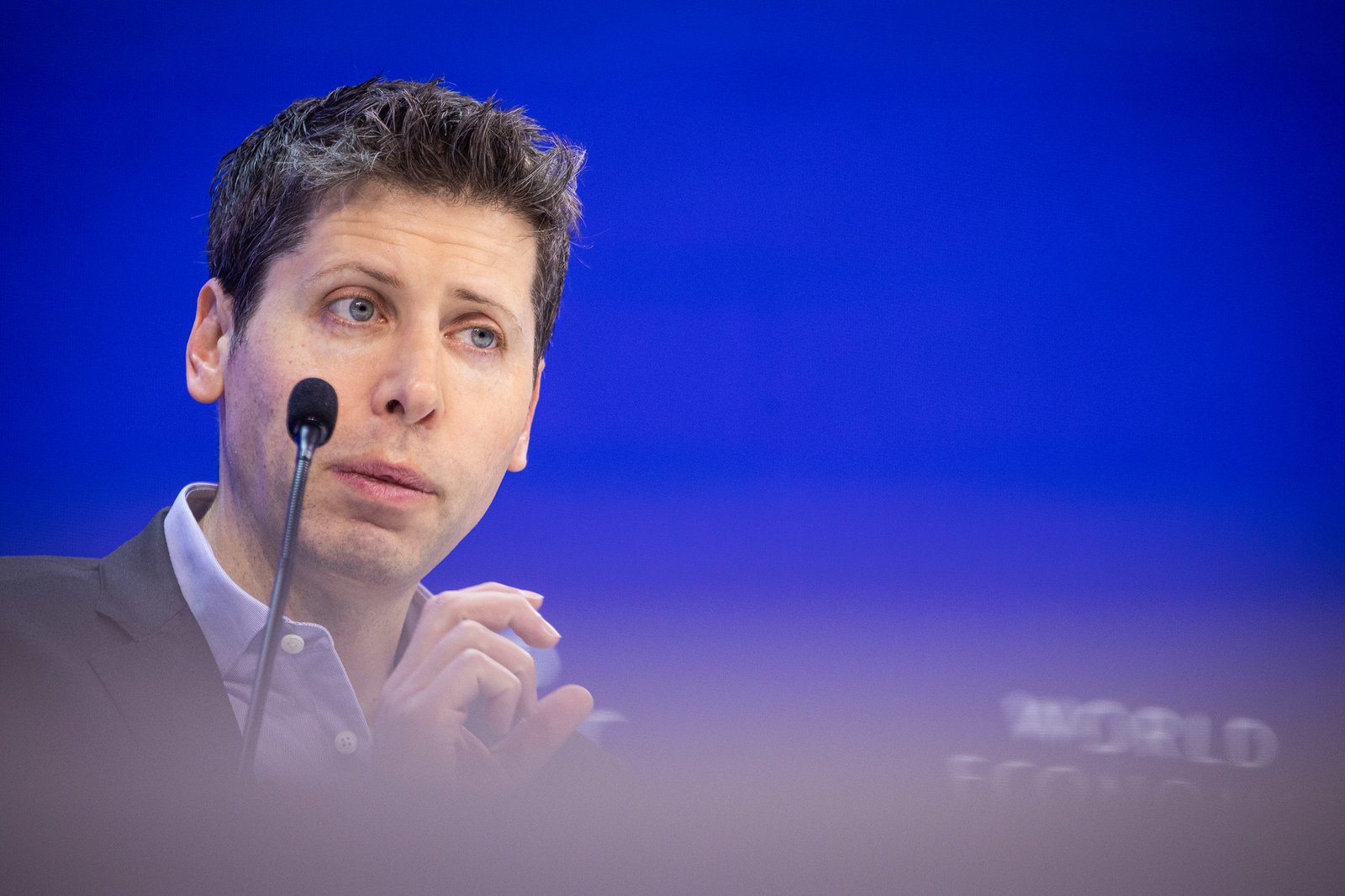
Sam Altman and OpenAI chief scientist Jakub Pachocki announced a sharp shift in company policy on June 8, 2026. In an essay titled “Built to benefit everyone: our plan,” released alongside a confidential filing for an initial public offering, the leaders argued that full automation is bad for humanity. They explicitly stated that entirely automating everything is not the future they want, calling it unfulfilling and dangerous.
The Blockbuster Wall Street Pivot
The timing of this philosophical declaration is intentional. OpenAI just submitted its confidential S-1 registration statement to the Securities and Exchange Commission, taking the first official step toward a massive stock market debut. For years, tech executives promised that algorithmic workers would soon replace entire human back offices. This aggressive rhetoric successfully raised billions of dollars in venture funding, but it also triggered immense pushback from labor unions, corporate buyers, and international lawmakers.
Now that OpenAI is transitioning into a public corporation accountable to Wall Street, the narrative is changing. Investors are starting to worry about the soaring computing costs of advanced software and the legal liabilities of unchecked deployment. By framing full automation as unfulfilling and dangerous, Altman is trying to calm the public markets. He is reassuring conservative institutional investors that OpenAI is focused on building tools to help workers rather than trigger chaotic economic instability.
Why Total Automation Fails Human Needs
The essay frames the problem around human purpose and fulfillment. When a machine handles every task, human choice becomes meaningless. Altman and Pachocki argue that human beings need to set direction, weigh tradeoffs, and bring personal taste to their daily activities. If technology becomes completely untethered from human goals, society loses its anchor.
This is a stark departure from the aggressive tech hype of the past three years. Silicon Valley previously celebrated the idea of a fully automated world where humans could simply sit back and collect a baseline income. The reality of that vision looks much darker to the public today. People are realizing that stripping human agency out of corporate strategy, artistic creation, and scientific research creates a completely hollow culture. The authors note that the human role must grow more important as machine capabilities expand, requiring deep responsibility and genuine care that a cluster of servers cannot replicate.
The Paradox of the Automated Scientist
Despite the warnings against total automation, the OpenAI manifesto contains an interesting internal contradiction. The company still lists the creation of an automated researcher as one of its top objectives. Internal projections show that OpenAI expects algorithmic systems to perform a significant share of its own engineering and alignment research alongside human scientists by March 2028.
This creates a complicated paradox. OpenAI is warning the world about the dangers of automating everything while trying to automate the very people who build their products. The leaders defend this strategy by claiming that advanced safety alignment is too difficult for humans to solve alone. They argue that they need automated systems to find software bugs, test complex engineering ideas, and run millions of daily safety iterations. However, critics point out that automating software research could quickly lead to an accelerating loop of machine improvement that flies past human comprehension.
A United Front with Anthropic
OpenAI is no longer acting as a lone wolf in Washington. This new manifesto aligns perfectly with recent moves by its chief competitor, Anthropic. Just one week earlier, Anthropic leadership publicly stated that a coordinated global slowdown in frontier technology development would likely be a positive step for safety. Now, Altman and Pachocki are joining that call, explicitly advocating for an international oversight body with the authority to force a temporary pause on development when safety measures fall behind.
This coordinated push marks a historic shift in the tech industry. In 2024 and 2025, these companies were locked in a frantic race to build the biggest, loudest, and fastest systems possible. By mid 2026, the two dominant players are standing side by side, begging governments to step in and regulate the field. This sudden desire for regulation has drawn deep skepticism from independent observers. Many policy experts accuse OpenAI and Anthropic of attempting regulatory capture. By helping governments design the rules today, the incumbent tech giants can create massive bureaucratic hurdles that prevent smaller startups from ever competing with them.
The True Cost of Machine Upkeep
Behind the lofty philosophy about human fulfillment lies a harsh economic reality. Tech companies are discovering that running massive data centers is incredibly expensive. In early June 2026, Altman admitted to enterprise clients that computing budgets had suddenly become a massive issue for major companies. This was a topic that almost never came up in executive meetings a year ago.
The cost of processing billions of text tokens is forcing corporate buyers to rethink their automation strategies. Many businesses rushed to replace human customer service departments with automated bots, only to find that the server bills wiped out any projected savings. Uber and Salesforce executives have recently questioned whether the massive capital investments in automated software are yielding actual profits. When you factor in the high error rates of automated systems and the constant need for human auditing, keeping real employees in the loop looks increasingly practical.
What This Means for the Corporate Workforce
For the average worker, OpenAI’s sudden philosophical pivot offers a strange sense of validation. The corporate obsession with complete workforce replacement is giving way to a more pragmatic approach. Instead of building autonomous digital entities that operate without oversight, the tech sector is focusing on human in the loop systems.
Companies are realizing that the most valuable employee is not someone who can write code instantly, but someone who possesses exceptional taste, strategic judgment, and deep institutional responsibility. Software engineers are learning to use these tools to build larger systems faster, but the final evaluation still requires human eyes. Marketing executives who tried to automate entire content teams found that the output lacked any distinct brand voice or genuine emotional connection with consumers. The corporate world is learning that automation can easily generate quantity, but quality still requires human care.
The Threat of Centralized Control
The OpenAI essay addresses another critical vulnerability of the current tech trajectory, which is the extreme concentration of power. Altman and Pachocki argue that a healthy future cannot exist if a tiny handful of tech institutions control all the computational capacity and reap all the financial upside. They compare the current rollout of advanced algorithms to the rural electrification efforts of the 1920s, arguing that the technology must become cheap, abundant, and widely distributed.
History shows that heavily concentrated power makes a society fragile. If only two or three companies in Silicon Valley control the infrastructure that runs global logistics, healthcare, and finance, a single software bug or corporate bankruptcy could collapse entire national economies. OpenAI claims its upcoming public listing is a step toward distributing this power, but skeptics remain unconvinced. A corporate structure that relies on massive data monopolies will naturally concentrate wealth and influence, regardless of the idealistic essays written by its founders.
The era of unchecked automation hype is officially over. When the very people who invented the modern AI boom start warning the public that total automation is dangerous, the ground shifts. The focus for the rest of 2026 will not be on how many human jobs can be eliminated, but on how human judgment can survive in an automated world.