
12 Life-Changing Lessons from Martin Luther King Jr. That Apply to You Today
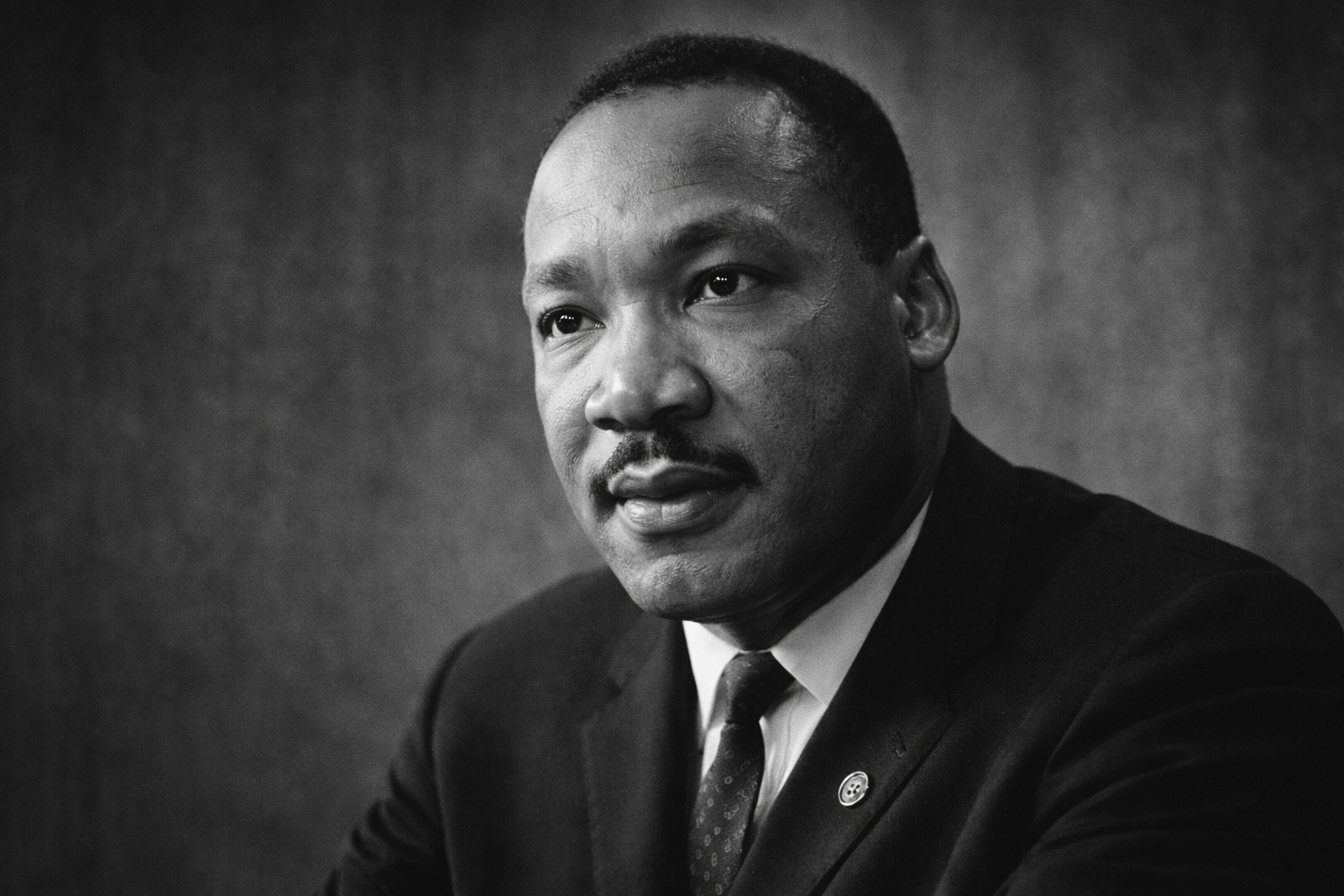
Martin Luther King Jr. was a minister and a civil rights leader. He was born in Atlanta, Georgia, in 1929. He led the American civil rights movement from the mid-1950s until his assassination in 1968. He advocated for racial equality and economic justice using nonviolent resistance. The United States celebrates his life and legacy on the third Monday of January. In 2026, Martin Luther King Jr. Day falls on January 19.
1. The Myth of “The Right Time”
Most people wait for the perfect moment to make a hard decision. They wait for a promotion, a sign, or for things to calm down. Dr. King dismantled this idea completely.
In 1963, King sat in a jail cell in Birmingham, Alabama. He had been arrested for protesting without a permit. While he was locked up, he read a statement from eight local clergymen. They were white religious leaders who claimed they agreed with King’s goals but disagreed with his methods. They told him he was moving too fast. They said he should wait for the courts to handle things. They told him to be patient.
King didn’t apologize. He wrote back on the margins of a newspaper because he didn’t have paper. This became the “Letter from Birmingham Jail.” In it, he attacked the “myth of time.” He argued that time is neutral. It does not inevitably cure all ills. Time can be used destructively just as easily as it can be used constructively.
The Lesson:
Stop saying “time will heal” or “eventually things will get better.” Things get better because you make them better. If you have a difficult conversation to have with a spouse, or a business idea you are scared to launch, waiting does not help. Procrastination is often disguised as patience. King taught that the “right time” is strictly a creation of your own will. You make the time right by acting.
2. Maladjustment is a Good Thing
Psychologists usually say that being “well-adjusted” is the goal of mental health. You fit into society. You follow the rules. You don’t cause trouble.
King hated this advice. He frequently gave a speech about “Creative Maladjustment.” He admitted that everyone wants to live a balanced life. But he argued there are some things in the world that you should never adjust to.
He said he never intended to adjust to segregation. He refused to adjust to religious bigotry. He refused to adjust to the violence of militarism. If you adjust to a sick society, you become sick yourself.
The Lesson:
Look at your workplace or your neighborhood. What are the things that everyone just accepts, but are actually wrong? Maybe it’s a boss who bullies employees. Maybe it’s the way your city ignores the homeless population.
The pressure to fit in is high. But transformation happens when you refuse to normalize bad behavior. Don’t try to be “chill” about everything. If something makes you angry because it is unfair, hold onto that feeling. That friction is where your power comes from. Being “maladjusted” to injustice is a badge of honor.
3. Nonviolence is Not Passive
There is a common misunderstanding that nonviolence means doing nothing. People think it means letting people hit you and not hitting back. That is only half of it.
King’s philosophy, inspired by Gandhi and his Christian faith, was “nonviolent direct action.” The key word is action.
During the Montgomery Bus Boycott, they didn’t just stop riding buses and sit at home. They organized a massive alternative transportation system. They raised money for station wagons. They created dispatch centers. It was an aggressive, organized campaign to bankrupt the bus system. It was not passive. It was economic warfare fought without guns.
The Lesson:
When you face a conflict, you have more options than just “fight” or “flee.” You can engage.
If someone at work steals your credit, screaming at them is violent. Doing nothing is passive. The “King way” is to document the work, present the data to leadership, and systematically prove your value while exposing the theft. You confront the problem directly, but you maintain your dignity. You don’t lower yourself to their level, but you also don’t let them walk over you.
4. Structure Your Dream
“I Have a Dream” is the most famous speech in American history. But dreams are cheap. Logistics are expensive.
King wasn’t just a dreamer; he was an executive. He was the president of the Southern Christian Leadership Conference (SCLC). The March on Washington for Jobs and Freedom in 1963 brought 250,000 people to the National Mall.
That didn’t happen by magic. It happened because Bayard Rustin and King’s team organized thousands of buses. They arranged for 80,000 cheese sandwiches to be made for the marchers. They installed high-tech sound systems so people in the back could hear. They managed security. They raised funds.
The Lesson:
You can have a vision for your life, but without logistics, it’s a fantasy. You want to buy a house? That’s the dream. The logistics are your credit score, your savings rate, and your debt-to-income ratio.
King showed that high-level inspiration must be paired with low-level grinding. If you want to change your life, stop focusing solely on the vision board. Start focusing on the spreadsheet. The “dream” is the destination, but the structure is the vehicle. You need both.
5. Love is a Strategy, Not a Feeling
King spoke about love constantly. But he wasn’t talking about the sentimental love you feel for your family. He was talking about agape—a Greek term for understanding, redeeming good will for all men.
This wasn’t emotional. It was practical. King knew that hating his oppressors would distract him. Hate uses up energy. It clouds your judgment. If you are consumed by anger toward your enemy, you make mistakes. You act rashly.
By choosing to love—which in this context means seeking the best for the other person even if they want the worst for you—you keep your mind clear. You maintain the moral high ground.
The Lesson:
You will deal with people you cannot stand. You will have rivals. If you hate them, they control you. They live rent-free in your head.
Treating them with basic human respect is a strategic advantage. It disarms them. It keeps you focused on your goals rather than their insults. You don’t have to like them. You don’t have to invite them to dinner. But you must refuse to let them drag you into the mud of hatred.
6. The Interconnectedness of Life
In his “Letter from Birmingham Jail,” King wrote: “Injustice anywhere is a threat to justice everywhere. We are caught in an inescapable network of mutuality.”
He understood systems thinking before it was a popular business term. He knew that you couldn’t fix the problems in the South without addressing the politics in the North. He knew you couldn’t fix poverty without fixing education.
The Lesson:
Your life is a system. You cannot compartmentalize your problems. If you are unhappy at work, you will bring that home to your family. If your physical health is poor, your mental focus will suffer.
When you try to transform your life, you have to look at the whole picture. You can’t just fix your finances while ignoring your marriage. You can’t fix your diet while ignoring your sleep. Everything touches everything else. Recognize the “network of mutuality” in your own habits.
7. Sacrifice is Necessary for Change
King’s life was not comfortable. He was stabbed. His house was bombed while his wife and baby were inside. He was arrested 29 times. He was constantly threatened.
He could have been a quiet pastor at a nice church. He had a PhD. He was educated and charismatic. He could have lived a safe, middle-class life. He chose danger because he knew the cost of change.
The Lesson:
We want transformation without inconvenience. We want to lose weight without being hungry. We want to save money without skipping vacations. We want to be leaders without taking the blame when things go wrong.
That is impossible. If you want a result you have never had, you have to do something you have never done. That usually involves pain or sacrifice. Ask yourself: What are you willing to give up to get what you want? If the answer is “nothing,” you won’t get it.
8. Economic Leverage Matters
Toward the end of his life, King shifted his focus heavily toward economics. He launched the Poor People’s Campaign. He died while supporting sanitation workers in Memphis who were striking for better wages.
King understood that civil rights meant nothing without the money to enjoy them. Being allowed to sit at a lunch counter doesn’t matter if you can’t afford the hamburger. He urged people to use their buying power. He told his followers to take their money out of banks that supported segregation.
The Lesson:
Money is a tool for moral action. Where you spend your dollar is a vote.
Look at your own finances. Are you supporting companies that align with your values? More importantly, are you securing your own economic freedom? Financial stability gives you the ability to say “no.” It gives you the power to walk away from a bad job or help a friend in need. Building wealth isn’t greed; it’s building the capacity to make a difference.
9. Build Alliances with Unlikely People
King was a Baptist minister, but he worked with everyone. He worked with Jews, Catholics, and atheists. He worked with labor unions. He worked with white college students and black sharecroppers.
He didn’t demand that everyone agree on everything. He demanded that they agree on the specific goal at hand. He knew he needed numbers to win.
The Lesson:
You cannot succeed alone. You need allies. And your best allies might not look like you or think like you.
In your career or your community, look for the common ground. Maybe you disagree with a colleague on politics, but you both want the project to succeed. That is enough to build an alliance. Don’t demand purity tests from the people around you. Build a coalition based on shared interests.
10. The Power of the Spoken Word
King was a master orator. He studied rhetoric. He knew how to use cadence, repetition, and metaphor. He didn’t just read facts; he told stories.
He understood that to move people, you have to speak their language. When he spoke to religious crowds, he quoted the Bible. When he spoke to legal crowds, he quoted the Constitution. He tailored his message to the audience to get the maximum impact.
The Lesson:
Communication is a skill you must practice. It doesn’t matter how smart you are or how good your ideas are if you cannot explain them.
Learn to tell a story. Learn to speak clearly. Stop using filler words. When you speak, do it with conviction. Whether you are selling a product or asking for a raise, your ability to articulate your value is the deciding factor.
11. Resilience After Failure
We remember the victories, but King failed often. The Albany Movement in Georgia in 1961 is considered by many historians to be a failure. The local police chief outmaneuvered the protesters, and King left town without achieving his major goals.
He was criticized by the press. He was criticized by other black leaders. It was humiliating.
But he didn’t quit. He analyzed what went wrong in Albany and applied those lessons to Birmingham the next year. Birmingham was a massive success because he learned from the failure of Albany.
The Lesson:
You will fail. You will launch a project that flops. You will apply for a job and get rejected.
Do not let failure define your identity. Let it refine your strategy. King treated failure as data. He looked at it objectively, adjusted his plan, and went back to work. If the greatest civil rights leader in history could lose a battle and keep going, so can you.
12. Moral Courage Over Popularity
In 1967, King gave a speech at Riverside Church in New York City opposing the Vietnam War.
This was a disaster for his popularity. The media turned on him. President Lyndon Johnson, who had signed the Civil Rights Act, was furious and cut ties with him. Even other civil rights leaders told King to stick to domestic issues and leave the war alone.
King knew it would hurt his standing. He did it anyway because his conscience demanded it. He said, “There comes a time when silence is betrayal.”
The Lesson:
Doing the right thing will often make you unpopular.
If you speak up for a coworker who is being harassed, you might get frozen out by the group. If you refuse to participate in unethical business practices, you might miss a bonus.
True leadership is not about checking the polls to see what everyone likes. It is about checking your conscience to see what is right. You have to live with yourself. King died knowing he didn’t compromise his soul for approval.
Applying MLK to 2026
Martin Luther King Jr. Day is often reduced to soundbites. We see a quote on social media, like the post, and move on.
But King was not a soundbite. He was a radical thinker who challenged the very foundation of how we live. His life demands that we look at our own.
Are you waiting for the “right time”?
Are you adjusting to things you should hate?
Are you ignoring the logistics of your dreams?
Are you valuing popularity over truth?
The year 2026 is here. The challenges are different than they were in 1968. We face digital privacy issues, global economic instability, and new forms of social division. But the toolkit King left behind works.
Direct action works.
Strategy works.
Resilience works.
Don’t just take the Monday off. Take the lessons. Use them to audit your life. If you want to honor the man, do the work. Transform yourself, and you inevitably transform the world around you.