The Hollow Crown: Why BYD’s Sales Record Hides a Deep Financial Crisis
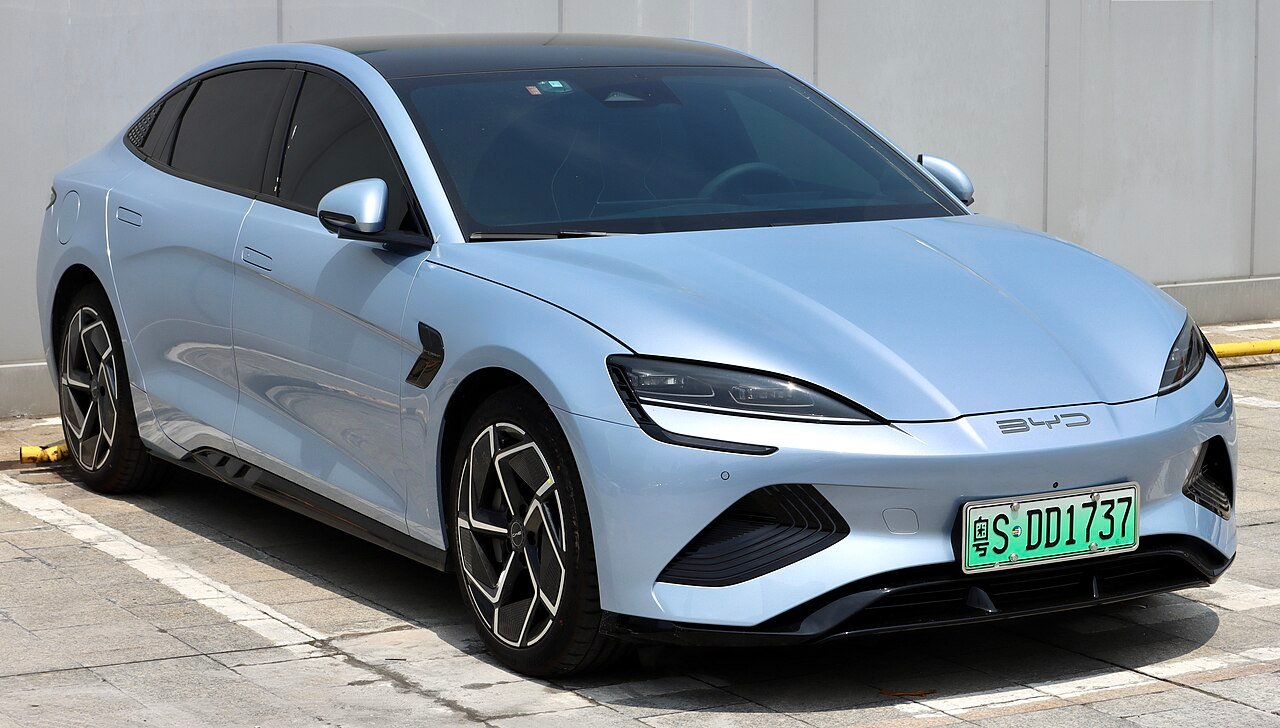
BYD officially sold more electric vehicles than Tesla in 2025. The Chinese automaker reported 2.26 million pure electric deliveries compared to Tesla’s 1.64 million. This shift ends Elon Musk’s long reign at the top of the sales charts. However, financial data released this week suggests the company paid a heavy price for this growth.
The Scoreboard
The final numbers for 2025 paint a clear picture of a market in transition. For years, the electric vehicle industry was Tesla’s game to lose. In 2025, they lost it.
Tesla saw its first significant annual decline in deliveries, dropping about 9% to 1.64 million units. The company struggled with an aging vehicle lineup—the Model 3 and Model Y have not seen major platform overhauls in years—and the removal of key federal tax credits in the United States.
BYD went the other direction. They surged 28% to hit that 2.26 million figure. If you count their plug-in hybrids (which still have gas engines), their total sales jump to a massive 4.6 million vehicles. On paper, it looks like a blowout. BYD is moving metal at a pace no other EV maker can match. They are flooding markets from Southeast Asia to South America with affordable, high-tech cars.
But looking exclusively at the sales count is a mistake. When you open the financial books, the celebration gets quieter.
The Profit Trap
Selling cars is good. Making money on cars is better. Right now, BYD is struggling to do the second part.
In the third quarter of last year, just as they were sprinting past Tesla in volume, BYD’s net profit crashed 32.6%. It fell to roughly $1.1 billion. Even more concerning, their revenue dropped for the first time in five years.
This is the direct result of the brutal price war inside China. To keep factories running and sales growing, BYD had to slash prices. They discounted their most popular models relentlessly to kill off domestic competition and undercut foreign brands. It worked to gain market share, but it destroyed their margins.
Contrast this with Tesla. Even with falling sales, Tesla protects its profit zones. They make significantly more money per car than BYD does. Tesla operates on a model similar to Apple—selling hardware to get users into an ecosystem where they might buy software (like Full Self-Driving) or energy products. BYD operates more like a traditional appliance manufacturer: they sell the hardware, and once it leaves the lot, the transaction is mostly over.
The result is a “profitless prosperity.” BYD is twice the size of Tesla by volume in some metrics but operates on razor-thin margins that leave little room for error.
The “Dilian” Shadow Debt
There is a deeper, less publicized issue threatening BYD’s stability. It involves a financial tool called “Dilian.”
For years, BYD used a supplier financing scheme that acted like a massive internal bank. Instead of paying suppliers immediately for parts—tires, glass, chips—BYD issued electronic IOUs. These weren’t standard 30-day or 60-day payment terms. BYD stretched these payments out to an average of 275 days.
That is nearly nine months.
Imagine running a business where you don’t pay for your inventory for three-quarters of a year. It freed up billions of dollars in cash for BYD to build factories and expand aggressively. It was effectively an interest-free loan funded by their own supply chain.
Regulators in China recently stepped in. They are forcing BYD to unwind this scheme to reduce systemic financial risk. As BYD pays down these billions in shadow debt, their cash flow will tighten significantly. They can no longer fund their global expansion using their suppliers’ money. This comes at the exact moment they need cash the most to build expensive factories overseas.
The Tariff Wall
BYD cannot survive on the Chinese market alone. The domestic market is saturated; everyone who wants an EV in Shanghai or Shenzhen largely has one. The growth is overseas.
In 2025, BYD exported over 1 million vehicles. This was their “new growth engine.” But that engine is hitting a wall.
The United States has locked the door with 100% tariffs on Chinese EVs. You will likely never see a BYD Seagull on a California highway for this reason. Europe, while more open, has slapped its own tariffs on Chinese imports, ranging from 17% to 35% on top of existing taxes.
BYD’s solution is “localization.” They are spending billions to build factories in:
- Hungary: To bypass EU tariffs.
- Brazil: To serve Latin America.
- Mexico: To potentially access North America (though this is politically risky).
- Turkey: To serve the Middle East and Europe.
Building factories is harder than shipping cars. It introduces massive overhead, labor union issues, and regulatory headaches. When you build a car in Shenzhen, you have cheap power, cheap labor, and a supply chain right next door. When you build a car in Hungary, your costs skyrocket.
This means the cars BYD sells in Europe in 2026 will have much lower profit margins than the cars they shipped from China in 2024. They are trading high-margin exports for low-margin local production just to stay in the game.
Tesla’s Pivot vs. BYD’s Grind
The battle between these two companies in 2026 represents a clash of philosophies.
BYD is betting on Vertical Integration. They make their own batteries, their own chips, and even own the ships that transport their cars. They want to control every atom of the physical car to squeeze out cost. It is a manufacturing bet. They believe the winner is the company that can build the best hardware for the lowest price.
Tesla is betting on Artificial Intelligence. Elon Musk has signaled that he cares less about selling 5 million cars and more about solving autonomous driving. Tesla is hoarding thousands of Nvidia GPUs to train its AI. The thesis is simple: if Tesla solves self-driving, the value of their fleet goes to infinity, regardless of whether they sold fewer cars than BYD this year.
In 2026, BYD has to prove it can make money as a pure car company. They don’t have a “Robotaxi” valuation cushion. If they stop selling cars, or if their margins drop to zero, the company creates no value.
The Consumer Reality
For the average buyer, this corporate war is great news. The competition is forcing better products at lower prices.
BYD’s pressure has forced Tesla to finally accelerate plans for cheaper models. We are likely to see a stripped-down Model Y or a new entry-level Tesla sooner because BYD exists. Conversely, BYD is being forced to improve its software and driver-assist tech to catch up to Tesla’s user experience.
If you are shopping for a car this year, you will see Chinese brands pushing “premium” features—massaging seats, rotating screens, karaoke mics—into budget cars. You will see Western brands slashing prices to compete.
What to Watch in 2026
As we move through the year, ignore the monthly sales charts. They tell you what happened, not what is happening.
Watch BYD’s cash reserves. As they pay off the Dilian debt and fund five new international factories, can they afford to keep developing new battery tech?
Watch Tesla’s margins. If they drop prices again to chase BYD’s volume, their stock price—which is built on the promise of high-margin tech revenue—could collapse.
BYD won the title. They have the trophy. But in business, the winner isn’t the one who sells the most; it’s the one who keeps the most. Right now, BYD is bleeding cash to hold a crown that might be too heavy to wear.