
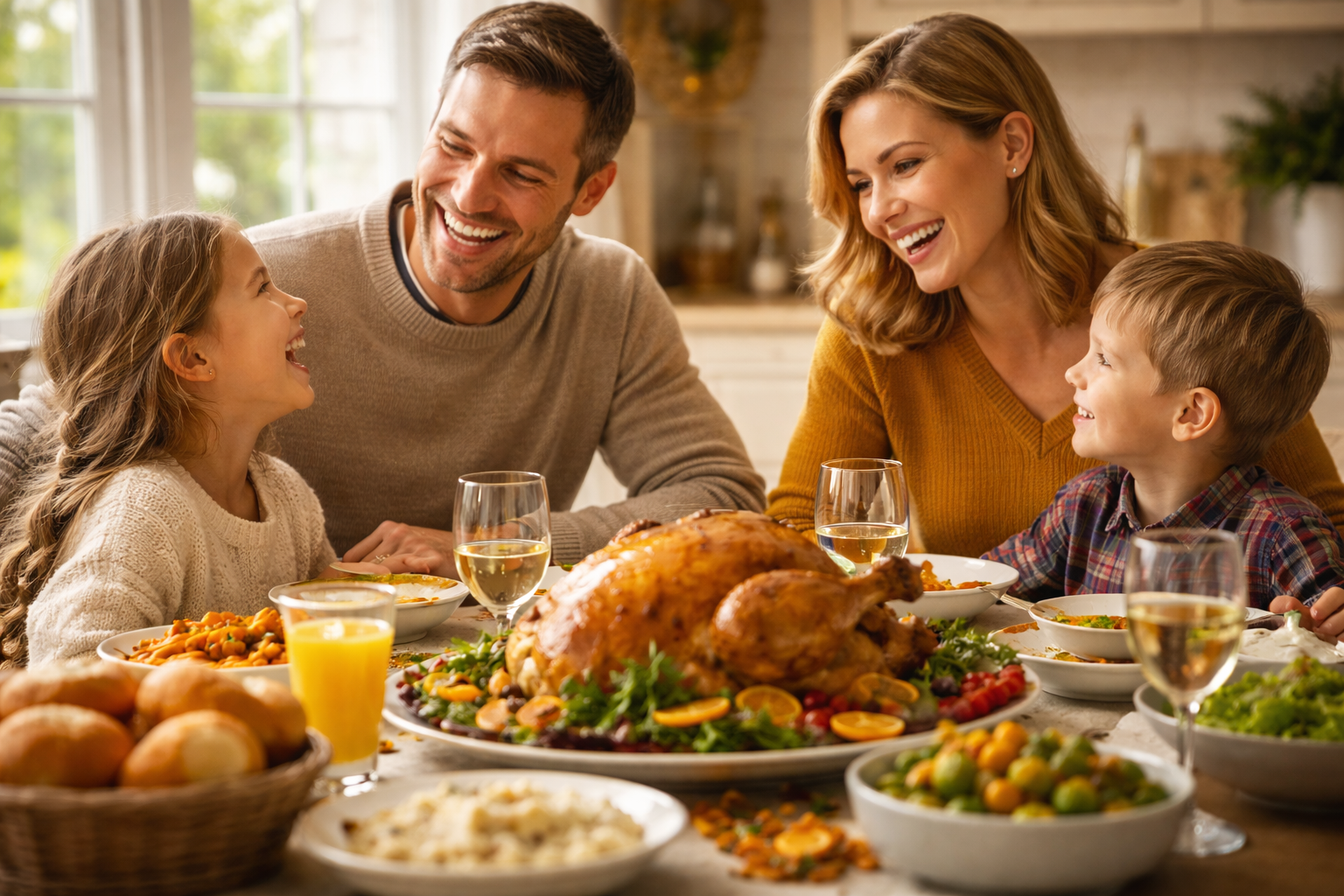
The Metabolic Minefield: 5 Traditional Christmas Foods To Skip For A Healthier 2026
NEW YORK — As the calendar turns to December 24, 2025, the air is thick with excitement for the feast to come. We condition ourselves to accept that Christmas is a time of “letting go,” a 24-hour hall pass for gluttony where calories don’t count and nutritional standards are paused.
However, the modern understanding of metabolic health has shifted. We now know that the damage from a single day of extreme consumption isn’t just about weight gain—it is about systemic inflammation, gut permeability, and acute stress on the liver. The danger isn’t merely the quantity of food; it is the specific chemical composition of certain traditional dishes that have become staples of the American holiday table.
From bio-accumulative toxins in canned goods to the bacterial risks of traditional cooking methods, some of our most beloved dishes carry hidden costs that go far beyond a tighter waistband. This article dissects five specific foods to avoid this Christmas, providing the uncommon science behind why they are hazardous and offering superior alternatives.
1. The “Toxic Sponge”: Stuffing Cooked Inside the Bird
It is the quintessential image of a Norman Rockwell Christmas: a golden-brown turkey pulled from the oven, bursting with savory stuffing. Yet, food safety experts and microbiologists view this tradition with alarm.
The Thermodynamic Trap
The problem with cooking stuffing inside the turkey is a matter of thermodynamics and bacterial migration. A turkey is a porous biological structure. As the bird roasts, juices containing Salmonella and Campylobacter from the raw meat seep directly into the absorbent bread mixture in the cavity.
For the stuffing to be safe, it must reach an internal temperature of 165°F (74°C). However, because the stuffing is insulated by the mass of the bird, it heats much slower than the meat. By the time the center of the stuffing reaches a safe temperature, the turkey meat is often overcooked and dry. Consequently, many home cooks pull the bird when the meat is done, leaving the stuffing in a “bacterial danger zone”—warm enough to encourage bacterial growth but not hot enough to kill the pathogens it absorbed from the raw poultry.
The Carbohydrate Compound
Beyond the bacterial risk, traditional boxed stuffing is often a nutritional void. Most commercial mixes are composed of refined white flour, high-sodium flavor packets, and partially hydrogenated oils. When this high-glycemic load absorbs the rendered fat from the turkey, it becomes a “hyper-palatable” calorie bomb that bypasses the body’s satiety signals, causing massive insulin spikes that can lead to an immediate energy crash (the “food coma”) and disrupted sleep.
The Fix: Cook your stuffing (or “dressing”) in a separate casserole dish. Use sourdough bread or wild rice to lower the glycemic index and use vegetable broth instead of relying on raw turkey drippings for moisture.
2. The “Lipid-Alcohol” Bomb: Commercial Eggnog
Eggnog is arguably the most metabolically confusing beverage you can consume. While homemade versions have their risks (specifically raw eggs), the commercial cartons lining supermarket shelves in 2025 are a chemical slurry that places an immense strain on the liver.
The Metabolic Bottleneck
The human liver processes alcohol and fructose (sugar) using similar metabolic pathways. Commercial eggnog is typically loaded with High Fructose Corn Syrup (HFCS) and thickeners like carrageenan, then often mixed with rum or brandy.
When you consume alcohol and high doses of sugar simultaneously, you create a “metabolic bottleneck.” The liver prioritizes breaking down the alcohol (which it views as a toxin). This pauses the processing of the sugar and the heavy fats from the cream. With nowhere to go, these excess substrates are rapidly converted into triglycerides and stored as visceral fat specifically around the liver.
“Holiday Heart” Syndrome
Furthermore, the combination of high alcohol intake and heavy, fatty dairy is a known trigger for “Holiday Heart Syndrome”—an acute disturbance of the heart rhythm (atrial fibrillation) observed in otherwise healthy people after binge drinking. The density of eggnog makes it easy to consume vast amounts of calories and alcohol without feeling the immediate volume, leading to accidental overconsumption.
The Fix: If you must have the flavor, opt for a “Coquito” style drink using coconut milk (which contains medium-chain triglycerides that are burned more easily for energy) and sweeten with monk fruit or stevia to remove the fructose load.
3. The “Chemical Glaze”: Nitrate-Cured Hams
For many, the Christmas Ham is the star of the show. But the pink hue of that ham is not natural; it is the result of curing salts, specifically sodium nitrate and sodium nitrite.
The Nitrosamine Reaction
Nitrates themselves are relatively inert. However, when they are exposed to high heat (such as roasting in an oven) and in the presence of amino acids (protein), they can convert into nitrosamines. Nitrosamines are potent chemical compounds that have been classified as probable carcinogens by the World Health Organization.
The traditional preparation of Christmas ham exacerbates this risk. We typically coat the ham in a glaze of sugar, honey, or pineapple juice. This addition of sugar, combined with high heat and the nitrates in the meat, creates the perfect chemical environment for the Maillard reaction to run wild, potentially increasing the formation of these harmful compounds.
The Sodium Bloat
A single serving of cured ham can contain over 50% of your daily recommended sodium intake. This massive influx of salt forces the kidneys to retain water to dilute the sodium in the bloodstream. This results in the “puffy” look and feeling many experience the day after Christmas, along with a significant spike in blood pressure that puts stress on the cardiovascular system.
The Fix: Choose a fresh, uncured pork roast (like a pork loin) instead of a cured ham. You get the same savory pork flavor without the nitrates or the excessive sodium load.
4. The “Deceptive” Side: Canned Cranberry Sauce
It jiggles, it retains the shape of the can, and for many, it is nostalgia in a dish. But canned cranberry jelly is one of the most ultra-processed items on the holiday table, stripping a “superfood” of all its benefits.
The BPA/Acid Interaction
Cranberries are naturally highly acidic. Most canned foods are lined with Bisphenol-A (BPA) or similar chemical linings to prevent corrosion. The high acidity of cranberry sauce can encourage the leaching of these endocrine-disrupting chemicals into the food over the long shelf life of the can.
The Fructose Inversion
Nutritionally, canned sauce is a disaster. To counteract the natural tartness of the berry, manufacturers add an exorbitant amount of sugar—usually High Fructose Corn Syrup. A single slice of canned jelly contains roughly 24g of sugar, turning a potent antioxidant fruit into a piece of candy. The processing also strips away the skins, removing the vast majority of the fiber and phytonutrients (like quercetin and anthocyanins) that make cranberries healthy in the first place.
The Fix: It takes 10 minutes to make fresh cranberry sauce. Simmer fresh berries with orange zest and a lower-glycemic sweetener like maple syrup or allulose. You retain the fiber, the texture, and the actual nutrients.
5. The “Histamine Trap”: The Day-After Leftovers
This is the most “uncommon” advice on this list, as leftovers are a beloved tradition. However, for those who suffer from headaches, brain fog, or bloating post-Christmas, the culprit might not be the food itself, but its age.
The Bacterial Fermentation
When protein-rich foods (like turkey and ham) sit in the fridge, bacteria naturally begin to break down the amino acid histidine into histamine. Histamine is an organic nitrogenous compound involved in local immune responses.
Freshly cooked meat has very low histamine levels. However, levels skyrocket in leftovers, especially if the food sat out on the buffet table at room temperature for an hour or two before being refrigerated. By December 26th or 27th, that “leftover sandwich” is loaded with histamines.
For individuals with low levels of the DAO enzyme (which breaks down histamine), eating high-histamine leftovers can trigger an inflammatory response mimicking an allergic reaction: flushing, migraines, nasal congestion, and digestive distress.
The Fix: Freeze your leftovers immediately. If you plan to eat turkey the next day, slice it and freeze it right after the main meal. Freezing halts the bacterial activity that produces histamine. Reheat only what you plan to eat immediately.
The 80/20 Rule for Christmas 2025
The goal of this article is not to induce fear, but to empower you with choice. Christmas is a time for joy, and food is a central part of that. However, blindly consuming industrial compounds and risky preparations is not a requirement for celebration.
Apply the 80/20 rule this year. If you absolutely love the stuffing, eat a small portion, but skip the canned jelly and the commercial eggnog. Cook your stuffing outside the bird. Choose fresh pork over cured ham. By avoiding these five specific metabolic landmines, you can wake up on December 26th feeling energized and clear-headed, ready to start the New Year not with a detox, but with momentum.