
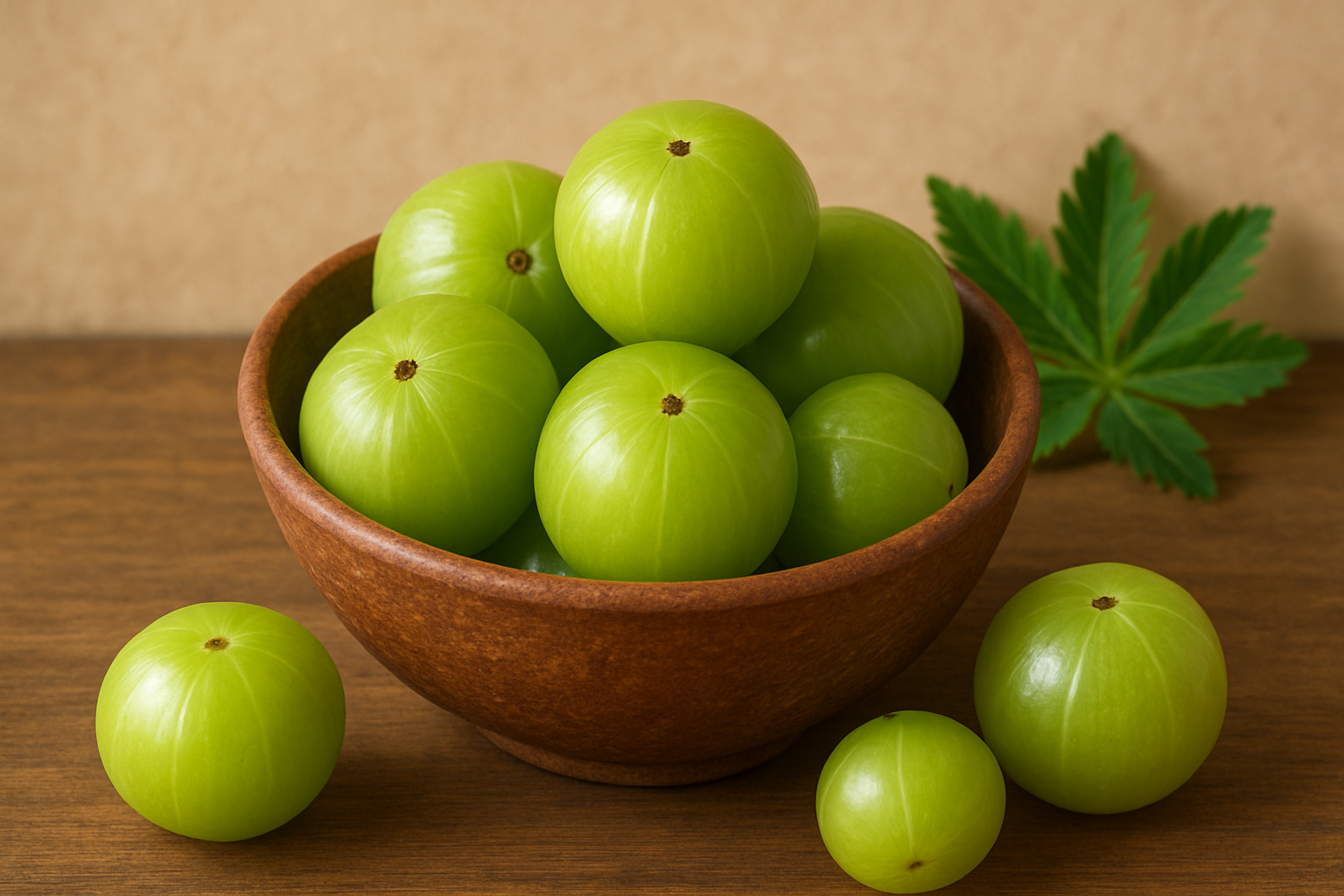
The Ayurvedic Immortal: Why Amla (Indian Gooseberry) Remains The Ultimate Superfood
In the crowded landscape of modern “superfoods,” few contenders possess the historical gravity and present-day scientific validation of Amla. Known botanically as Phyllanthus emblica and commonly as the Indian Gooseberry, this translucent green fruit is far more than just a potent source of antioxidants.
For over three millennia, Amla has been the cornerstone of Ayurvedic medicine, revered not just for treating ailments but for preventing them entirely. It is classified as a “Rasayana”—an elite category of restorative herbs dedicated to longevity, holistic rejuvenation, and the delaying of aging.
While popular health media often reduces Amla to a simple Vitamin C supplement for hair and skin, the reality of its biochemical matrix is far more complex and profound. Amla does not just patch up symptoms; it aggressively modulates the body’s foundational defense systems against the stressors of modern life.
This article dives past the surface-level claims to explore the unique mechanisms, the “uncommon” benefits, and the synergistic power that makes Amla a true botanical heavyweight.
The Synergy Effect: Why Amla is Superior to Synthetic Vitamin C
The headline benefit of Amla is always Vitamin C (ascorbic acid). It is undeniably one of the richest natural sources on Earth, containing nearly 20 times more Vitamin C than an orange by weight. However, if Vitamin C were the only story, a cheap synthetic tablet would suffice. It does not.
The “uncommon” truth about Amla lies in its unique phytochemical matrix. Isolated Vitamin C is notoriously unstable; it degrades rapidly when exposed to heat, light, or oxygen. Amla, however, contains a potent complex of gallotannins and ellagitannins.
These specific tannins act as a protective shield around the ascorbic acid molecules. This natural stabilization means that, unlike most fruits, Amla retains a significant portion of its vitamin content even when processed, dried, or subjected to heat. Furthermore, these tannins are themselves powerful antioxidants that work synergistically with Vitamin C, creating a bioavailability that synthetic supplements cannot replicate. When you consume Amla, you aren’t just getting a vitamin; you are getting a stabilized, highly absorbable antioxidant defense system.
The Metabolic Regulator: Amla and Modern Lifestyle Diseases
Perhaps the most relevant application of Amla today is its impact on metabolic syndrome—the cluster of conditions including high blood pressure, high blood sugar, excess body fat around the waist, and abnormal cholesterol levels.
Insulin Sensitivity and Blood Glucose
Amla is deeply regarded in traditional medicine for managing “Madhumeha” (diabetes). Modern research is catching up, suggesting that Amla exerts a multi-pronged effect on blood sugar regulation.
The fruit is rich in chromium, a mineral essential for carbohydrate metabolism. Chromium enhances the action of insulin, the hormone responsible for allowing glucose to enter cells and be used for energy. By improving insulin sensitivity, Amla helps the body manage blood sugar spikes more effectively after meals. Furthermore, certain compounds in Amla inhibit the enzyme aldose reductase, which is implicated in the development of diabetic complications like cataracts and neuropathy.
Cardiovascular Armor and Lipid Profiles
Amla’s influence extends to cardiovascular health by actively modulating lipid profiles. It doesn’t just arbitrarily lower cholesterol; it works to optimize the ratio. Studies suggest regular consumption can help reduce LDL (bad) cholesterol and triglycerides while simultaneously supporting HDL (good) cholesterol levels.
More importantly, Amla addresses the root cause of arterial damage: oxidative stress. By preventing the oxidation of LDL cholesterol—the process that causes it to stick to artery walls and form plaque—Amla acts as a preventative agent against atherosclerosis (hardening of the arteries).
The Hepatoprotective Powerhouse: Guarding the Liver
In Ayurveda, Amla is considered cooling and detoxifying, with a specific affinity for liver health. The liver is the body’s primary filtration system, constantly bombarded by environmental toxins, processed foods, and pharmaceuticals.
Amla serves as a potent hepatoprotective agent. Its intense antioxidant activity boosts the liver’s own defense mechanisms, specifically increasing levels of glutathione, the body’s “master antioxidant.” By mitigating free radical damage within liver cells and reducing systemic inflammation, Amla supports the liver’s ability to regenerate and perform its vital detoxification cycles efficiently. This makes it an excellent supportive herb for those with sluggish digestion or those exposed to high levels of environmental pollutants.
The Ayurvedic Perspective: The Tridoshic Balancer
To truly understand Amla, one must view it through the lens of Ayurveda. Most foods or herbs tend to pacify one dosha (bio-energy) while potentially aggravating another.
Amla is a rare exception. It is considered “Tridoshic,” meaning it balances all three doshas: Vata, Pitta, and Kapha.
- Though it is sour, its cooling energy (virya) pacifies the fiery Pitta dosha (often associated with inflammation, acidity, and anger).
- Its grounding, nutritive nature tends to calm Vata (associated with dryness, anxiety, and movement).
- Its dry and astringent qualities help offset the heavy, damp nature of Kapha (associated with congestion and lethargy).
This unique capacity to harmonize opposing forces in the body is why Amla is the central ingredient in Chyawanprash, the famous Ayurvedic immunity tonic designed for daily use by all body types.
Practical Integration: How to Consume Amla Effectively
While Amla powder in capsules is convenient, it is rarely the most potent form. The goal is to consume it in a way that preserves its tannin-vitamin complex.
- Fresh Fruit (The Gold Standard): If you have access to fresh Indian gooseberries, this is ideal. They are intensely sour and astringent. Eating one or two a day, perhaps sprinkled with a little black salt to offset the tartness, provides maximum benefit.
- Fresh Juice: Cold-pressed Amla juice is highly potent. A small shot (20-30ml) taken in the morning on an empty stomach, diluted with warm water, is a powerful metabolic wake-up call.
- Chyawanprash: This ancient, jam-like preparation cooks Amla with ghee, honey, and dozens of other herbs. While cooked, the synergistic blend makes the Amla highly bioavailable and nutritive, excellent for long-term immunity building.
- High-Quality dried Powder: If fresh isn’t an option, look for freeze-dried or shade-dried organic powder. This can be mixed into smoothies, yogurt, or simply warm water.
A Note on Safety and Dosage
Amla is generally very safe for long-term consumption as a food. However, because it acts as a natural blood thinner and blood sugar modulator, those on anti-coagulant medications or anti-diabetic drugs should consult their doctor before starting high-dose therapeutic regimens to prevent additive effects.