
The Heart of America Thanksgiving Day 2025 And The Enduring Power Of Gratitude
On Thursday, November 27, 2025, millions of Americans will pause their daily routines to partake in a ritual that is as old as the nation itself. Thanksgiving Day is more than just a federal holiday or a prelude to the winter shopping season. It is the spiritual and cultural anchor of the American autumn, a day dedicated to the simple yet profound act of giving thanks.
From the bustling streets of New York City to quiet family dining rooms in rural townships, the holiday weaves a tapestry of food, football, family, and reflection. While the core of the celebration remains the gathering of loved ones around a bountiful table, the history and evolution of this day reveal a complex story of survival, politics, and national identity. This guide explores every facet of Thanksgiving, from its contested historical origins to the modern traditions that define the 2025 celebration.
Origins and the Myth of the First Feast
The popular narrative of Thanksgiving often begins in 1621 in Plymouth, Massachusetts. This event is deeply ingrained in the American consciousness as the “First Thanksgiving.” In the autumn of that year, 53 surviving Pilgrims of the Mayflower colony joined 90 Wampanoag Native Americans for a three day harvest celebration. They feasted on venison, fowl, and corn to celebrate the colony’s first successful harvest, which was achieved largely through the agricultural knowledge shared by the Wampanoag people, particularly a man named Tisquantum, or Squanto.
However, historians note that this 1621 gathering was not a singular genesis moment but part of a broader tradition of harvest festivals common in both English and Indigenous cultures. Interestingly, it was not the first recorded service of thanksgiving on the continent. Spanish settlers in St. Augustine, Florida, held a Mass of Thanksgiving as early as 1565, and English settlers in Virginia’s Berkeley Hundred observed a day of thanksgiving in 1619. Yet, the Plymouth narrative prevailed, largely due to the rich written records left by Pilgrim leaders like William Bradford and Edward Winslow.
It is crucial to acknowledge the Native American perspective on this history. For the Wampanoag and other Indigenous nations, the arrival of European settlers marked the beginning of land loss, disease, and conflict. Since 1970, the United American Indians of New England have organized a National Day of Mourning on Thanksgiving Day in Plymouth, reminding the nation that the story of colonization is one of immense loss for the original inhabitants. This duality—celebration of survival and acknowledgement of historical tragedy—adds a necessary layer of depth to the modern understanding of the holiday.
The Evolution of a National Holiday
For nearly two centuries after the 1621 feast, Thanksgiving was celebrated sporadically on different days by different states. It was not until the mid 19th century that it became a unified national event. This transformation was largely the work of Sarah Josepha Hale, a prominent magazine editor and the author of “Mary Had a Little Lamb.” For 17 years, Hale campaigned tirelessly, writing letters to five different presidents advocating for a national day of thanks to promote unity.
Her efforts finally succeeded in 1863, amidst the brutal conflict of the Civil War. President Abraham Lincoln, seeking to heal a fractured nation, issued a proclamation setting aside the last Thursday in November as a day of “Thanksgiving and Praise.” He envisioned the holiday as a balm for the country’s wounds, asking citizens to pray for peace and unity.
The date remained relatively stable until 1939, when President Franklin D. Roosevelt attempted to move the holiday up by one week to extend the Christmas shopping season during the Great Depression. The move was met with public outcry and confusion, with some states refusing to comply. The failed experiment, derisively dubbed “Franksgiving,” ended in 1941 when Congress passed a resolution permanently fixing Thanksgiving Day as the fourth Thursday in November.
The Modern Celebration A Tapestry of Traditions
In 2025, Thanksgiving has evolved into a secular but deeply spirited festival. It is the busiest travel period of the year, with the Transportation Security Administration (TSA) and AAA projecting record breaking numbers of travelers taking to the roads and skies to reunite with family.
The Feast
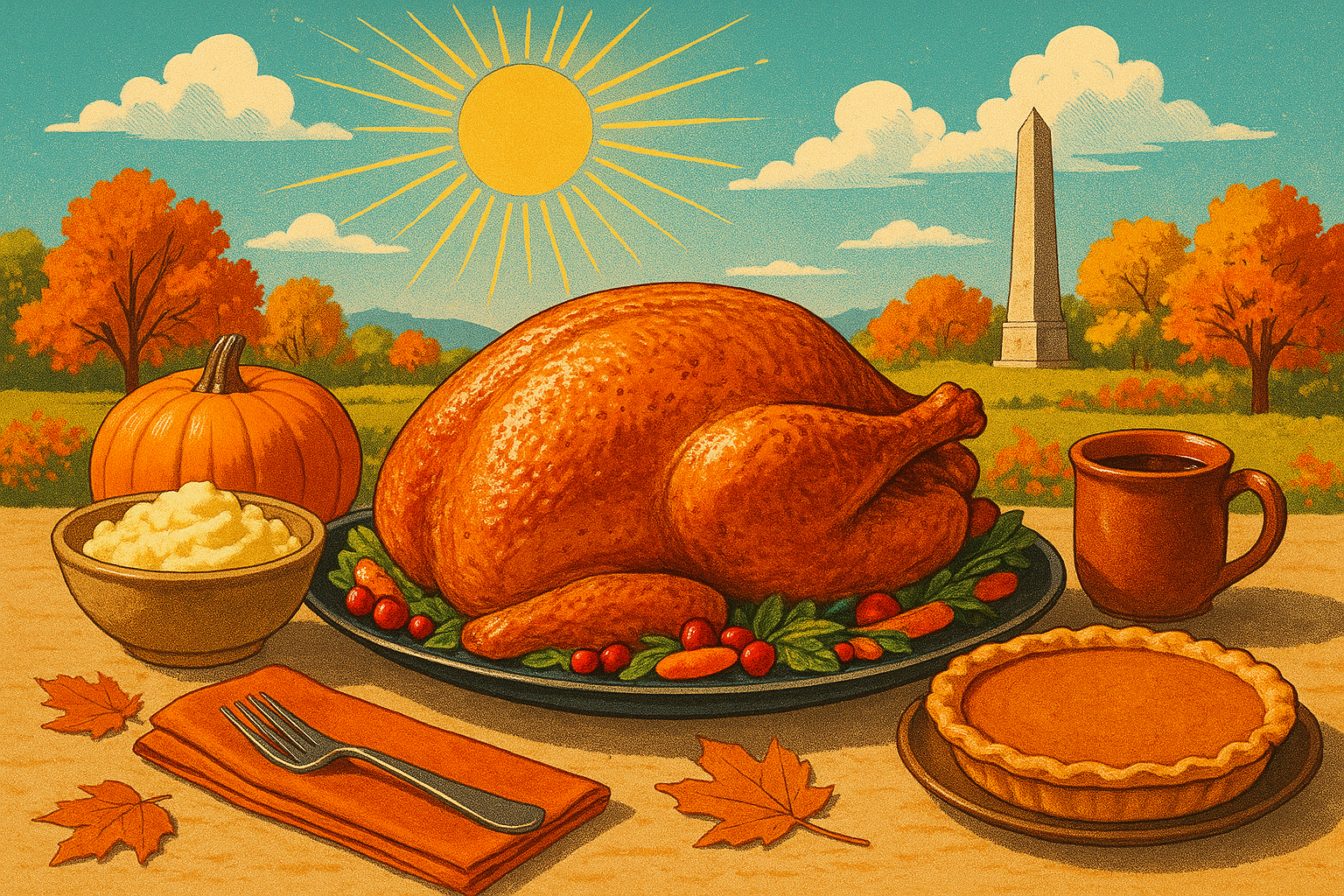
The centerpiece of the day is undoubtedly the meal. The turkey remains the undisputed king of the table, with Americans consuming hundreds of millions of pounds of the bird each year. Preparation methods vary wildly, from the traditional oven roast to deep fried turkey, a technique popular in the South.
Accompaniments are just as iconic. Stuffing (or dressing), mashed potatoes with gravy, green bean casserole, and cranberry sauce are staples. Dessert is dominated by pumpkin pie, a dish that has little resemblance to the pumpkin preparations of 1621 but has become synonymous with the holiday. Regional variations keep the menu exciting: one might find mac and cheese in the South, sauerkraut in Baltimore, or tamales in the Southwest.
Economic Context for 2025
For the 2025 holiday, families are navigating a mixed economic landscape. While inflation has cooled in some sectors, the cost of a traditional Thanksgiving dinner remains a topic of conversation. Some reports indicate a stabilization in turkey prices compared to the spikes seen in 2022 and 2023, though items like canned goods and certain produce have seen modest increases. Savvy shoppers are utilizing retailer promotions, with major grocery chains offering “inflation free” meal bundles to keep the celebration affordable.
Spectacle and Sport
Thanksgiving morning in America is synonymous with the Macy’s Thanksgiving Day Parade in New York City. Since 1924, this spectacle has captivated the nation. Millions line the streets of Manhattan, and tens of millions more watch from home as giant helium balloons, marching bands, and elaborate floats make their way to Herald Square. The arrival of Santa Claus at the end of the parade officially signals the beginning of the Christmas season.
By afternoon, the focus shifts to the gridiron. NFL football is an integral part of the holiday DNA. The tradition dates back to the league’s inception, with the Detroit Lions and Dallas Cowboys hosting traditional home games every year. For many families, the roar of the crowd on the television is the background noise to dinner preparations and post meal naps.
Another quirky tradition is the Presidential Turkey Pardon. Each year, the President of the United States is presented with a live turkey and grants it an official “pardon,” sparing it from the dinner table. The lucky bird is then sent to live out its days on a farm or sanctuary. This lighthearted ceremony usually takes place a few days before the holiday and serves as the unofficial kickoff to the week’s festivities.
Why It Matters The Philosophy of Gratitude
Beyond the food and the football, the enduring power of Thanksgiving lies in its core philosophy: gratitude. In a culture often driven by ambition and consumerism, Thanksgiving offers a rare collective pause. It is a mandated moment to stop, look around, and appreciate what is already present.
Psychologists and sociologists alike emphasize the benefits of this collective gratitude. Expressing thanks has been linked to increased happiness, better health, and stronger social bonds. The holiday forces a shift in perspective from what we lack to what we have.
Volunteering is another critical expression of this spirit. Food banks and soup kitchens see their highest rates of volunteerism during Thanksgiving week. The “Turkey Trot”—local 5K runs held on Thanksgiving morning—often raises money for local charities, allowing participants to give back to their communities before sitting down to their own feasts.
How to Celebrate Creating Meaningful Moments
Celebrating Thanksgiving does not require a large family or a perfect gourmet meal. The essence of the day is connection.
Friendsgiving has emerged as a popular alternative or addition to the traditional family gathering. Usually held on the Wednesday before or the weekend after Thanksgiving, Friendsgiving allows chosen families to celebrate with potluck style meals and fewer formal rules. It reflects the changing social structures of modern America, where friends often serve as the primary support system for young adults living far from home.
For those hosting, the key to a successful Thanksgiving is preparation and delegation. The meal is massive, and trying to do it alone is a recipe for stress. Inviting guests to bring a dish not only lightens the load but also makes the dinner more collaborative and diverse.
Incorporating a gratitude ritual is a simple way to elevate the gathering. Going around the table and having each person share one thing they are thankful for is a classic tradition that grounds the meal in its true purpose.
Voices of Thanksgiving Quotes to Inspire
Words often capture the spirit of the holiday better than anything else. Here are some of the most poignant reflections on gratitude and Thanksgiving:
“Gratitude is not only the greatest of virtues, but the parent of all others.” — Marcus Tullius Cicero
-
“I am grateful for what I am and have. My thanksgiving is perpetual.” — Henry David Thoreau
-
“Be present in all things and thankful for all things.” — Maya Angelou
-
“Thanksgiving is a time of togetherness and gratitude.” — Nigel Hamilton
-
“As we express our gratitude, we must never forget that the highest appreciation is not to utter words, but to live by them.” — John F. Kennedy
A Day for the Soul
As the sun sets on November 27, 2025, and the leftovers are packed away, the true value of Thanksgiving remains. It is the one day on the American calendar that asks nothing of its citizens other than to be together and to be thankful. In a world that moves at breakneck speed, this annual return to the table serves as a vital reset for the national soul. It reminds us that despite differences in politics, background, or belief, there is a shared capacity for gratitude that binds the country together. Whether celebrated with a grand banquet or a simple meal, Thanksgiving affirms that the greatest blessings are often the people sitting right beside us.