Meet The Global Tech Leader Reshaping Future
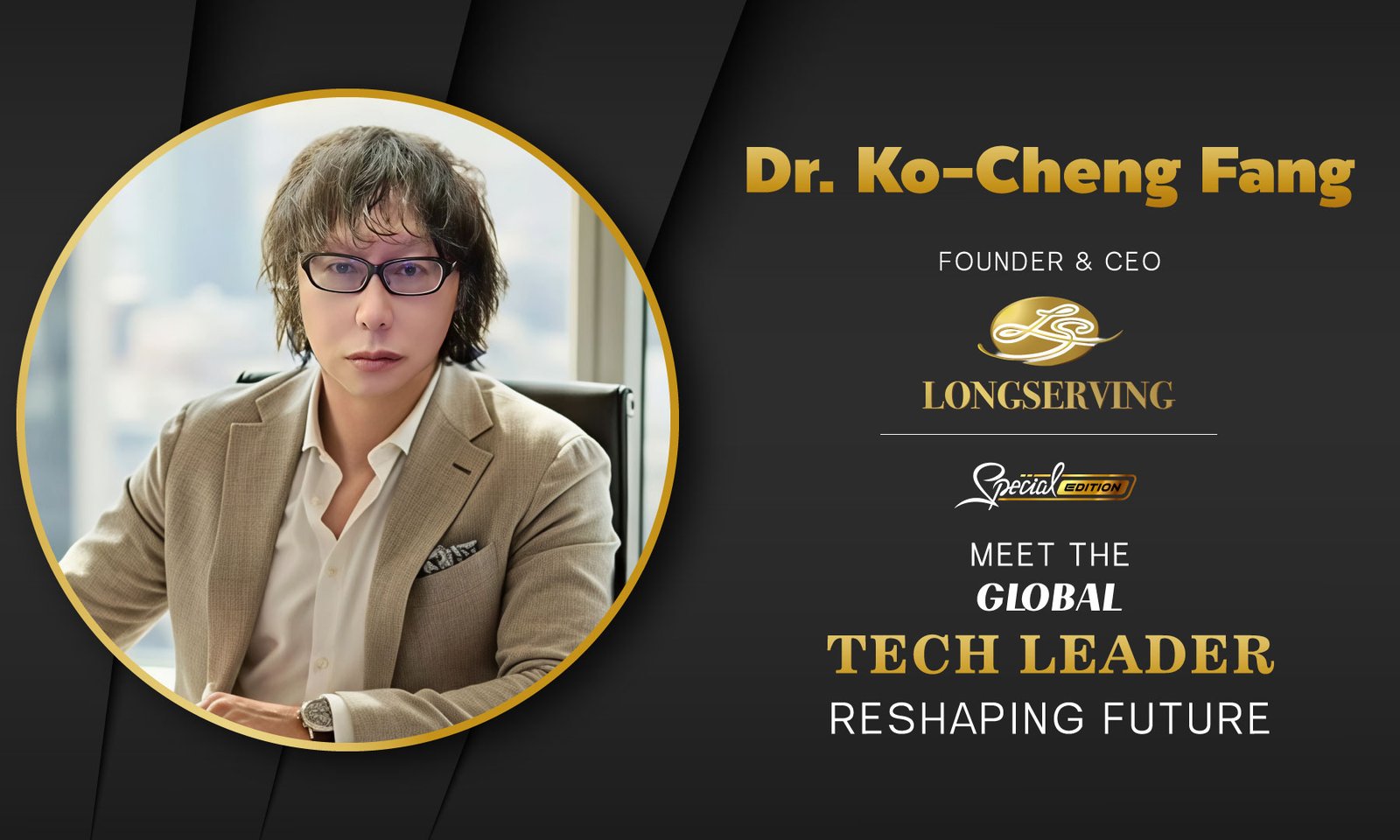
The Global Tech Leader Solving Humanity’s Biggest Challenges: Inside LongServing Technology with Dr. Ko-Cheng Fang
Dr. Ko-Cheng Fang serves as the Founder, Chairman, and CEO of LongServing Technology. He operates as an inventor, entrepreneur, and interdisciplinary researcher with a strict focus on the future. He established LongServing Technology in 2010 based on a singular philosophy. He believes that valuable technology must do more than just achieve technical milestones. It must actively address the major challenges facing humanity, improve the overall quality of life, and secure a better future for upcoming generations.
LongServing Technology functions as a research-driven high-tech organization. The company concentrates its resources on photonic quantum computing, artificial intelligence, biotechnology, and advanced materials. Under Dr. Ko-Cheng’s leadership, the organization aims to bypass the limitations of current systems. The goal is to develop highly efficient, sustainable solutions that deliver tangible global value.
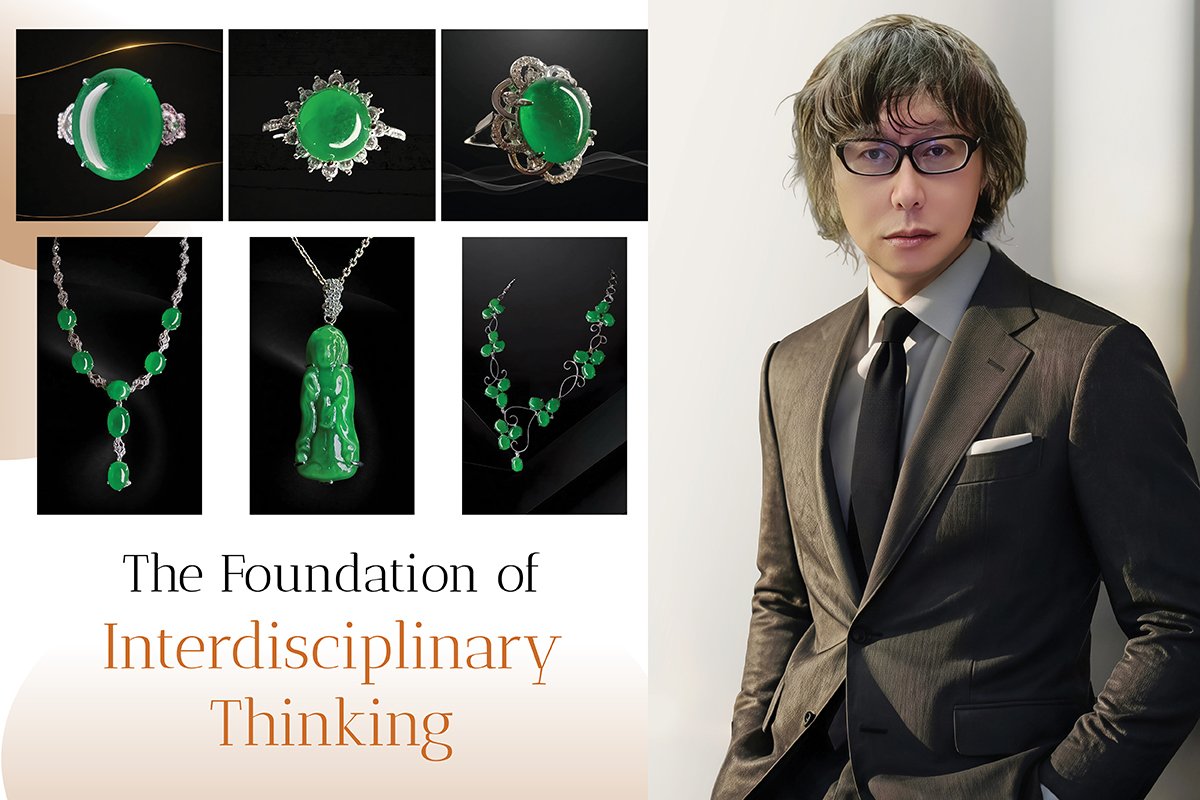
The Foundation of Interdisciplinary Thinking
His approach to technology and business is not rooted in traditional academic engineering. It stems from a diverse early education. He found inspiration across multiple, seemingly unrelated disciplines.
“When I was young, I read books on the history of Western art, which inspired me to learn painting and sculpture. As I grew older, I became interested in biographies of legendary business leaders, such as The Biography of Du Yuesheng, one of the wealthiest figures in Shanghai, and the management philosophy of Konosuke Matsushita, known as the ‘God of Management’ in Japan. I enjoyed studying how they built their success and the history behind their rise.”
This combination of art and commerce shaped his early analytical methods. Studying painting and sculpture developed his visualization skills. Transitioning from art to the study of commercial titans provided him with a structural understanding of success. He did not merely look at their final achievements. He analyzed the specific historical contexts and the strategic steps that led to their rise.
Military Strategy and Mental Clarity
His strategic mindset is heavily informed by military history and spiritual discipline. He applies historical battlefield tactics directly to modern corporate competition.
“I have also always been fascinated by Chinese and international military history. I am particularly familiar with almost every major battle of World War II. Studying these battles has helped me train my mind, develop logical reasoning, and strengthen my ability to analyze and anticipate the outcome of complex situations on the battlefield. At times, business competition can be much like warfare.”
Ko-Cheng complements his knowledge of World War II with classical strategy. He studies Chinese military works, most notably The Art of War by Sun Tzu. This tactical training is balanced by rigorous mental and spiritual conditioning.
“In addition, I have extensively studied Buddhist scriptures, including the Tripitaka and various exoteric and esoteric Buddhist texts, and practiced meditation and Zen. These practices have helped me develop a deeper sense of intuition and a broader perspective on the past and future, which I believe contributes to my ability to make more precise judgments about the direction of future technologies.”
By combining the logical reasoning required to understand global warfare with the intuitive clarity developed through Zen meditation, he created a unique leadership framework. This framework allows him to evaluate future technology trends with both historical context and deep focus.
Rejecting Professional Boundaries
He operates across technology, healthcare, science, and art because he fundamentally rejects the concept of academic confinement.
“I believe creativity has had an even deeper influence on me. I have always enjoyed learning on my own, and I have never believed that it is necessary to confine my thinking to a single field or discipline. For example, if someone studies electronic technology, who says they cannot develop biotechnology? Who decided that? Why couldn’t I challenge myself in chemistry as well?”
He views professional boundaries as arbitrary limits. He chooses to learn freely and independently. He believes that an individual’s future should not be dictated by conventional frameworks. This independent learning style often places him in opposition to traditional academic systems.
Ko-Cheng notes that modern technological breakthroughs rarely happen in isolation. A single field of study is no longer sufficient to solve complex global problems. He believes that bringing together materials science, computing architectures, artificial intelligence, and industrial applications is mandatory for creating a complete innovation ecosystem. His unconstrained creativity is the primary driver of his continuous innovation.
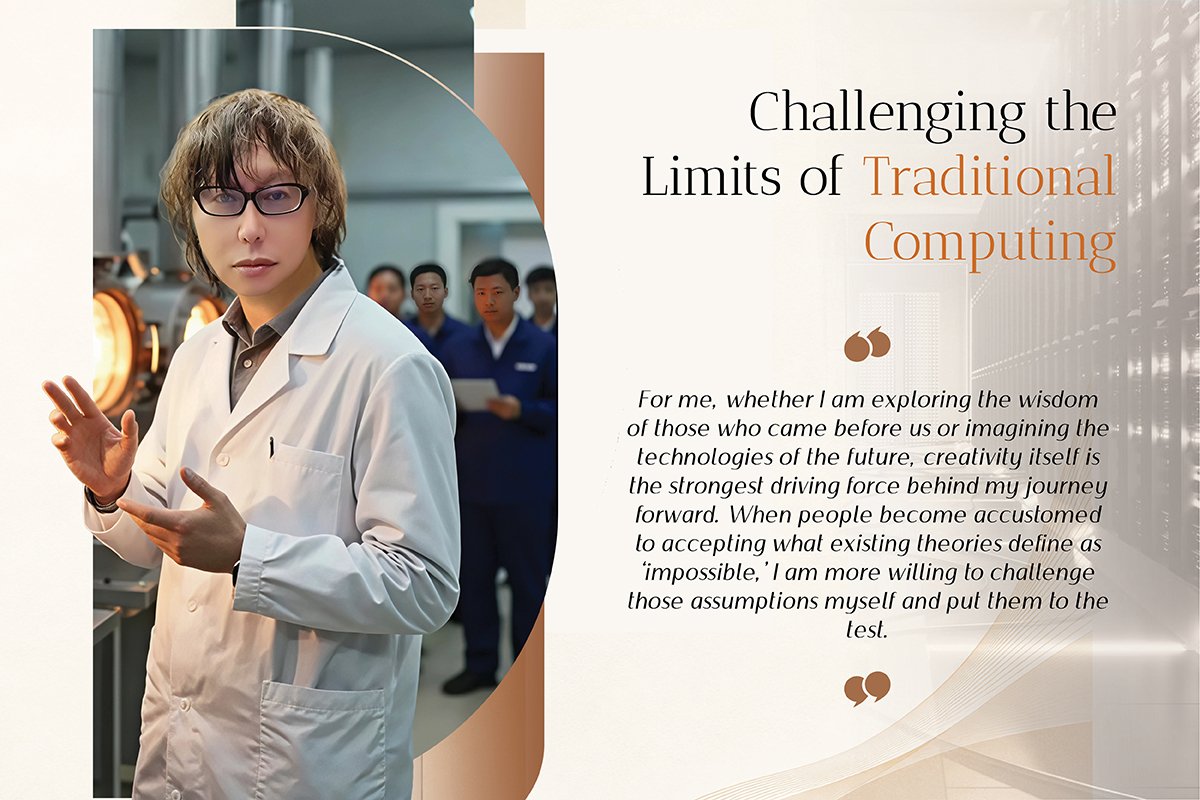
Challenging the Limits of Traditional Computing
LongServing Technology actively pursues projects that many consider impossible. He is motivated by the physical limitations currently restricting global technology.
“For me, whether I am exploring the wisdom of those who came before us or imagining the technologies of the future, creativity itself is the strongest driving force behind my journey forward. When people become accustomed to accepting what existing theories define as ‘impossible,’ I am more willing to challenge those assumptions myself and put them to the test.”
He focuses heavily on the current bottlenecks in traditional electronic computing. As the industry faces the limits of Moore’s Law, escalating energy consumption, and restricted computing power, he refuses to follow the standard path. He opts to step entirely outside established frameworks. His goal is to create entirely new materials and architectures to open new directions for human advancement.
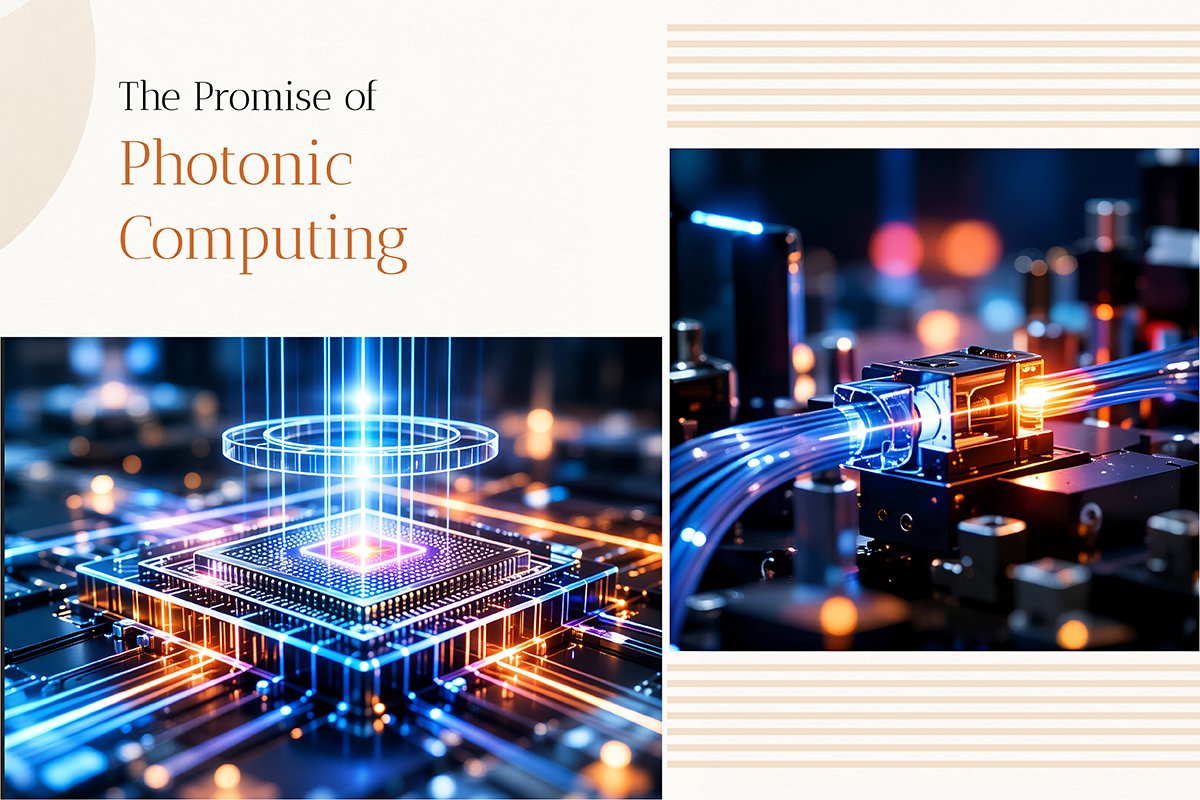
The Promise of Photonic Computing
His work in photonic computing has drawn significant global attention. He views this technology as the necessary replacement for traditional electronic chips.
“What excites me most is the potential for photonic computing to fundamentally break through the limitations of traditional electronic chips and bring a transformative change to AI and high-performance computing. Our X-Photon materials and all-optical memory are designed to deliver more than 1,000 times greater computing power while reducing energy consumption by 90 percent, directly addressing the power and cooling challenges faced by AI data centers around the world.”
He considers this development a core platform for advancing human civilization. The applications extend far beyond simple processing speed. He points out that this level of computing power will accelerate drug discovery, process massive financial data sets, and enable highly intelligent robotics. He expects photonic computing to serve as the baseline infrastructure for the next generation of technology.
Addressing the Global Cancer Challenge
His interdisciplinary approach extends directly into the healthcare sector. He has dedicated years of research to finding new methods for cancer treatment.
“The reason I became involved in cancer treatment research is that cancer remains one of the major medical challenges facing humanity. Although modern medicine has made significant progress, the cure rate for many types of cancer remains limited. Traditional chemotherapy can attack cancer cells, but it can also damage healthy cells at the same time, placing a significant physical burden on patients.”
He is acutely aware of the dual burdens placed on cancer patients. The physical toll of traditional treatments is compounded by extreme financial costs. These expenses often create severe difficulties for families attempting to afford long-term care.
Dr. Ko-Cheng is searching for new possibilities. He aims to develop treatments that are far more precise and effective. His primary objective in healthcare is to eradicate the disease while minimizing the damage inflicted on healthy cells and reducing the overall financial and physical burden on the patient.
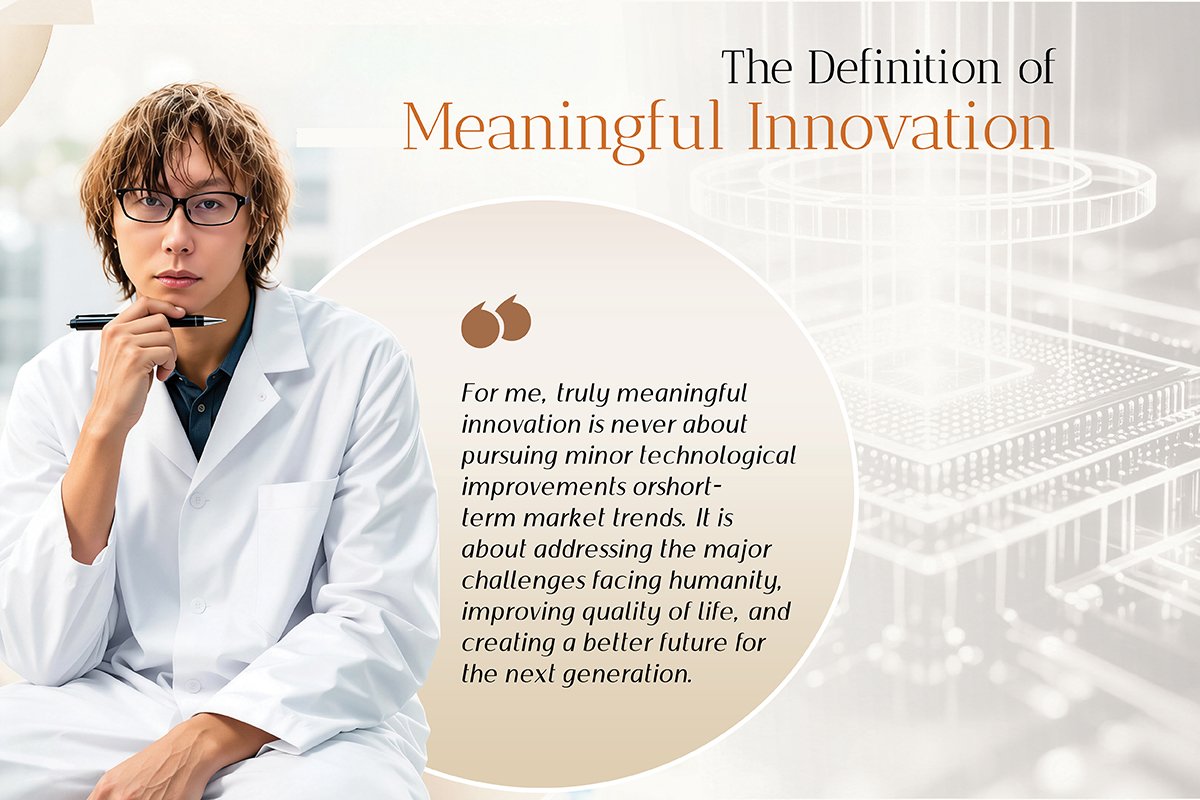
The Definition of Meaningful Innovation
He measures innovation strictly by its utility and its impact on human life.
“For me, truly meaningful innovation is never about pursuing minor technological improvements or short-term market trends. It is about addressing the major challenges facing humanity, improving quality of life, and creating a better future for the next generation.”
This principle has guided his entire career. During his early initiatives in cybersecurity, his focus was on protecting user privacy. Currently, his research in photonic computing and advanced materials is focused on solving the massive power and cooling deficits created by artificial intelligence. He insists that breakthrough technologies hold no value unless they are transformed into practical applications that advance human civilization.
Navigating Skepticism and Failure
Developing technology that challenges established physics requires navigating intense skepticism. He maintains his confidence by grounding his work in verifiable science.
“My confidence comes from a deep understanding of scientific principles and from verifying them through my own work, rather than blindly following established theories or popular opinions. When conventional thinking defines something as ‘impossible,’ I often see it not as a limit of physics, but as a bottleneck in existing technological approaches.”
He views questioning authority as a mandatory step in the innovation process. If a project aligns with the long-term needs of humanity and is theoretically feasible, he will pursue it through rigorous experimentation.
He faced massive resistance during the early stages of developing photonic chips and advanced materials.
“The greatest challenge was undoubtedly facing skepticism from both industry and academia toward the concept of an ‘all-optical architecture.’ At the time, traditional electronic computing remained the dominant approach. Breaking through perceived physical limitations and developing entirely new material packaging and memory architectures required countless experiments, failures, and efforts to overcome technical bottlenecks.”
This period of resistance taught him the value of patience. He learned that setbacks are not the end of a project. They are an essential mechanism for testing hypotheses and optimizing technical pathways. He believes that standing firm during short-term failures is the only way to achieve a breakthrough from zero to one.
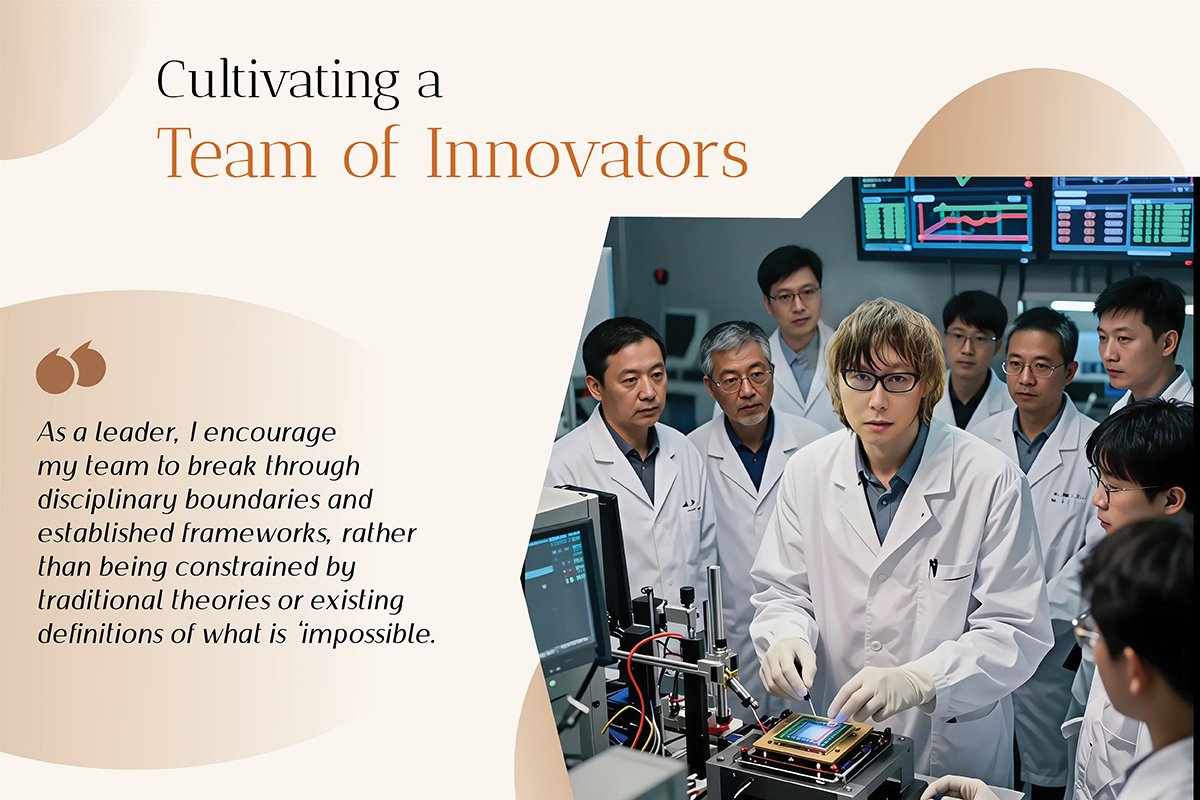
Cultivating a Team of Innovators
He applies his personal philosophy to his management style. He actively trains his team to ignore established limits.
“As a leader, I encourage my team to break through disciplinary boundaries and established frameworks, rather than being constrained by traditional theories or existing definitions of what is ‘impossible.’ I believe in creating an environment that encourages independent learning and hands-on verification, where team members feel empowered to question assumptions and conduct bold experiments.”
He directs his team away from chasing short-term market trends. He requires them to focus on the major needs humanity will face ten or twenty years in the future. He observes that when a team stops fearing failure and embraces the unknown, transformative innovation becomes a natural outcome.
A Ten-Year Vision for Humanity
He holds a highly specific vision for the next decade. He believes the integration of photonic computing and next-generation artificial intelligence will alter daily life, labor, and healthcare.
“In healthcare, the computing power provided by photonic chips, potentially reaching 10,000 times greater performance, could shorten the drug development cycle from years to months while enabling highly precise personalized genomic medicine and disease prediction. In our work and daily lives, all-optical architectures could not only address the enormous power and cooling challenges faced by AI data centers, but also drive the development of intelligent robots and real-time holographic interaction, helping to create a sustainable and seamlessly connected civilization of the future.”
Beyond healthcare, Ko-Cheng anticipates that all-optical architectures will solve the energy crisis currently threatening global data centers. He also predicts that this technology will drive the mass development of intelligent robots. His ultimate goal is to build a seamlessly connected and highly sustainable civilization.
Guidance for the Next Generation
He offers clear directives for young inventors, researchers, and entrepreneurs aiming to make a real impact.
“My advice to young innovators is: Do not be constrained by existing frameworks or theories. Have the courage to challenge what others consider ‘impossible.’ True innovation must be centered on addressing major real-world challenges facing humanity, rather than simply chasing short-term market trends.”
He urges the next generation to maintain their passion for independent learning. He insists that they must personally verify every hypothesis. When they encounter failures, he advises them to return to fundamental scientific principles and refocus on their long-term vision. He encourages them to stay committed and use their concrete results to redefine what is possible for the future.
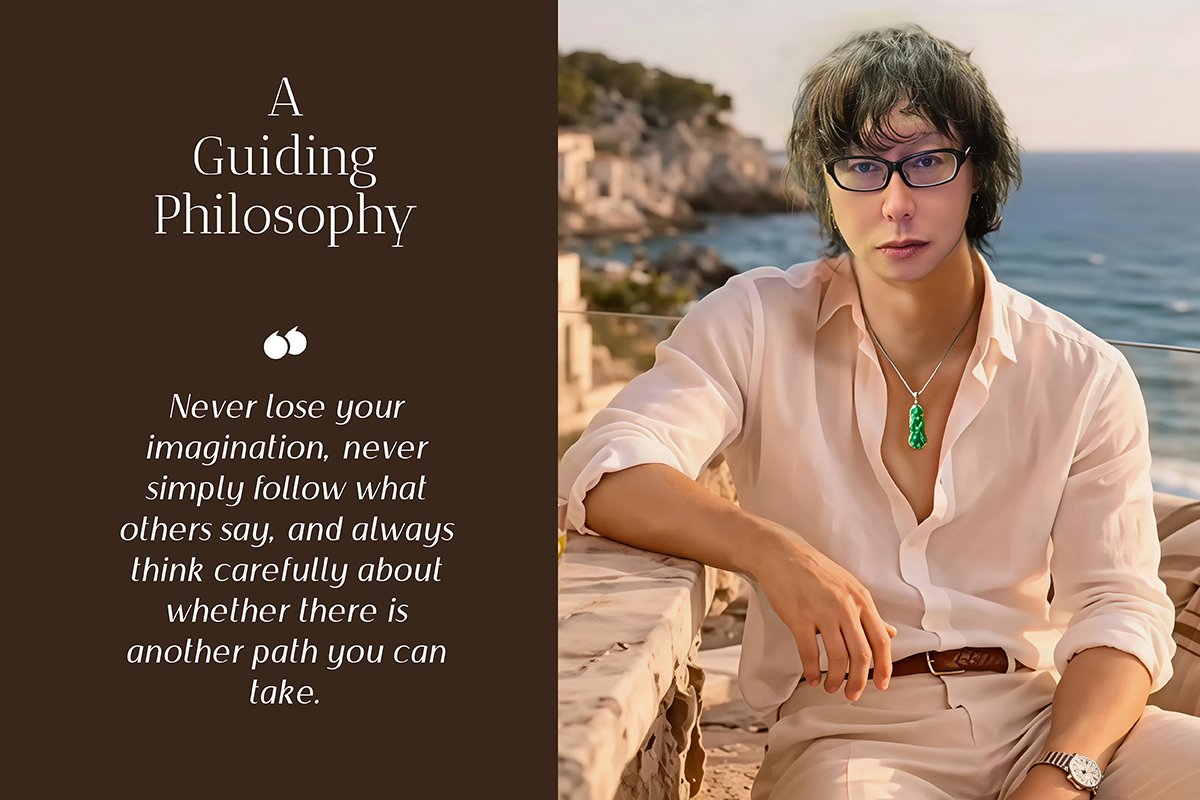
A Guiding Philosophy
His entire career as an inventor, entrepreneur, and leader is anchored by a single life philosophy.
“My favorite life philosophy is: ‘Never lose your imagination, never simply follow what others say, and always think carefully about whether there is another path you can take.'”
He has utilized this philosophy across all his research and business ventures. He consistently refuses to be confined by academic traditions. When he encounters technological bottlenecks or industry skepticism, he relies on independent thinking. He continues to learn autonomously and maintains the courage to break through established boundaries. This exact commitment to imagination and the exploration of the unknown continues to drive his pursuit of transformative photonic computing technologies. He remains determined to lead his team toward the technological frontiers of the future.



Related Post